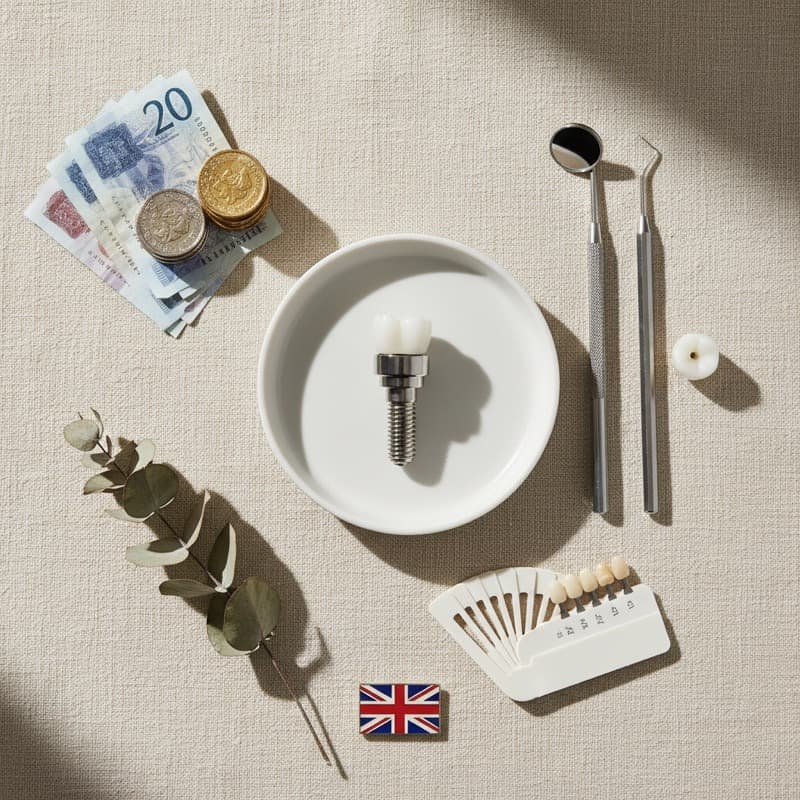
A single E-max veneer costs £180-280 in Turkey versus £400-700 in Spain versus £500-1,000 in the UK. A full Hollywood Smile (16-20 veneers) costs £3,000-4,500 in Turkey versus £7,000-12,000 in Spain. Turkey is 50-60% cheaper than Spain for identical Ivoclar Vivadent E-max materials. Based on 2026 pricing from MyDentalFly's network of 29 verified clinics. Spain's EU membership and shorter flights (2-2.5 hours vs 3.5 hours to Istanbul) offer convenience, but Turkey's purpose-built cosmetic dental clinics handle 50-100+ veneer cases monthly.
A single E-max veneer costs £180-280 in Turkey versus £400-700 in Spain versus £500-1,000 in the UK. A full Hollywood Smile (16-20 veneers) costs £3,000-4,500 in Turkey versus £7,000-12,000 in Spain. Turkey is 50-60% cheaper than Spain for identical Ivoclar Vivadent E-max materials. Based on 2026 pricing from MyDentalFly's network of 29 verified clinics. Spain's EU membership and shorter flights (2-2.5 hours vs 3.5 hours to Istanbul) offer convenience, but Turkey's purpose-built cosmetic dental clinics handle 50-100+ veneer cases monthly.
About MyDentalFly
We build your treatment plan and match you with vetted specialist clinics in Turkey, Hungary and Poland — and a dentist at the clinic confirms every plan before you pay anything.
Hi, I'm Pearl 👋 Ask me anything about veneers abroad — or tell me what you need and I'll build your package.
What I build for you
Prefer another language?
gap
worn
shade
Smile Analyser
Send one photo. I tell you what I can see.
Try asking about this
Price Comparison: Turkey vs Spain
All prices in GBP. Based on verified clinic pricing from the MyDentalFly platform. Spain prices represent Western European averages.
Treatment
Spain
Turkey
Saving
E-max Veneer (per tooth)
£1,100
£262
76%
Porcelain Veneer (per tooth)
£1,000
£222
78%
Composite Veneer (per tooth)
£450
£135
70%
Hollywood Smile (8-10 Veneers)
£8,500
£2,163
75%
E-max Crown
£1,000
£225
78%
Zirconia Crown
£950
£179
81%
Pearl
MyDentalFly’s dental consultant
The bit that matters most and gets discussed least: veneers and crowns are not the same treatment. A veneer is a thin facing that keeps most of your own tooth; a crown means the tooth is reduced right down first, and that can't be undone. A lot of very cheap 'veneer' packages abroad are actually crowns.
What are you hoping to change?
Quality Comparison
Factor
Turkey
Spain
Veneer materials
E-max (Ivoclar Vivadent), layered porcelain, composite. E-max is the default standard material. Same globally manufactured ceramics used worldwide.
E-max, layered porcelain, composite. Same materials available. Spanish labs use the same Ivoclar Vivadent products and equivalent porcelain systems.
Laboratory quality
In-house digital labs with CAD/CAM milling standard in top cosmetic clinics. High case volumes produce highly experienced ceramists. Rapid turnaround (1-3 days for E-max).
Quality dental labs available, particularly in Barcelona and Madrid. Mix of in-house and outsourced laboratory work. Good craftsmanship but typically lower case volumes for cosmetic work than Turkey.
Digital Smile Design
DSD is standard practice in Turkish cosmetic clinics. Mock-ups and digital previews included in the treatment process at no extra charge.
DSD available in some specialist cosmetic practices, but not universally adopted. More likely to be offered as a premium service with an additional fee.
Cosmetic specialisation
A large number of Turkish clinics specialise primarily or exclusively in cosmetic dentistry. Dentists and ceramists handle hundreds of veneer cases annually.
Dedicated cosmetic dental practices exist in Spain but are less common. Most clinics offer cosmetic services alongside general and restorative dentistry, resulting in lower cosmetic case volumes.
Aftercare
Written warranties 3-5 years (up to 10 for E-max). Patient portal for remote aftercare. Dedicated coordinator throughout the process.
Warranty terms vary by clinic. Convenient to return for adjustments due to short flight times. Less structured dental tourism aftercare infrastructure compared to Turkey.
Travel & Logistics
Flight time
2-2.5 hours to Barcelona, Madrid, Malaga (frequent low-cost flights)
Visa
No visa required for UK citizens (Schengen zone, 90-day stay)
Language barrier
Moderate -- English spoken in tourist areas, but dental clinics may require Spanish or have limited English capability outside major cities
Accommodation
Rarely included in treatment pricing. Hotels from £50-100/night depending on location and season.
Pros & Cons
Turkey
+
50-65% lower prices than Spain for the same E-max and porcelain materials
+
More clinics specialising in cosmetic dentistry with higher case volumes
+
Digital Smile Design and mock-ups included as standard practice
+
All-inclusive packages with hotel and transfers are the norm
+
Highly competitive market produces better patient experience and service
+
Greater number of verified, specialist cosmetic clinics to choose from
-
Longer flight from the UK (3.5 hours vs 2-2.5 hours to Spain)
-
Visa required for UK citizens (free e-Visa)
-
Not an EU member state
-
Greater distance for follow-up visits if veneer adjustments are needed
Spain
+
Shorter flight times from the UK with budget airline options
+
EU member state with consumer protection regulations
+
No visa required
+
Familiar Western European culture and healthcare system
+
Large British communities in coastal areas provide a comfortable environment
+
Well-known holiday destination that can combine leisure with treatment
-
Prices reflect Western European cost structures -- 50-65% more than Turkey
-
E-max veneers cost £500-750 per tooth in Spain vs £180-280 in Turkey
-
A Hollywood Smile (10 veneers) costs £5,000-7,500 in Spain vs £1,800-2,800 in Turkey
-
Dental tourism packages (hotel, transfers, coordinator) are not standard practice
-
English-language support less reliable than in Turkish dental tourism clinics
-
Fewer cosmetic dentistry specialists compared to Turkey's concentrated market
Our Verdict
For cosmetic veneers, Turkey offers a dramatically better value proposition than Spain. The E-max material is identical, but a full smile makeover in Turkey costs roughly half of what it would in Spain, and the Turkish cosmetic dental industry is far more developed and specialised. Spain's advantages are limited to convenience (shorter flights, no visa, EU status) but these benefits are modest compared to the £3,000-5,000+ in additional savings Turkey offers for a full set of veneers. Unless you have a strong personal preference for staying within the EU, Turkey is the clear choice for veneer treatment.
Example dental packages
Real prices from verified clinics — including flights and hotel
Frequently Asked Questions
How much cheaper are veneers in Turkey than Spain?
Turkey is approximately 50-65% cheaper for veneers. E-max veneers cost £180-280 per tooth in Turkey versus £500-750 in Spain. A Hollywood Smile (10 veneers) costs £1,800-2,800 in Turkey versus £5,000-7,500 in Spain. Spain is cheaper than the UK (£800-1,000 per veneer) but represents only a moderate saving, whereas Turkey delivers savings of 60-75% versus UK prices.
Is the E-max material the same in Turkey and Spain?
Yes. E-max is manufactured by Ivoclar Vivadent in Liechtenstein and distributed globally. A block of E-max ceramic used in Turkey is identical to one used in Spain, the UK, or any other country. The final veneer quality depends on the laboratory processing and the ceramist's skill, not on geographic location. Both Turkey and Spain have capable laboratories, though Turkey's high-volume cosmetic labs tend to have more specialised cosmetic experience.
Are Spanish dental clinics set up for English-speaking tourists?
Some are, particularly in Barcelona, Madrid, and the coastal tourist areas (Costa del Sol, Costa Blanca). However, Spain's dental tourism industry is much less developed than Turkey's, and many Spanish dental practices operate primarily in Spanish. English-language patient coordinators, dedicated airport transfers, and hotel arrangements are not standard in Spanish dental clinics, whereas they are standard in Turkish dental tourism clinics. If choosing Spain, confirm the specific clinic's English-language capabilities in advance.
Do Spanish clinics offer all-inclusive veneer packages?
All-inclusive packages (treatment + hotel + transfers + coordinator) are uncommon in Spain. Spanish dental clinics typically quote for treatment only, and patients arrange travel independently. In contrast, Turkish dental tourism clinics routinely offer all-inclusive packages where the quoted price includes accommodation, airport transfers, and a dedicated coordinator. When comparing prices between Turkey and Spain, add £300-700 to the Spanish quote for accommodation and transport to get a true like-for-like comparison.
Which country has more experienced cosmetic dentists?
Turkey has a significantly larger pool of dentists who specialise in cosmetic work. The volume of international patients seeking veneers in Turkey far exceeds Spain's, meaning Turkish cosmetic dentists and ceramists accumulate more veneer-specific experience. Spain has skilled cosmetic dentists, particularly in Barcelona (which has a strong cosmetic dentistry scene), but the overall market is smaller and less specialised. For veneer work, where experience and case volume directly impact results, Turkey's concentration of cosmetic expertise is a genuine advantage.
Can I get veneers in Spain as a day trip from the UK?
No. Even with a short flight, veneer treatment requires multiple appointments over 5-7 days (consultation, preparation, laboratory fabrication, bonding). You need to plan a trip of at least 5 days for veneers in either Spain or Turkey. The shorter flight to Spain (2-2.5 hours) saves approximately one hour each way compared to Istanbul (3.5 hours) -- a minor convenience that does not significantly change the overall trip logistics. Both destinations require the same clinical timeline.
About MyDentalFly
MyDentalFly is a UK-based platform that builds your treatment plan and matches you with vetted specialist clinics abroad — and a dentist at the clinic reviews and confirms every plan before you pay anything.
Our interactive assessment evaluates your dental needs and builds a bespoke package: every treatment explained, a matched clinic with reasons why, your named dentist, flight estimates, transport, and accommodation — all in one place. We maintain a small, vetted network across Turkey, Hungary and Poland, visit clinics in person, help arrange CBCT scans before you fly, and stay with you through the entire journey. Compare. Save. Smile.
500+ patients helped·Nothing is charged until the clinic's dentist confirms your plan
Vetted clinics only Turkey · Hungary · Poland1,875 verified pricesAsk Pearl how it works ↓
All clinical claims, pricing data, and statistics in this article are based on peer-reviewed research, official regulatory sources, and publicly verifiable data. We invite you to verify anything before making a treatment decision.
Medical disclaimer: This article is for educational purposes and does not replace a clinical examination. Treatment outcomes vary between patients. Always consult a qualified dental professional.
AS
About the author
Adam Smith
Head of Patient Research, MyDentalFly
Adam leads patient research at MyDentalFly, personally vetting clinics across Turkey, Hungary, and Poland. He has reviewed over 200 clinic proposals, analysed patient outcomes, and helped coordinate treatment plans for patients across the UK, USA, and Europe.