Dental Abroad When You're Nervous
By Adam Smith, Head of Patient Research
Updated 28 March 2026 · Dental tourism researcher · Clinic vetting specialist · 40+ clinics assessed on-site
Clinically reviewed by Dr. Ertan Etemoglu, Lead Dentist & Co-Founder
Tower Dental Clinic, Istanbul · 26 years in practice · 8,000+ patients/year · Turkish & American Dental Association member · Featured on Reuters
About MyDentalFly
We build your treatment plan and match you with vetted specialist clinics in Turkey, Hungary and Poland — and a dentist at the clinic confirms every plan before you pay anything.
Vetted clinics only· Turkey · Hungary · Poland·1,875 verified prices
Pearl, our dental consultant
Pearl
Pearl · online
Hi, I'm Pearl 👋 Ask me anything about dental treatment abroad — or tell me what you need and I'll build your package.
Try asking about this

Dental anxiety affects 1 in 4 adults. Flying abroad for treatment sounds terrifying — but many nervous patients say it was easier than their local dentist. Here's why.
You haven't been to the dentist in years. The thought of a dental chair makes your palms sweat. And now someone's suggesting you fly to another country and let a stranger drill your teeth?
It sounds counterintuitive. But dental tourism clinics handle anxious patients every day — often better than your local practice. Here's why, and how to manage dental anxiety when getting treatment abroad.
Why Nervous Patients Often Do Better Abroad
This seems backwards, but the data and patient reports are consistent:
1. You're a customer, not a number. NHS dental appointments are 15-20 minutes. Turkish and Hungarian clinics schedule 1-2 hours for each patient. When you're not being rushed, the dentist can explain everything, answer questions, and wait when you need a break.
2. Sedation is standard, not a luxury. In the UK, conscious sedation costs £200-400 extra and many practices don't offer it. In Turkish clinics, IV sedation is routine and typically costs £100-200 or is included in major treatment packages.
3. Modern facilities reduce fear. Many dental tourism clinics are purpose-built modern facilities — large treatment rooms, natural light, Netflix on ceiling screens, noise-cancelling headphones. They don't look or feel like the NHS practice you remember from childhood.
4. Distance creates psychological separation. Strange but true: many patients report less anxiety in a foreign clinic because it doesn't trigger the same associations as their childhood dentist. New environment, new associations.
"I was terrified before I went but the staff were incredible — they held my hand and explained everything"
Pearl
MyDentalFly’s dental consultant
Something worth knowing while you're reading: almost every dental decision comes down to two things a price list can't tell you — what condition the surrounding teeth and bone are in, and how permanent you want the result to be. Those are what make two people's treatment for the 'same' problem look completely different.
What's brought you here today?
Sedation Options Available Abroad
| Sedation Level | What It Is | Awareness | Memory | Recovery | Available Abroad? |
|---|---|---|---|---|---|
| Local anaesthesia | Numbing injection | Fully awake | Full memory | Immediate | Everywhere |
| Nitrous oxide (laughing gas) | Gas through nose mask | Awake but relaxed | Partial memory | 5-10 minutes | Most clinics |
| Oral sedation | Pill taken before treatment | Drowsy, responsive | Little memory | 2-4 hours | Most clinics |
| IV conscious sedation | Medication through IV drip | Deeply relaxed, semi-awake | Usually no memory | 1-2 hours | Common in Turkey/Hungary |
| General anaesthesia | Fully unconscious | None | No memory | 4-6 hours | Hospital-based clinics only |
For nervous patients, IV conscious sedation is the sweet spot. You're relaxed enough that you don't care what's happening, but awake enough that the dentist can communicate with you. You remember little or nothing afterwards.
General anaesthesia is available at hospital-based clinics in Turkey (several major dental hospitals in Istanbul and Antalya offer this). It's used for extensive surgery — All-on-4, multiple extractions, or patients with severe dental phobia. Cost: £300-600 in Turkey (vs £1,000-2,000 in the UK for private GA dental work).
The Anxiety Scale: Where Are You?
| Level | Description | What Helps |
|---|---|---|
| Mild | Slightly nervous, can cope with deep breathing | Communication, distractions (music, Netflix) |
| Moderate | Avoid dental visits, need encouragement, tense in the chair | Nitrous oxide or oral sedation, a support person |
| Severe | Haven't been in years, panic attacks at the thought | IV sedation, full explanation before each step |
| Phobic | Cannot enter a dental practice, may vomit or faint | General anaesthesia, gradual exposure with sedation |
Most dental tourism clinics are equipped for mild to severe anxiety. Phobic patients should specifically seek hospital-based clinics with anaesthesiology departments.
Practical Strategies That Actually Work
Before the Trip
Tell the clinic you're nervous. Say it upfront — in your first WhatsApp message or email. Good clinics adjust their approach: scheduling extra time, assigning their most patient dentist, preparing sedation.
Ask for a video tour. Most clinics will send a video of their facility, or you can find one on YouTube. Seeing the space before you arrive removes the unknown.
Bring a companion. Having someone with you — partner, friend, parent — provides emotional support. They can sit in the waiting room, hold your hand during treatment (many clinics allow this), and help you get back to the hotel afterwards if you've had sedation.
Agree a stop signal. Before any treatment begins, agree with the dentist that raising your left hand means "pause." Knowing you have control reduces panic.
During Treatment
Headphones and music. Bring your own earbuds. Many clinics have ceiling screens for Netflix, but your own music gives you a familiar comfort blanket.
Breathing techniques. Box breathing works: breathe in for 4 seconds, hold for 4, out for 4, hold for 4. Simple enough to do while someone works on your teeth.
Focus on something specific. Count ceiling tiles. Follow the lyrics of a song. Anything that occupies your conscious mind.
Take breaks. You can ask the dentist to stop at any point. Five minutes of breathing, a sip of water, and you're ready to continue. No good dentist will refuse.
"They gave me a stress ball and told me to squeeze it whenever I felt uncomfortable — small thing but it helped"
Choosing the Right Clinic for Anxious Patients
Look for:
- "Sedation dentistry" explicitly mentioned on their website or in your consultation
- An anaesthesiologist on staff (for IV sedation and GA)
- Treatment rooms with distractions — screens, music systems, comfortable chairs
- Patient reviews mentioning anxiety — if other nervous patients had good experiences, you likely will too
- Willingness to schedule longer appointments — rushed treatment worsens anxiety
Red flags:
- "We don't offer sedation" — walk away if you need it
- "It'll be fine, don't worry" without explaining how — dismissive of your concerns
- Pressure to start treatment before you're comfortable — never acceptable
The "I Haven't Been to a Dentist in 10 Years" Scenario
This is more common than people admit. Shame keeps nervous patients away, and the longer you stay away, the worse the anxiety gets. By the time you finally go, the treatment needed is more extensive — which confirms the fear.
Here's the reality: dental tourism clinics see patients with 10-20 years of neglected dental health every week. They don't judge. They've seen worse. And the modern treatments available mean that even severely damaged mouths can be restored.
The typical journey for a long-term avoider:
- Send X-rays and photos (remote — no chair involved)
- Get a treatment plan remotely (still no chair)
- Fly to the clinic — first consultation with sedation available
- Treatment under IV sedation if needed — you may not remember it
- Wake up with temporary teeth, feeling relief that it's done
- Fitting permanent teeth a few days later
- Fly home with a functioning smile you haven't had in years
The hardest part is step 1. Everything after that gets easier.
Cost of Sedation Abroad
| Sedation Type | Turkey | Hungary | UK (Private) |
|---|---|---|---|
| Nitrous oxide (per session) | £40-80 | £50-100 | £100-200 |
| Oral sedation (per session) | £30-60 | £40-80 | £100-150 |
| IV conscious sedation (per session) | £100-200 | £150-300 | £200-400 |
| General anaesthesia (per session) | £300-600 | £400-800 | £1,000-2,000 |
For complex treatment (All-on-4, full mouth restoration), sedation may be included in the package price. Always ask.
Getting Started
If you're nervous, our dental assessment tool lets you start the process from home — no dental chair required. Complete a dental chart, upload X-rays or photos, and receive an Intelligent Treatment Plan. You can compare clinics and discuss sedation options before you book anything.
See also: All-on-4 Guide
Next Steps
Your dental tourism consultant is there specifically for moments when anxiety kicks in. They've handled nervous patients before, they speak to the clinic on your behalf, and they're a phone call away throughout your trip. The dental assessment is a low-pressure way to start — 2 minutes, from your sofa, no commitment.
What your package would look like
Your package, building
ExamplePackage total
building…
—
Real results from verified clinics
Drag the slider to compare before & after
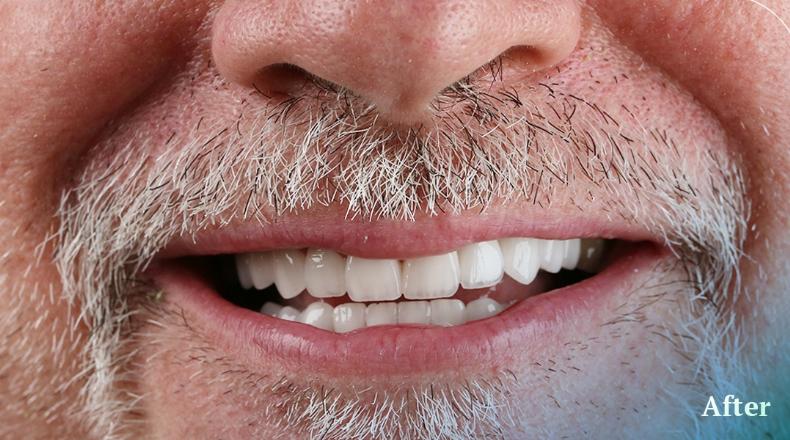
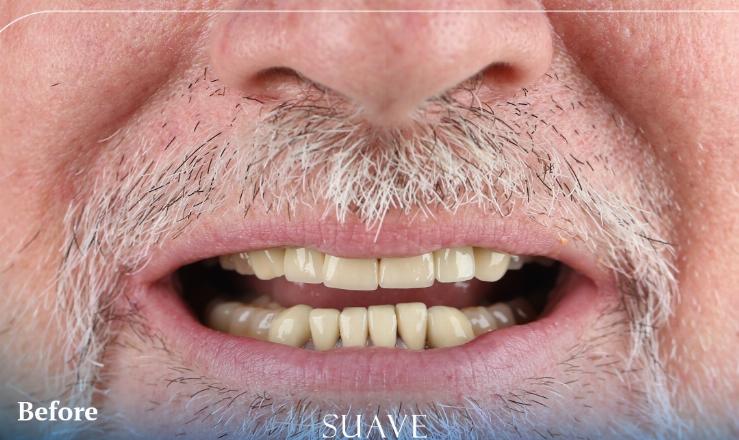
Suave Clinic
Verified clinicFull smile restoration · Istanbul
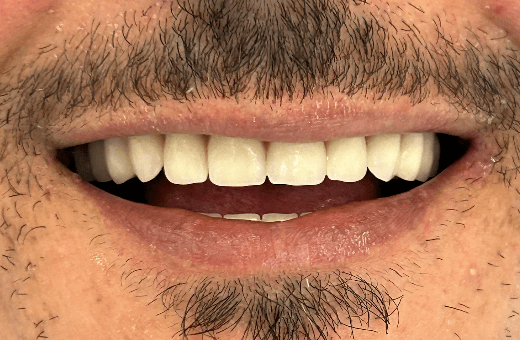
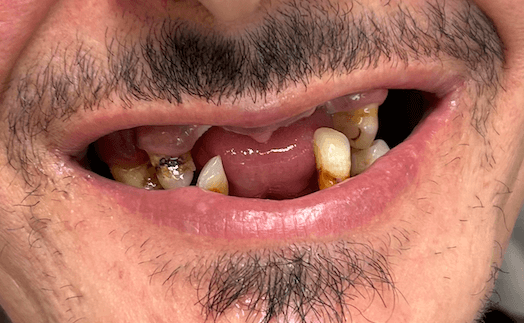
MDental Clinic
Verified clinicFull smile makeover · E-max veneers · Budapest
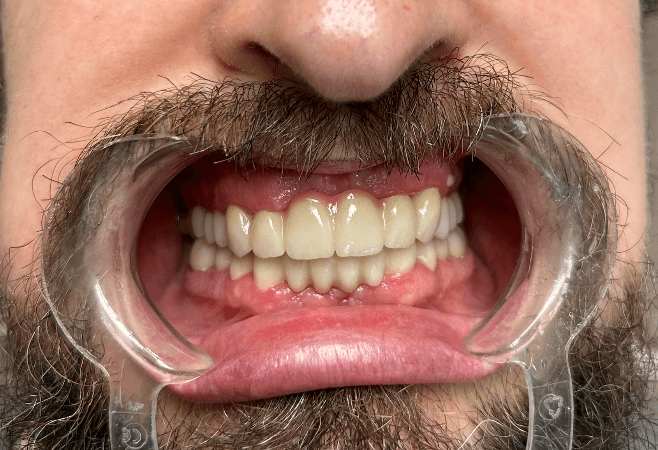
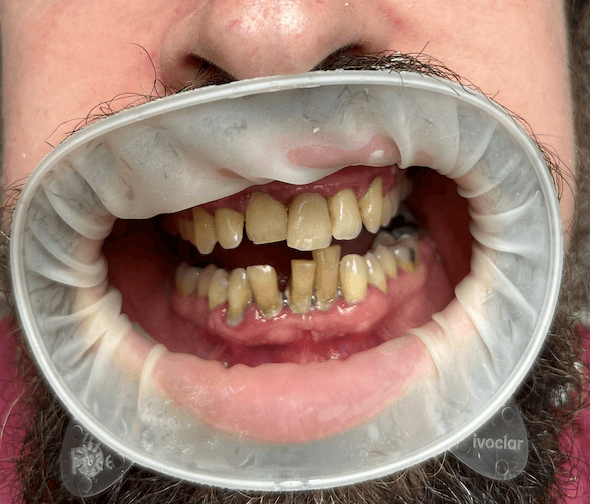
MDental Clinic
Verified clinicCrowns & restoration · Budapest
 Before → After
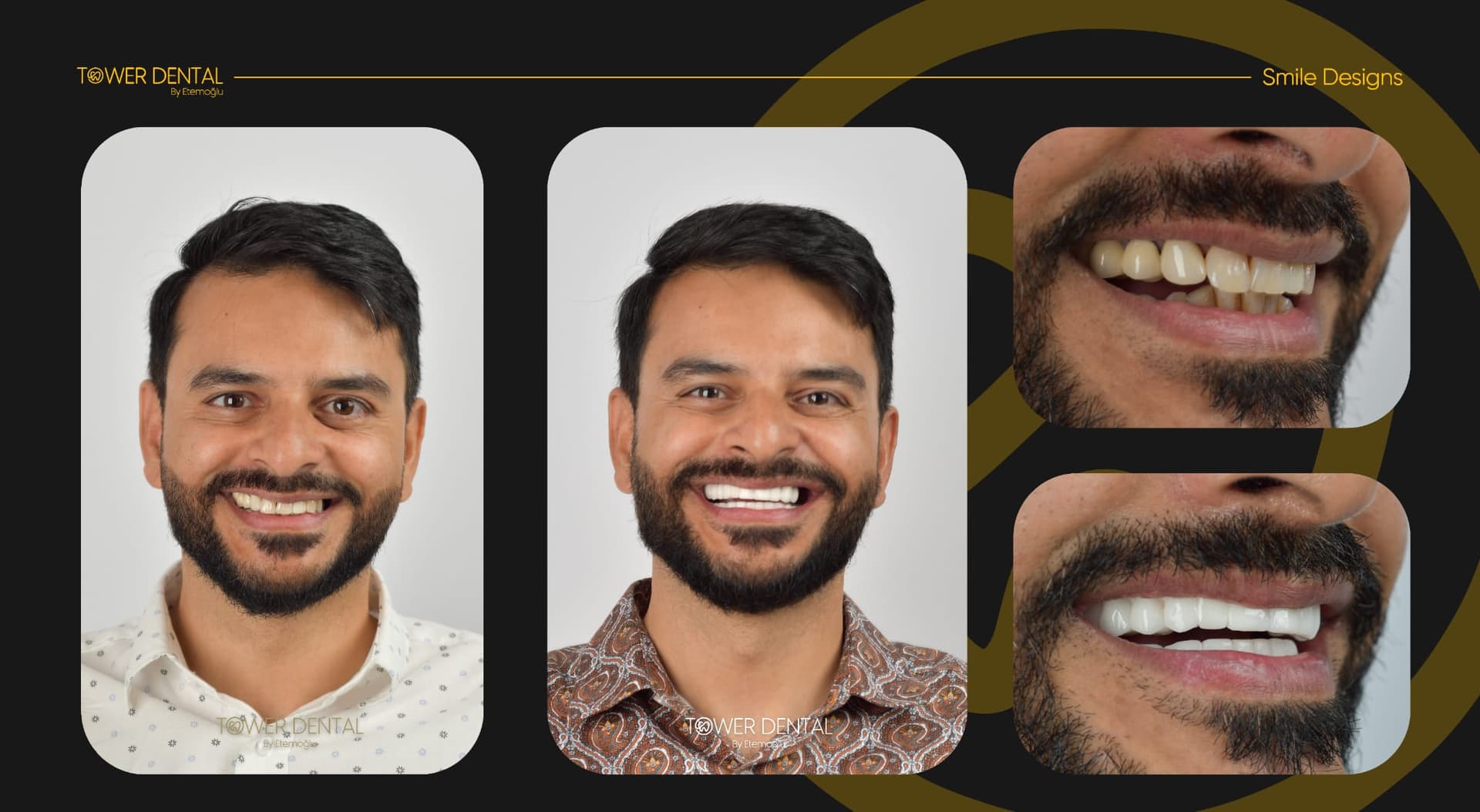
Tower Dental Clinic
Verified clinicHollywood smile · E-max veneers · Istanbul
References & Sources
All clinical claims, pricing data, and statistics in this article are based on peer-reviewed research, official regulatory sources, and publicly verifiable data. We invite you to verify anything before making a treatment decision.
- 1.BBC News, "Turkey teeth: The dental tourism risks patients don't see." February 2023.
- 2.BBC, "Turkey Teeth: Bargain Smiles or Big Mistake?" — documentary investigating dental tourism risks, 2022.
- 3.Euronews, "Medical tourism: Dental expert explains why Turkey teeth can be a costly mistake." October 2024.
- 4.General Dental Council (UK), "Going abroad for dental treatment" — patient guidance.
- 5.British Dental Association (BDA), "Dental tourism: Patients need to know the risks."
- 6.T.C. Saglik Bakanligi (Turkish Ministry of Health), Health Tourism Authorisation Regulations.
- 7.Kontakiotis, E.G. et al. (2015), "A prospective study of the incidence of asymptomatic pulp necrosis following crown preparation," Int. Endod. J., 48(6), 512-517.
- 8.Pjetursson, B.E. et al. (2012), "A systematic review of the survival and complication rates of implant-supported fixed dental prostheses after at least 5 years," Clin. Oral Implants Res., 23(S6), 22-38.
- 9.Sailer, I. et al. (2015), "All-ceramic or metal-ceramic tooth-supported fixed dental prostheses: a systematic review," Dent. Mater., 31(6), 603-624.
- 10.Türkiye Today, "1.5 million health tourists visited Türkiye in 2024, generating $3 billion in revenue." 2025.
Medical disclaimer: This article is for educational purposes and does not replace a clinical examination. Treatment outcomes vary between patients. Always consult a qualified dental professional.
About MyDentalFly
MyDentalFly is a UK-based platform that builds your treatment plan and matches you with vetted specialist clinics abroad — and a dentist at the clinic reviews and confirms every plan before you pay anything.
Our interactive assessment evaluates your dental needs and builds a bespoke package: every treatment explained, a matched clinic with reasons why, your named dentist, flight estimates, transport, and accommodation — all in one place. We maintain a small, vetted network across Turkey, Hungary and Poland, visit clinics in person, help arrange CBCT scans before you fly, and stay with you through the entire journey. Compare. Save. Smile.
Tap a question — Pearl answers
Prefer a person? WhatsApp us · 020 4634 2312 · or
Clinically reviewed before booking
Every dental package built on MyDentalFly is reviewed by a qualified dentist before it gets accepted. Our clinical reviewers include specialists like Dr. Hubert Trępatowski — 800+ All-on-4 procedures, trained under Professor Paulo Malo (pioneer of the All-on-4 technique), graduate of Jagiellonian University Medical Faculty, Krakow.
About the author
Adam Smith
Head of Patient Research, MyDentalFly
Adam leads patient research at MyDentalFly, personally vetting clinics across Turkey, Hungary, and Poland. He has reviewed over 200 clinic proposals, analysed patient outcomes, and helped coordinate treatment plans for patients across the UK, USA, and Europe.
Clinically reviewed by
Dr. Ertan Etemoglu
Lead Dentist & Co-Founder, Tower Dental Clinic
26 years in practice · 8,000+ patients/year · Turkish & American Dental Association member · Featured on Reuters
Content last reviewed: 29 August 2026


