Flying After Dental Surgery: When Is It Safe?
By Adam Smith, Head of Patient Research
Updated 28 March 2026 · Dental tourism researcher · Clinic vetting specialist · 40+ clinics assessed on-site
Clinically reviewed by Dr. Ertan Etemoglu, Lead Dentist & Co-Founder
Tower Dental Clinic, Istanbul · 26 years in practice · 8,000+ patients/year · Turkish & American Dental Association member · Featured on Reuters

About MyDentalFly
We build your treatment plan and match you with vetted specialist clinics in Turkey, Hungary and Poland — and a dentist at the clinic confirms every plan before you pay anything.
Vetted clinics only· Turkey · Hungary · Poland·1,875 verified prices
Pearl, our dental consultant
Pearl
Pearl · online
Hi, I'm Pearl 👋 Ask me anything about dental treatment abroad — or tell me what you need and I'll build your package.
What I build for you

Smile Analyser
Send one photo. I tell you what I can see.
Try asking about this

How soon can you fly after implants, veneers, or extractions? The real timelines by treatment type — not the vague advice clinics give you.
You can fly 24-48 hours after most dental work. But "most" isn't "all" — and the answer depends entirely on what was done.
The concern isn't the flying itself. It's the cabin pressure changes at altitude, which can amplify pain and swelling in freshly treated areas. At 35,000 feet, cabin pressure drops to the equivalent of 6,000-8,000 feet altitude. Any trapped air in surgical sites or sinus cavities expands.
Flying Timelines by Treatment
| Treatment | Earliest Safe Flight | Recommended Wait | Why |
|---|---|---|---|
| Veneers (bonded) | Same day | 24 hours | No surgical site. Wait for numbness to wear off |
| Crowns (cemented) | Same day | 24 hours | Same as veneers — non-surgical |
| Simple extraction | 24 hours | 48-72 hours | Blood clot needs to form. Pressure changes risk dry socket |
| Surgical extraction | 48 hours | 3-5 days | More tissue disruption, higher swelling risk |
| Single implant | 24-48 hours | 3-5 days | Surgical site needs initial healing. Swelling peaks at 48 hours |
| Multiple implants | 48-72 hours | 5-7 days | Multiple surgical sites = more swelling and bleeding risk |
| All-on-4 / All-on-6 | 3-5 days | 5-7 days | Major surgery. Swelling, numbness, and bleeding risk |
| Bone graft | 3-5 days | 7-10 days | Graft material needs to stabilise. Avoid pressure changes |
| Sinus lift | 5-7 days minimum | 10-14 days | Sinus cavity directly affected by cabin pressure. Highest risk |
| Wisdom tooth removal | 48 hours | 3-5 days | Surgical extraction, potential sinus communication |
The critical one: Sinus lifts. If you've had a sinus lift (common when upper jaw bone is too thin for implants), the membrane between your mouth and sinus cavity has been deliberately lifted. Cabin pressure changes can cause serious complications. Most oral surgeons recommend waiting at least 7 days, ideally 14.
Pearl
MyDentalFly’s dental consultant
Something worth knowing while you're reading: almost every dental decision comes down to two things a price list can't tell you — what condition the surrounding teeth and bone are in, and how permanent you want the result to be. Those are what make two people's treatment for the 'same' problem look completely different.
What's brought you here today?
What Actually Happens on the Plane
At cruising altitude, three things affect your healing:
1. Pressure drop: Cabin pressure is lower than sea level. Air trapped in extraction sockets or sinus cavities expands. This causes throbbing pain that paracetamol alone may not handle.
2. Dehydration: Cabin humidity is 10-20% (vs 40-60% normally). Dry conditions slow healing and make blood clots in extraction sites more fragile. Drink water constantly. Avoid alcohol — it's a blood thinner and dehydrant.
3. Immobility: Sitting still for 3-4 hours increases blood pressure to the head when you stand up. Combined with blood thinners or anti-inflammatories, this can restart bleeding from surgical sites.
How Turkish Clinics Plan Around Flights
Most Turkish dental tourism packages are structured with flying timelines built in:
- Veneers/crowns: 5-7 day trip. Fly home day after final fitting.
- Implants (stage 1): 3-5 day trip. Implant placed days 1-2, fly home days 4-5.
- All-on-4: 5-7 day trip. Surgery day 1-2, temporary teeth day 3-4, fly home day 5-7.
- Sinus lift + implants: Two trips. Sinus lift trip 1 (7 days), implant trip 2 (3-4 months later, 5 days).
"Don't book too tight a schedule - procedures often take longer than quoted"
If your clinic schedules your procedure for the day before your flight, push back. A one-day buffer can prevent a miserable flight and a potential complication.
The Dry Socket Risk
Dry socket (alveolar osteitis) occurs when the blood clot in an extraction site dislodges or dissolves before the wound heals. It's the most common complication of tooth extraction, affecting 2-5% of cases.
Cabin pressure changes can contribute to clot dislodgement. To minimise the risk:
- Don't fly within 24 hours of an extraction
- Don't drink through a straw (suction dislodges clots)
- Don't smoke for 72 hours minimum
- Bite on gauze during takeoff and landing if flying within 3 days
- Take prescribed antibiotics on schedule
What to Pack for the Flight Home
- Painkillers: Take ibuprofen 30 minutes before boarding. Paracetamol as backup. Your clinic may prescribe stronger options.
- Gauze pads: For biting on during pressure changes if you've had extractions
- Neck pillow: You'll want to keep your head elevated
- Water bottle: Fill after security. Drink constantly.
- Ice pack: Wrap a cold pack in a cloth for swelling. Some airports have pharmacies after security.
- Avoid: Alcohol, hot drinks, crunchy foods, chewing gum
"Bring a neck pillow - you'll be spending a lot of time in the dental chair"
When to Delay Your Flight
Rebook your flight if any of these apply:
- Active bleeding that hasn't stopped after 4 hours of pressure
- Temperature above 38°C (possible infection)
- Numbness that hasn't resolved after 24 hours (possible nerve involvement)
- Severe swelling that's getting worse, not better
- Your surgeon specifically advises against flying
Most travel insurance with dental cover will reimburse flight changes for medical reasons. Keep documentation from your clinic.
Planning Your Trip Length
The sweet spot for most treatments:
| Treatment | Minimum Trip | Comfortable Trip |
|---|---|---|
| Veneers (full set) | 5 days | 7 days |
| Crowns (multiple) | 4 days | 6 days |
| Implants (1-3) | 4 days | 6 days |
| All-on-4 (both arches) | 6 days | 8-10 days |
| Sinus lift only | 5 days | 7-10 days |
Book your return flight for at least one day later than the clinic suggests. If everything heals perfectly, you get a day to explore Istanbul. If something needs adjustment, you have a buffer.
You can plan your treatment timeline and compare clinic packages on our platform — including how long each clinic recommends staying.
See also: All-on-4 Guide
Next Steps
Your dental tourism consultant helps schedule your flights around your recovery timeline. The aftercare guide has treatment-specific recovery timelines and warning signs to watch for. The flight estimator shows flexible route options from your city.
Start here: Take the dental assessment — understand what you may need before comparing clinics.
What your package would look like
Your package, building
ExamplePackage total
building…
—
Real results from verified clinics
Drag the slider to compare before & after
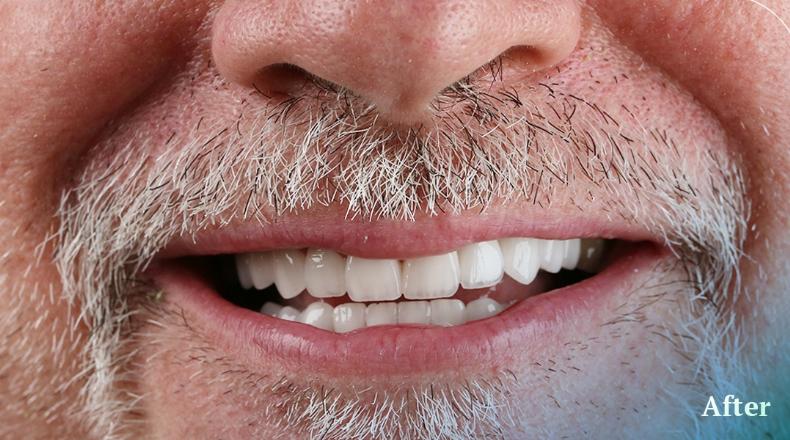
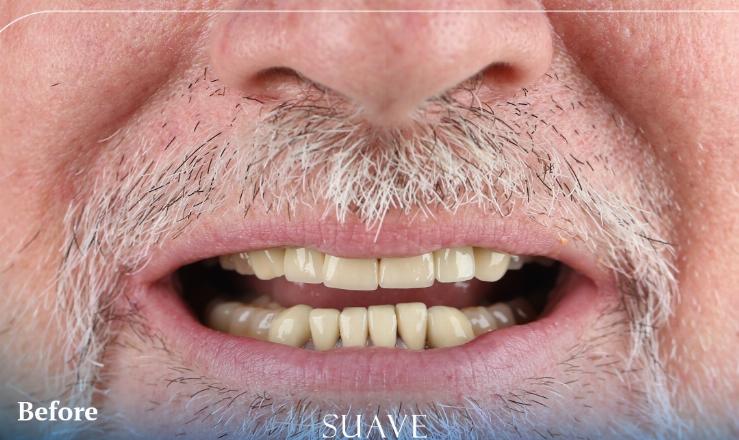
Suave Clinic
Verified clinicFull smile restoration · Istanbul
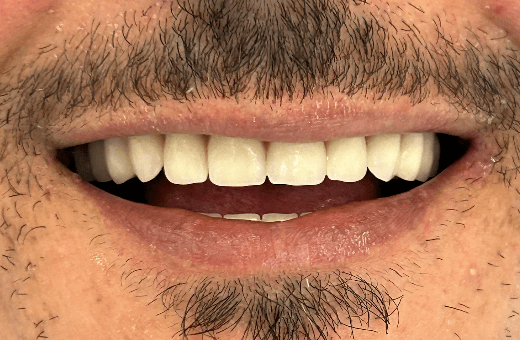
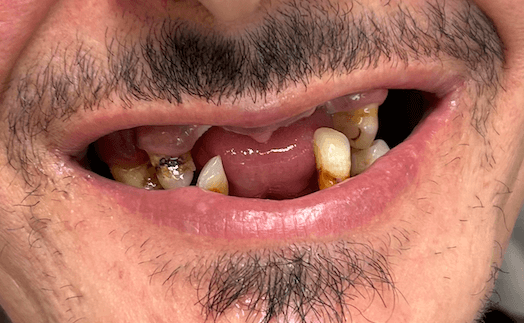
MDental Clinic
Verified clinicFull smile makeover · E-max veneers · Budapest
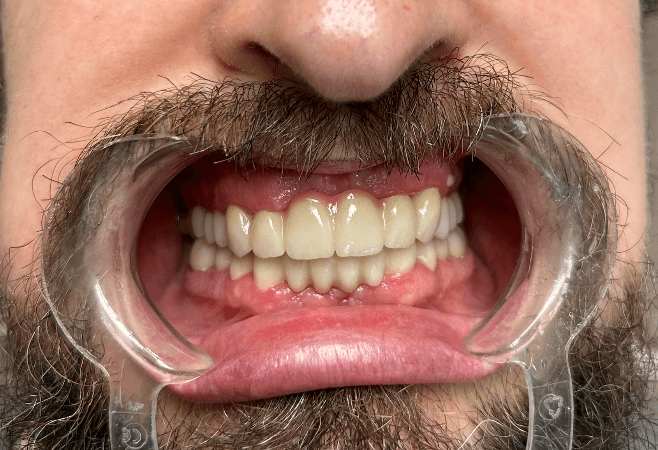
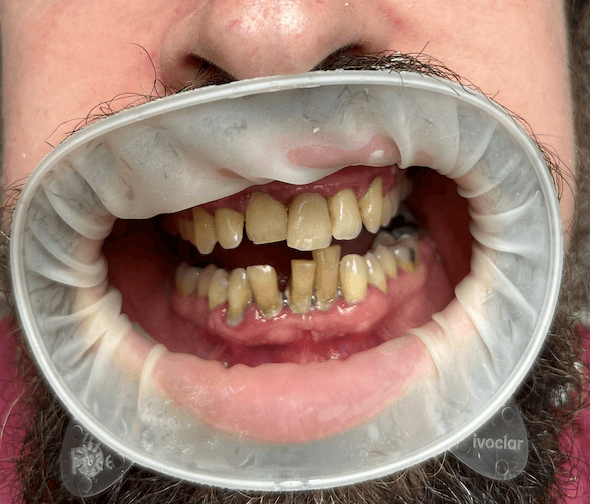
MDental Clinic
Verified clinicCrowns & restoration · Budapest
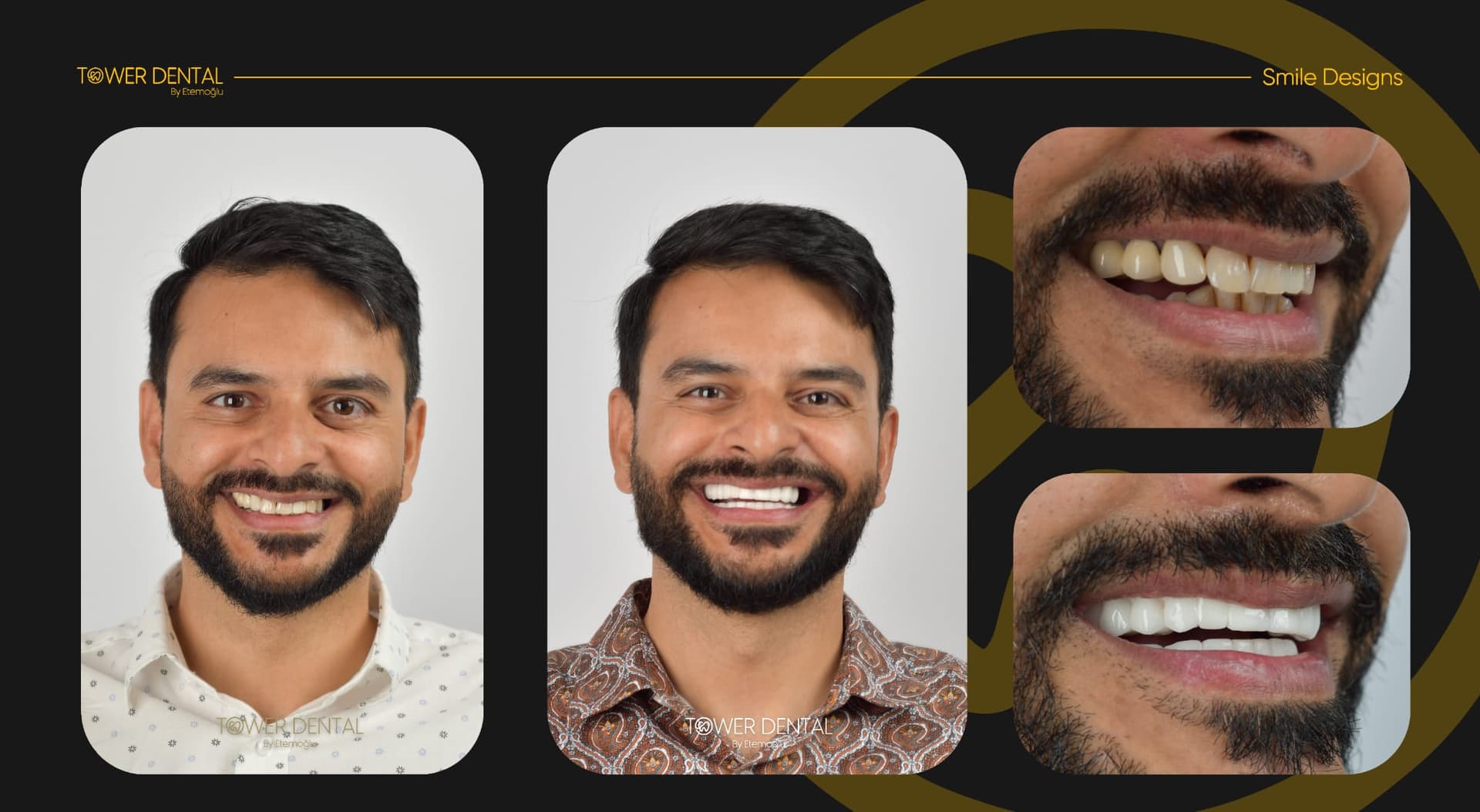 Before → After
Tower Dental Clinic
Verified clinicHollywood smile · E-max veneers · Istanbul
References & Sources
All clinical claims, pricing data, and statistics in this article are based on peer-reviewed research, official regulatory sources, and publicly verifiable data. We invite you to verify anything before making a treatment decision.
- 1.BBC News, "Turkey teeth: The dental tourism risks patients don't see." February 2023.
- 2.BBC, "Turkey Teeth: Bargain Smiles or Big Mistake?" — documentary investigating dental tourism risks, 2022.
- 3.Euronews, "Medical tourism: Dental expert explains why Turkey teeth can be a costly mistake." October 2024.
- 4.General Dental Council (UK), "Going abroad for dental treatment" — patient guidance.
- 5.British Dental Association (BDA), "Dental tourism: Patients need to know the risks."
- 6.T.C. Saglik Bakanligi (Turkish Ministry of Health), Health Tourism Authorisation Regulations.
- 7.Kontakiotis, E.G. et al. (2015), "A prospective study of the incidence of asymptomatic pulp necrosis following crown preparation," Int. Endod. J., 48(6), 512-517.
- 8.Pjetursson, B.E. et al. (2012), "A systematic review of the survival and complication rates of implant-supported fixed dental prostheses after at least 5 years," Clin. Oral Implants Res., 23(S6), 22-38.
- 9.Sailer, I. et al. (2015), "All-ceramic or metal-ceramic tooth-supported fixed dental prostheses: a systematic review," Dent. Mater., 31(6), 603-624.
- 10.Türkiye Today, "1.5 million health tourists visited Türkiye in 2024, generating $3 billion in revenue." 2025.
Medical disclaimer: This article is for educational purposes and does not replace a clinical examination. Treatment outcomes vary between patients. Always consult a qualified dental professional.

About MyDentalFly
MyDentalFly is a UK-based platform that builds your treatment plan and matches you with vetted specialist clinics abroad — and a dentist at the clinic reviews and confirms every plan before you pay anything.
Our interactive assessment evaluates your dental needs and builds a bespoke package: every treatment explained, a matched clinic with reasons why, your named dentist, flight estimates, transport, and accommodation — all in one place. We maintain a small, vetted network across Turkey, Hungary and Poland, visit clinics in person, help arrange CBCT scans before you fly, and stay with you through the entire journey. Compare. Save. Smile.
Questions Pearl can answer about flying after dental surgery: when is it safe?
- “Is treatment abroad safe?”
- “What would my case cost?”
- “Which clinic suits me?”
She answers in your own language, using prices from clinics we have checked. No sign-up, and she never asks for a phone number to give you an answer.
Tap a question — Pearl answers
Prefer a person? WhatsApp us · 020 4634 2312 ·
Clinically reviewed before booking
Every dental package built on MyDentalFly is reviewed by a qualified dentist before it gets accepted. Our clinical reviewers include specialists like Dr. Hubert Trępatowski — 800+ All-on-4 procedures, trained under Professor Paulo Malo (pioneer of the All-on-4 technique), graduate of Jagiellonian University Medical Faculty, Krakow.
About the author
Adam Smith
Head of Patient Research, MyDentalFly
Adam leads patient research at MyDentalFly, personally vetting clinics across Turkey, Hungary, and Poland. He has reviewed over 200 clinic proposals, analysed patient outcomes, and helped coordinate treatment plans for patients across the UK, USA, and Europe.
Clinically reviewed by
Dr. Ertan EtemogluLead Dentist & Co-Founder, Tower Dental Clinic
26 years in practice · 8,000+ patients/year · Turkish & American Dental Association member · Featured on Reuters
Content last reviewed: 28 March 2026


