Dental Tourism: Platform vs WhatsApp
By Adam Smith, Head of Patient Research
Updated 28 March 2026 · Dental tourism researcher · Clinic vetting specialist · 40+ clinics assessed on-site
Clinically reviewed by Dr. Ertan Etemoglu, Lead Dentist & Co-Founder
Tower Dental Clinic, Istanbul · 26 years in practice · 8,000+ patients/year · Turkish & American Dental Association member · Featured on Reuters
About MyDentalFly
We build your treatment plan and match you with vetted specialist clinics in Turkey, Hungary and Poland — and a dentist at the clinic confirms every plan before you pay anything.
Vetted clinics only· Turkey · Hungary · Poland·1,875 verified prices
Pearl, our dental consultant
Pearl
Pearl · online
Hi, I'm Pearl 👋 Ask me anything about dental treatment abroad — or tell me what you need and I'll build your package.
Try asking about this

10,000 dental malpractice cases filed yearly in the US alone. The problem isn't the country — it's the lack of process.
The UK's General Dental Council received 1,401 formal complaints in 2024 — an 8% jump from the year before. Across the Atlantic, the US logs roughly 10,000 dental malpractice reports every single year. One in five American dentists will face a malpractice lawsuit during their career.
These aren't numbers from Turkey, Hungary, or Thailand. These are from two of the most regulated dental markets on earth.
Dental mishaps aren't a geography problem. They're a dentistry problem. And the way most patients currently navigate dental tourism — WhatsApp messages, Facebook group recommendations, and prayer — makes everything worse.
The Numbers Nobody Talks About
Before anyone says "just get it done at home," here's what the data actually shows:
| Country | Annual Dental Complaints | Source |
|---|---|---|
| UK | 1,401 GDC complaints (2024) + 2,023 NHS complaints to PHSO | GDC Fitness to Practise Report |
| USA | ~10,000 malpractice reports filed annually | National Practitioner Data Bank |
| USA | $125 million in dental malpractice payouts (2021) | NPDB |
And these are just the cases that get reported. The UK Parliamentary Ombudsman upheld or partly upheld 78% of dental complaints it investigated — compared to 42% five years earlier. That's not a rounding error. That's a system under strain.
Globally, dental implants have a 2-3% failure rate regardless of where they're placed. Around 21% of implant patients develop peri-implantitis — a bone-destroying infection around the implant. This happens in London, Los Angeles, and Istanbul at similar rates.
"I was in exactly the same situation while researching clinics. I read so many horror stories that I almost cancelled the whole idea."
The risk isn't unique to dental tourism. What IS unique is how little infrastructure exists to manage that risk when you're 2,000 miles from the dental chair.
Pearl
MyDentalFly’s dental consultant
Something worth knowing while you're reading: almost every dental decision comes down to two things a price list can't tell you — what condition the surrounding teeth and bone are in, and how permanent you want the result to be. Those are what make two people's treatment for the 'same' problem look completely different.
What's brought you here today?
The WhatsApp Problem
Right now, the dental tourism industry runs on WhatsApp. Millions of pounds of dental work — implants, full mouth restorations, veneer packages — coordinated through a messaging app designed for sharing memes with your mates.
Here's what that looks like in practice:
Before treatment: The clinic coordinator is responsive, friendly, sends voice notes, answers questions at midnight. You feel looked after.
After treatment: The same number goes quiet. Messages get read but not replied to. Weeks pass. You've got a problem with a crown margin and nobody's responding.
"Communication was excellent before I arrived but follow-up after returning home was poor"
It gets worse. Clinics rebrand. Coordinators leave. The WhatsApp number you've been messaging for six months suddenly belongs to a different clinic — or nobody at all. Your treatment records, X-rays, photos, and clinical notes? They exist only in that chat thread. Maybe.
We've watched this pattern repeat across dental tourism Facebook groups: patient has a problem, tries to contact the clinic through the only channel they have, gets ghosted, posts in a Facebook group, gets attacked by other patients who had a good experience. No records. No accountability. No independent party to step in.
Your dental records shouldn't live in a WhatsApp chat.
Directories List Clinics. Platforms Protect Patients.
Most dental tourism websites are directories. They list hundreds of clinics, show reviews, maybe offer a contact form. That's it. You pick a clinic the same way you'd pick a restaurant — reviews, photos, gut feeling.
The problem? Reviews can be managed. Photos can be curated. And once you've made your choice, the directory disappears from the picture entirely. If something goes wrong, you're on your own.
A platform is different. A platform sits in the middle of the relationship — before, during, and after treatment.
| Feature | Directory | Platform |
|---|---|---|
| Number of clinics | Hundreds | 10-15 vetted per city |
| Patient records | None | Full assessment file on platform |
| Communication | WhatsApp/email | Structured messaging, tracked |
| Pre-treatment preparation | None | Dental chart, photos, X-rays, assessment |
| If something goes wrong | You're alone | Platform can intervene |
| Clinic accountability | Reviews only | Ongoing relationship, can be delisted |
"Don't just look at price — check reviews and ask for before/after photos"
Good advice. But even that isn't enough when the reviews might be curated and the before/after photos are cherry-picked.
What a Proper Dental Tourism Platform Actually Does
Here's what changes when there's a platform in the middle:
Your patient file lives on the platform, not in a chat thread. Your dental chart, assessment answers, photos, and X-rays are stored independently. If a clinic rebrands, your coordinator leaves, or you want a second opinion — your records are yours. Always accessible. Always complete.
The clinic gets a proper brief before you arrive. Instead of fragmented WhatsApp messages, the clinic receives a structured patient file: your dental chart with marked teeth, your assessment answers, your photos, your medical history. We even generate summaries — flagging things like "this patient is nervous about sedation" or "they have a blood clotting condition." The clinic knows you before you sit in the chair.
Communication happens through the platform. Messages are tracked. Nothing disappears. If there's a dispute about what was agreed, there's a record. If a clinic goes quiet, the platform can follow up on your behalf.
Clinics are curated, not collected. We don't list 200 clinics and hope for the best. We work with a focused selection of vetted clinics per city. They know that staying on the platform means maintaining standards. That's leverage a directory doesn't have.
The platform can intervene. When a patient and clinic hit a communication breakdown — and it happens — an independent party can step in. Not as a lawyer or arbitrator, but as someone who can pick up the phone, get clarity, and move things forward.
Risk Reduction, Not Promises
Here's what we won't tell you: that using a platform guarantees a perfect outcome. It doesn't. No platform can.
Dental work carries inherent risk. Implants have a 2-3% failure rate globally. Crowns can chip. Gums can react to margins. These things happen in Harley Street, on Fifth Avenue, and in Istanbul.
"Get everything in writing before you pay"
What a platform does is reduce the variables that turn a manageable complication into a nightmare:
- No records? You have them — on the platform, always accessible
- Clinic not responding? The platform follows up
- Need a second opinion? Your complete file can be shared with any dentist
- Clinic closed or rebranded? Your data isn't lost
- Felt pressured during treatment? There's a documented record of what was originally agreed
The gap between "something went wrong" and "my life is ruined" is almost always a gap in process, communication, and records. That's what a platform closes.
The Real Question Isn't "Which Country?"
Scroll through any dental tourism Facebook group and you'll see the same question on repeat: "Can anyone recommend a clinic in Turkey/Hungary/Budapest?"
That's the wrong question. The right question is: "What process will protect me before, during, and after treatment — regardless of where I go?"
The answer isn't a WhatsApp number. It's not a five-star Google review. It's not even a friend's recommendation — though those help.
It's a structured process that gives the clinic everything they need to treat you well, gives you ownership of your records, and keeps an independent party in the middle in case things go sideways.
That's what a dental tourism platform is built to do.
Can a platform prevent dental complications?
No. Dental complications — implant failure (2-3% globally), peri-implantitis (affects 21% of implant patients), crown chipping — happen everywhere. What a platform does is ensure you have records, communication channels, and an independent party if complications arise. The difference between a complication and a catastrophe is usually process.
What happens to my records if a clinic closes or rebrands?
On WhatsApp, your records vanish with the chat thread. On a platform, your dental chart, assessment, photos, X-rays, and clinical notes are stored independently. They belong to you, not the clinic. You can share them with any dentist, anywhere, at any time.
Why don't clinics already use platforms for this?
Building a proper clinical communication platform is genuinely hard — much harder than setting up a WhatsApp Business account. Most clinics default to what's easy. But "easy for the clinic" and "safe for the patient" aren't the same thing. The clinics that do embrace structured platforms tend to be the ones that take patient outcomes seriously.
How is this different from booking through a dental tourism agency?
Agencies typically act as brokers — they connect you with a clinic and take a commission. Once you're in the chair, the agency is usually out of the picture. A platform stays in the middle throughout: your records live there, communication flows through it, and there's accountability on both sides. Think of it as the difference between a letting agent who finds you a flat and moves on, versus a property management platform that handles everything ongoing.
Are dental tourism horror stories as common as Facebook groups suggest?
Facebook groups amplify negative experiences because people with problems are more motivated to post than people who are happy. That said, the problems are real. The UK alone saw dental complaints rise 66% in five years. The issue isn't that dental tourism is uniquely dangerous — it's that the current infrastructure (WhatsApp, directories, word of mouth) doesn't protect patients when things do go wrong. A structured platform changes that equation.
See also: We Compared Dental Prices in 8 Countries
Next Steps
The candidacy checker tells you in 60 seconds if you're suitable for implants. The dental assessment builds your bespoke dental package — mapping your teeth and matching you with the right clinic. The savings calculator shows verified clinic prices vs home costs.
We've verified every clinic on our platform and removed eight that didn't meet our standards — unlike directories that list anyone who pays. Your dental tourism consultant coordinates everything once you're ready.
Guide: Dental Implants Abroad Guide
What your package would look like
Your package, building
ExamplePackage total
building…
—
Real results from verified clinics
Drag the slider to compare before & after
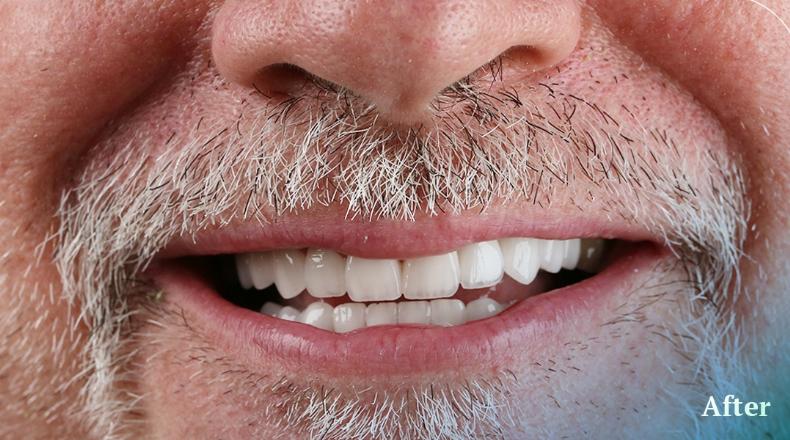
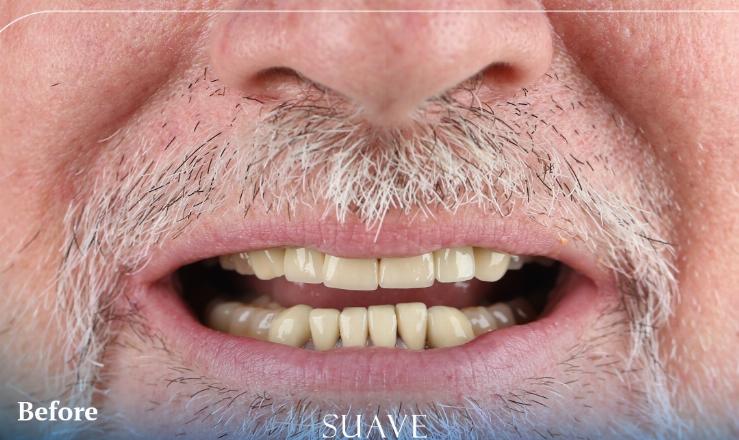
Suave Clinic
Verified clinicFull smile restoration · Istanbul
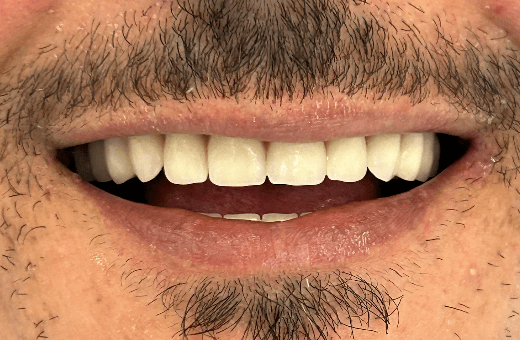
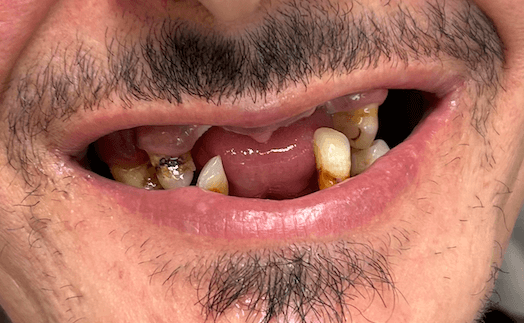
MDental Clinic
Verified clinicFull smile makeover · E-max veneers · Budapest
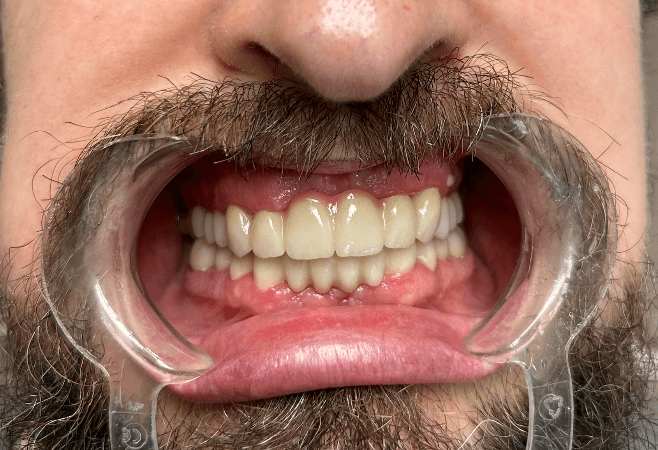
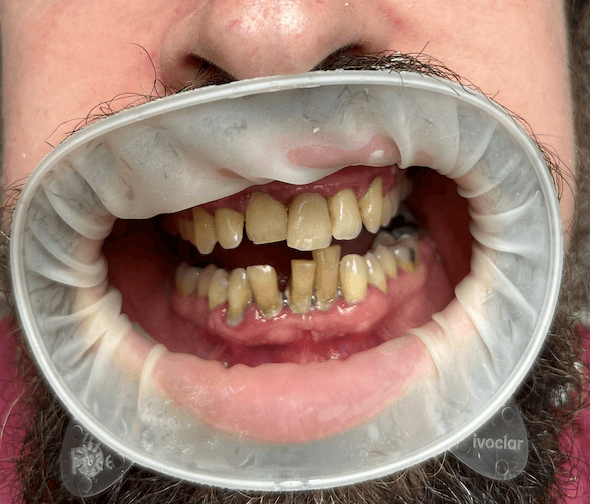
MDental Clinic
Verified clinicCrowns & restoration · Budapest
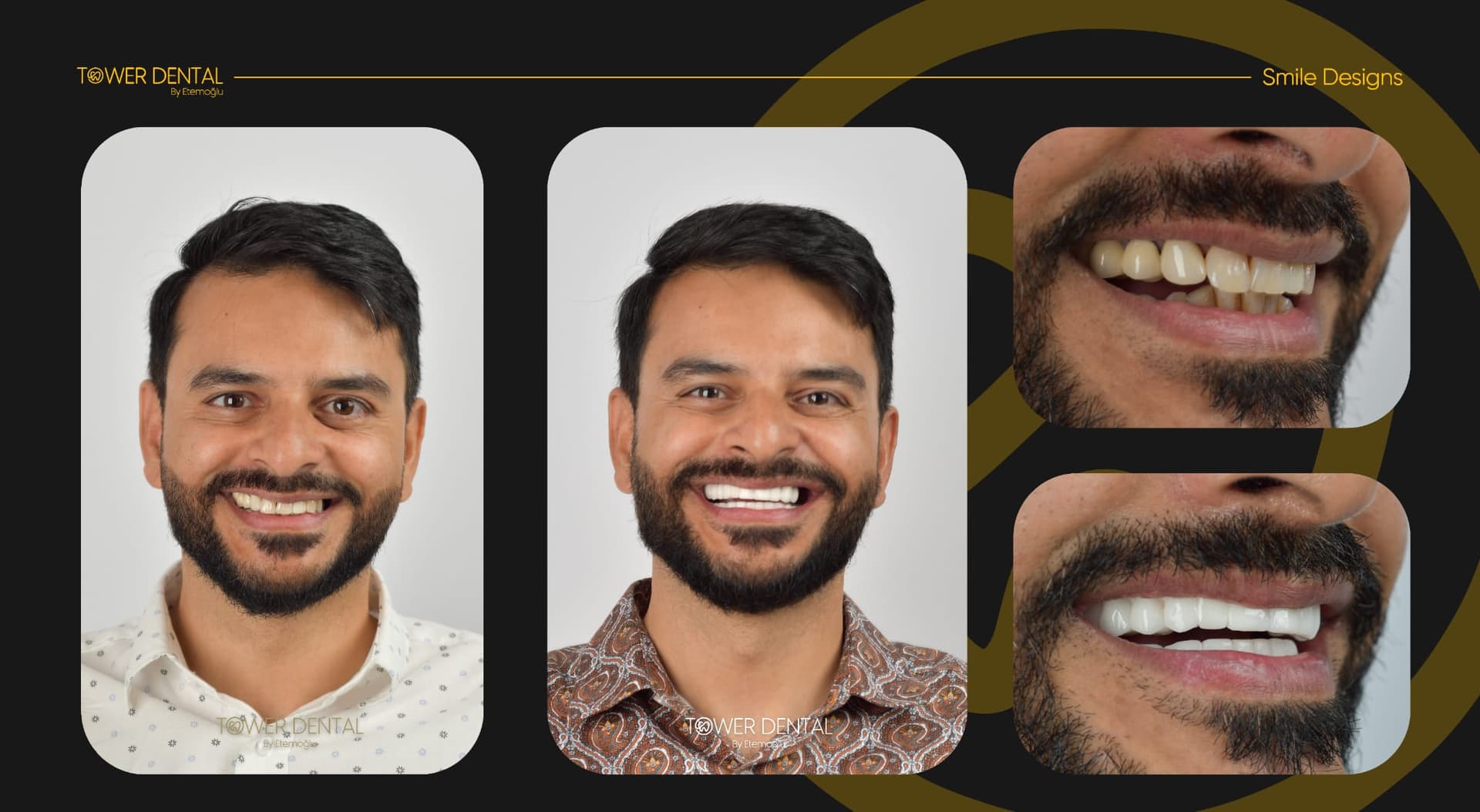 Before → After
Tower Dental Clinic
Verified clinicHollywood smile · E-max veneers · Istanbul
References & Sources
All clinical claims, pricing data, and statistics in this article are based on peer-reviewed research, official regulatory sources, and publicly verifiable data. We invite you to verify anything before making a treatment decision.
- 1.BBC News, "Turkey teeth: The dental tourism risks patients don't see." February 2023.
- 2.BBC, "Turkey Teeth: Bargain Smiles or Big Mistake?" — documentary investigating dental tourism risks, 2022.
- 3.Euronews, "Medical tourism: Dental expert explains why Turkey teeth can be a costly mistake." October 2024.
- 4.General Dental Council (UK), "Going abroad for dental treatment" — patient guidance.
- 5.British Dental Association (BDA), "Dental tourism: Patients need to know the risks."
- 6.T.C. Saglik Bakanligi (Turkish Ministry of Health), Health Tourism Authorisation Regulations.
- 7.Kontakiotis, E.G. et al. (2015), "A prospective study of the incidence of asymptomatic pulp necrosis following crown preparation," Int. Endod. J., 48(6), 512-517.
- 8.Pjetursson, B.E. et al. (2012), "A systematic review of the survival and complication rates of implant-supported fixed dental prostheses after at least 5 years," Clin. Oral Implants Res., 23(S6), 22-38.
- 9.Sailer, I. et al. (2015), "All-ceramic or metal-ceramic tooth-supported fixed dental prostheses: a systematic review," Dent. Mater., 31(6), 603-624.
- 10.Türkiye Today, "1.5 million health tourists visited Türkiye in 2024, generating $3 billion in revenue." 2025.
Medical disclaimer: This article is for educational purposes and does not replace a clinical examination. Treatment outcomes vary between patients. Always consult a qualified dental professional.
About MyDentalFly
MyDentalFly is a UK-based platform that builds your treatment plan and matches you with vetted specialist clinics abroad — and a dentist at the clinic reviews and confirms every plan before you pay anything.
Our interactive assessment evaluates your dental needs and builds a bespoke package: every treatment explained, a matched clinic with reasons why, your named dentist, flight estimates, transport, and accommodation — all in one place. We maintain a small, vetted network across Turkey, Hungary and Poland, visit clinics in person, help arrange CBCT scans before you fly, and stay with you through the entire journey. Compare. Save. Smile.
Tap a question — Pearl answers
Prefer a person? WhatsApp us · 020 4634 2312 · or
Clinically reviewed before booking
Every dental package built on MyDentalFly is reviewed by a qualified dentist before it gets accepted. Our clinical reviewers include specialists like Dr. Hubert Trępatowski — 800+ All-on-4 procedures, trained under Professor Paulo Malo (pioneer of the All-on-4 technique), graduate of Jagiellonian University Medical Faculty, Krakow.
About the author
Adam Smith
Head of Patient Research, MyDentalFly
Adam leads patient research at MyDentalFly, personally vetting clinics across Turkey, Hungary, and Poland. He has reviewed over 200 clinic proposals, analysed patient outcomes, and helped coordinate treatment plans for patients across the UK, USA, and Europe.
Clinically reviewed by
Dr. Ertan Etemoglu
Lead Dentist & Co-Founder, Tower Dental Clinic
26 years in practice · 8,000+ patients/year · Turkish & American Dental Association member · Featured on Reuters
Content last reviewed: 4 September 2026