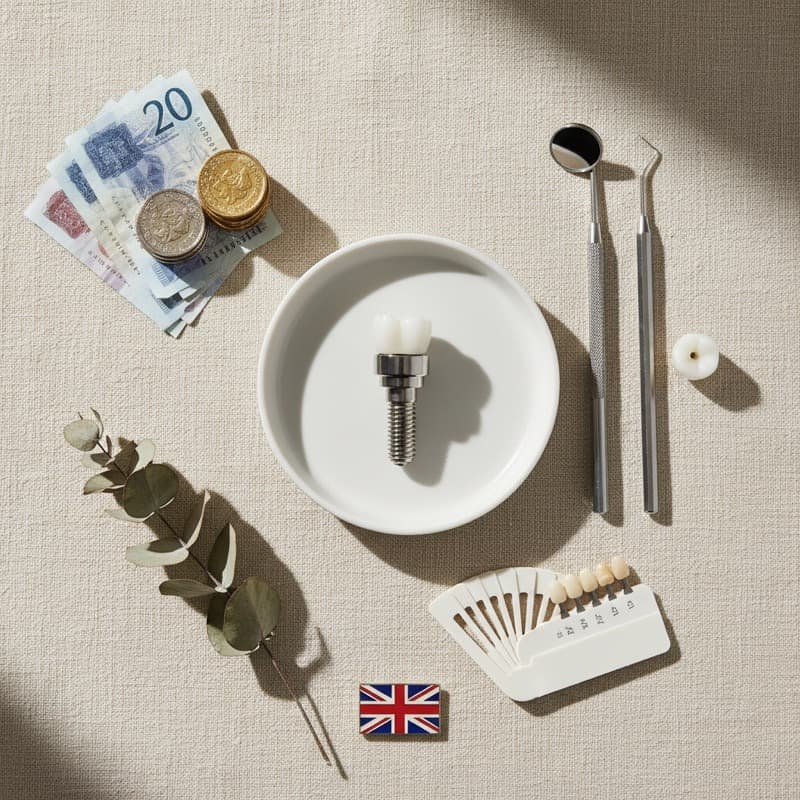
Turkey Teeth in 2026: Real Costs, Risks & Red Flags
By Adam Smith, Head of Patient Research
Updated 7 September 2026 · Dental tourism researcher · Clinic vetting specialist · 40+ clinics assessed on-site
Clinically reviewed by Dr. Ertan Etemoglu, Lead Dentist & Co-Founder
Tower Dental Clinic, Istanbul · 26 years in practice · 8,000+ patients/year · Turkish & American Dental Association member · Featured on Reuters

About MyDentalFly
We build your treatment plan and match you with vetted specialist clinics in Turkey, Hungary and Poland — and a dentist at the clinic confirms every plan before you pay anything.
Vetted clinics only· Turkey · Hungary · Poland·1,875 verified prices
Pearl, our dental consultant
Pearl
Pearl · online
Hi, I'm Pearl 👋 Ask me anything about the cost of dental treatment abroad — or tell me what you need and I'll build your package.
What I build for you

Smile Analyser
Send one photo. I tell you what I can see.
Try asking about this

What 'Turkey teeth' really means, what veneers and crowns in Turkey actually cost, and the red flags that separate safe clinics from horror stories.
You've heard the phrase "Turkey teeth" — and not in a good way. Behind the memes and the horror stories there's a real industry treating hundreds of thousands of people a year, most of them successfully. This guide covers what the phrase actually means, what it costs in 2026, what's genuinely in a package, and how to tell a clinic worth flying to from one worth avoiding.
What "Turkey Teeth" Actually Means
The phrase started on TikTok and Instagram around 2021. Young patients — many in their twenties — were flying to Turkey for full sets of veneers or crowns. Some results looked natural. Many didn't. The uniform, too-white, too-bulky look became the meme.
Here's what most people don't realise: "Turkey teeth" usually means crowns, not veneers. To fit crowns, a clinic reduces healthy teeth down to smaller shapes. That reduction is permanent. If those crowns fail in 10–15 years, the next step is usually more crowns, or implants — not a simple redo.
Porcelain veneers (E-max or similar) require far less tooth reduction. If you are weighing up the cosmetic change itself, our smile simulator shows the difference on your own photo before you commit to anything. A cautious clinic won't propose crowning healthy teeth for a purely cosmetic change, and if a clinic quotes you 20 crowns without seeing an X-ray, that tells you something.
The distinction matters more than the price, and it's the single thing most people get wrong before they book.
Pearl
MyDentalFly’s dental consultant
Something worth doing before you compare any prices: a quote is only comparable if you know what's inside it. The gap between two quotes for 'the same' treatment is usually the parts nobody itemises — the abutments on an implant, the temporary teeth, the follow-up visits. Same headline number, very different job.
Have you been quoted for anything yet?
How Much Do Turkey Teeth Cost in 2026?
Typical per-tooth prices in Turkey, against what the same work costs privately in the UK:
| Treatment | Turkey (typical) | Turkey range | UK private | You save |
|---|---|---|---|---|
| Zirconia crown | £160 | £120–£220 | £850 | ~81% |
| E-max crown | £180 | £140–£250 | £900 | ~80% |
| Porcelain crown | £130 | £100–£180 | £800 | ~84% |
| Porcelain veneer | £220 | £160–£300 | £900 | ~76% |
| E-max veneer | £250 | £180–£350 | £1,000 | ~75% |
| Composite veneer | £100 | £70–£150 | £400 | ~75% |
| "Hollywood smile" (8–10 veneers) | £2,200 | £1,600–£3,200 | £7,500 | ~71% |
A full upper-and-lower set of 20 zirconia crowns in Turkey typically lands between £3,200 and £4,400. The same work privately in the UK runs £17,000 or more.
Those are treatment prices, not trip prices. The next section is the part quotes leave out.
What's Actually in a "Turkey Teeth Package"
Most Istanbul and Antalya clinics quote an all-inclusive package. What that phrase covers varies enormously, so it's worth knowing the standard shape before you compare two of them.
Usually included:
- The treatment itself, at a fixed per-unit price
- Airport transfers, both directions
- Hotel, typically 5–7 nights, often 4-star, sometimes attached to the clinic
- A translator or patient coordinator
- Initial X-ray or CBCT scan on arrival
- Temporary crowns between the two fitting appointments
Usually not included, and worth asking about explicitly:
- Flights. Almost never included. Budget £150–£350 return from the UK depending on season.
- Extractions, root canals, bone grafts, sinus lifts. These get discovered on arrival and added to the bill. This is the most common source of a price rising after you land.
- Follow-up work back home if something needs adjusting.
- A guarantee you can actually use. A "lifetime guarantee" that requires you to fly back to Istanbul at your own expense is not the same as one that pays for remedial work.
The honest way to compare two packages is to ignore the headline number and ask both clinics the same question: what would take this price up once I'm there? A clinic that answers precisely is telling you more than one that says "nothing".
The Real Cost of a Dental Holiday in Turkey
For a typical 20-crown case, flying from the UK:
| Item | Typical cost |
|---|---|
| 20 zirconia crowns | £3,200–£4,400 |
| Return flights (2 trips, or 1 long trip) | £150–£350 |
| Hotel, if not in the package | £0–£450 |
| Food, transport, incidentals | £150–£300 |
| Contingency for unplanned extractions/root canals | £200–£600 |
| Realistic total | £3,700–£6,100 |
Against roughly £17,000 in the UK, the saving is real even at the top of that range. What it isn't is the £2,999 on the advert.
Most clinics work in two trips — a first visit for preparation and temporaries, a second a few months later for the permanent fit — or one longer stay of 7–10 days. Anyone offering a full-mouth restoration in three days is compressing steps that shouldn't be compressed.
Why It Went Viral — And Why That's a Problem
The backlash was earned. A minority of high-volume clinics were selling identical bright-white crown sets to anyone who walked in, including people whose teeth needed nothing structural doing to them. That's where the horror stories come from: not from Turkey, but from a business model that sells the same procedure to every patient regardless of what they need.
The problem for everyone else is that the meme flattened the whole country into one joke. Turkey has genuinely excellent dentists working to standards equal to anything in the UK, and it also has clinics that will crown twenty healthy teeth without hesitation. The phrase doesn't distinguish between them. You have to.
The "Chicklet Teeth" Problem
The most common complaint? The look. Oversized, blocky, unnaturally white teeth that sit too far forward from the gum line. Dentists call this the "chicklet" effect, and it happens for specific, avoidable reasons.
Why Bad Results Happen
Over-preparation of healthy teeth. Some clinics shave down perfectly healthy teeth far more than necessary, then cover them with thick crowns rather than thin veneers. This approach is faster and requires less skill. Labs can use cheaper materials. The result? Teeth that look bulky because they are bulky.
Wrong shade selection. Ultra-white shades (BL1 or "Hollywood white") look artificial on almost everyone. A skilled cosmetic dentist guides you toward a shade that looks bright but natural for your skin tone. Budget clinics often default to the whitest shade available because patients associate white with "new."
One-size-fits-all treatment plans. A proper cosmetic dentist designs each tooth individually. Size, shape, even slight imperfections vary to mimic natural teeth. Low-quality clinics use a standard template for everyone. That's why bad results all look the same.
Crowns instead of veneers. This is the biggest issue. Veneers require removing a thin layer of enamel (0.3-0.5mm). Crowns require shaving the tooth down to a small stump. Some clinics place crowns on every tooth because it's faster and easier. But patients lose healthy tooth structure they can never get back.
Good Work vs Bad Work
| Factor | Good Result | Bad Result |
|---|---|---|
| Tooth shape | Varies slightly between teeth, natural contours | Identical shape on every tooth |
| Colour | Bright but with subtle gradations | Flat, uniform, ultra-white |
| Gum line | Flush with gums, no visible margins | Visible line where restoration meets gum |
| Profile | Teeth sit naturally, not protruding | Teeth stick out or look too thick |
| Preparation | Minimal enamel removal (veneers) | Teeth ground to stumps (full crowns) |
| Material | E-max lithium disilicate | Cheap composite or low-grade porcelain |
Veneers vs Crowns: What You Actually Need
Understanding the difference between veneers and crowns is critical before you book anything.
Veneers are thin shells (0.3-0.5mm) bonded to the front of your existing tooth. The dentist lightly prepares the tooth by removing a small amount of enamel. The tooth behind the veneer remains mostly intact. Veneers work for cosmetic issues: discolouration, minor chips, small gaps, slightly crooked teeth.
Crowns are full caps that cover the entire tooth. The tooth must be filed down significantly to fit the crown. Crowns are appropriate for structurally damaged teeth: large cavities, fractures, root canal-treated teeth, or teeth with insufficient enamel for veneer bonding.
The problem? Some clinics put crowns on teeth that only need veneers. It's irreversible. Once a tooth is ground down for a crown, you'll need a crown or similar restoration for the rest of your life.
The Risks Nobody Talks About
Irreversible reduction. The most serious risk isn't a bad shade match, it's healthy tooth structure removed for cosmetic reasons. That decision cannot be undone later.
Nerve damage and root canals. Heavy reduction on a healthy tooth can irritate the pulp. When it does, the fix is a root canal — sometimes months after you're home.
Bite problems. A full-mouth restoration changes how your teeth meet. Getting that wrong produces jaw pain and headaches that are difficult and expensive to correct.
No local aftercare. If a crown fails in month eight, a UK dentist who didn't do the work may be reluctant to take it on, and will charge privately.
The price changing on arrival. Common, and usually because the original quote was made without diagnostic images.
None of these argue against treatment in Turkey. They argue against booking treatment anywhere on the basis of a price and a photo.
What It Costs to Fix Turkey Teeth That Went Wrong
Worth knowing before you choose on price alone. Remedial work in the UK, privately:
- Replacing a failed crown: £800–£900 per tooth
- Root canal on a crowned tooth, then a new crown: £1,300–£1,800 per tooth
- A tooth that can't be saved, replaced with an implant: £2,400–£3,000
- Full-mouth re-restoration: £15,000 and up
A set of crowns that cost £3,000 and fails at year five costs considerably more than one that cost £4,500 and lasts.
How to Tell a Good Clinic From a Bad One
Signals worth taking seriously:
- They ask for an X-ray or CBCT before quoting. A firm price with no diagnostic images is a marketing number, not a treatment plan.
- They push back on something you asked for. A clinic that talks you out of crowning healthy teeth is showing you their judgement.
- The dentist is named, with verifiable registration and training. Not "our expert team".
- The implant or ceramic brands are specified. E-max, Straumann, Nobel Biocare, Osstem — named, not "premium European materials".
- The written plan itemises everything, including what happens if extra work is found.
Signals worth walking away from: a price that only holds "if you book today", refusal to name the treating dentist, before-and-after galleries with obviously stock imagery, and any quote for a full set of crowns issued from a photograph.
What a Safe Process Actually Looks Like
- Diagnostics first. A recent X-ray or CBCT — ideally taken at home, so it's independent of the clinic selling you the treatment.
- A written, itemised plan naming materials, tooth numbers, and total cost.
- A second opinion on that plan, from someone with no financial interest in it.
- Preparation and temporaries on the first visit.
- A settling period, then the permanent fit.
- Aftercare arranged before you fly, not after something goes wrong.
Getting a CBCT scan in the UK before you commit is the single highest-value thing you can do. It costs around £100–£150 and it turns a quote based on a photograph into a quote based on your actual anatomy — which is what stops the price moving after you land.
Frequently Asked Questions
How much do Turkey teeth cost in 2026?
Individual crowns run £130–£180 each and veneers £220–£250. A full set of 20 crowns typically costs £3,200–£4,400 in treatment, or £3,700–£6,100 once flights, accommodation and a contingency for unplanned work are included.
Is it safe to get veneers in Turkey?
Turkey has clinics working to standards equal to anything in the UK, and clinics that don't. The risk sits in clinic selection rather than the country. The safety of any given plan depends on whether it's based on diagnostic images of your mouth and whether the reduction proposed is justified.
What's the difference between veneers and crowns?
A veneer is a thin facing bonded to the front of a tooth, needing minimal reduction. A crown covers the whole tooth and requires reshaping it substantially. Most "Turkey teeth" are crowns. If a clinic quotes "veneers" at crown prices for twenty teeth, ask which one they actually mean.
How long do Turkey teeth last?
Well-made zirconia or E-max crowns last comparably to the same materials fitted anywhere — commonly quoted as 10–15 years, depending on the fit, the bite, and gum health. The material matters less than the dentistry underneath it.
What's included in a Turkey dental package?
Typically treatment, hotel, transfers, translator and an on-arrival scan. Typically not flights, and not extractions, root canals or bone grafts discovered on arrival. Ask what would increase the price before you book.
How many trips to Turkey do I need?
Most full-mouth cases are two trips, or one stay of 7–10 days. Anything promising a complete restoration in three days is compressing stages that need time.
Can my UK dentist fix Turkey teeth if something goes wrong?
Many will, privately, but some are reluctant to take on another clinic's work. Arranging UK aftercare before you travel is worth doing.
Is it cheaper to go to Turkey, Hungary or Poland?
Turkey is usually the lowest headline price. Poland and Hungary are closer, cheaper to fly to, and comparable on quality — which narrows the gap once travel is counted. Our country comparison sets the numbers side by side.
Next Steps
If you're considering treatment in Turkey, the order that protects you is: get diagnostic images first, get an itemised written plan second, and compare clinics on that plan rather than on a headline price.
You can talk to Pearl about your own case — describe what you need and you'll get an itemised breakdown with real prices from clinics we've checked, before you speak to anyone. Or read our guide to comparing clinics abroad for the questions worth asking.
What your package would look like
Your package, building
ExamplePackage total
building…
—
Real results from verified clinics
Drag the slider to compare before & after
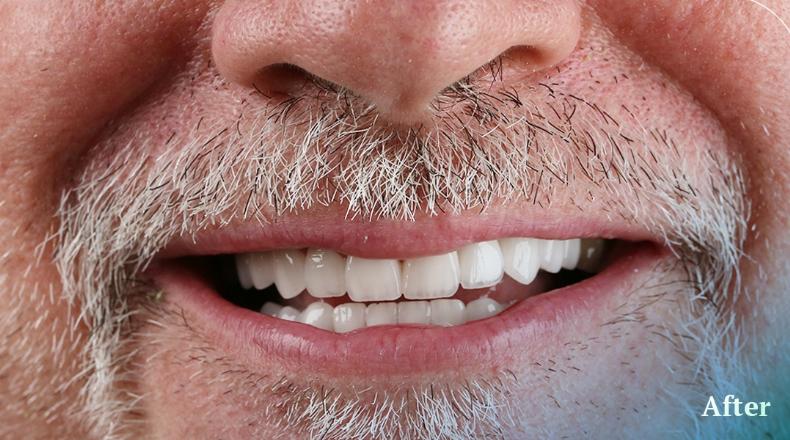
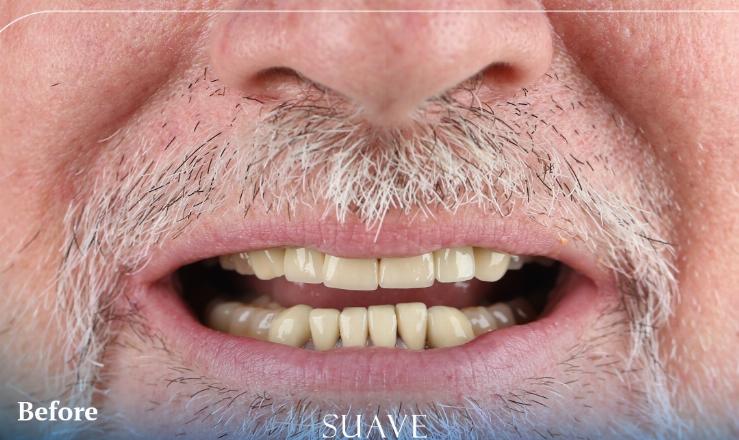
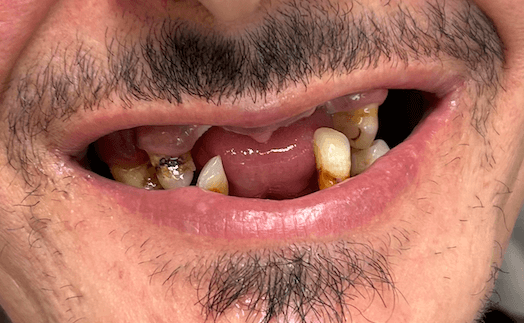
Suave Clinic
Verified clinicFull smile restoration · Istanbul
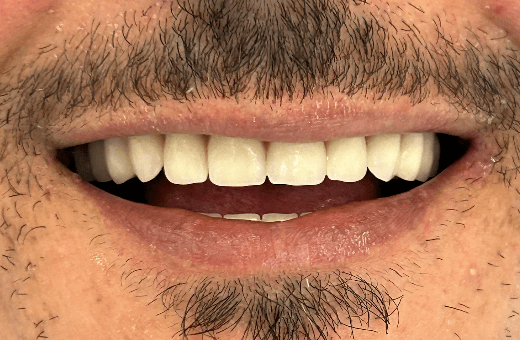
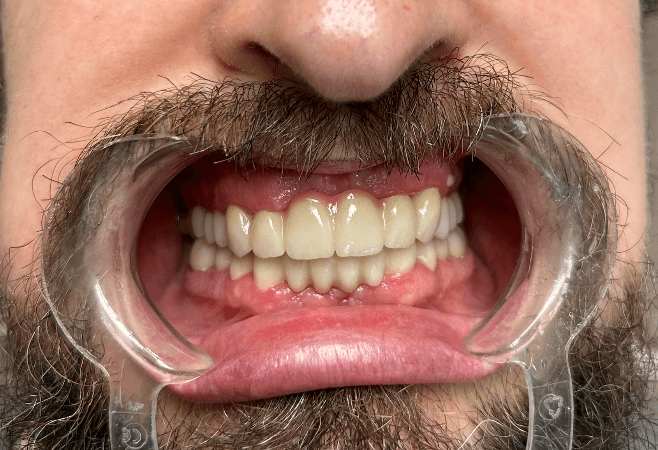
MDental Clinic
Verified clinicFull smile makeover · E-max veneers · Budapest
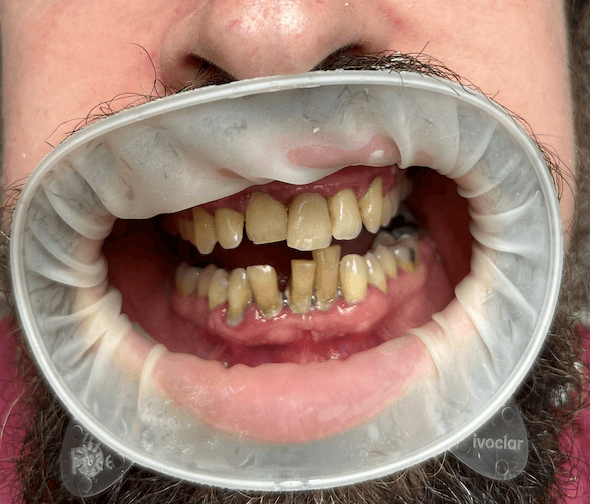
MDental Clinic
Verified clinicCrowns & restoration · Budapest
 Before → After
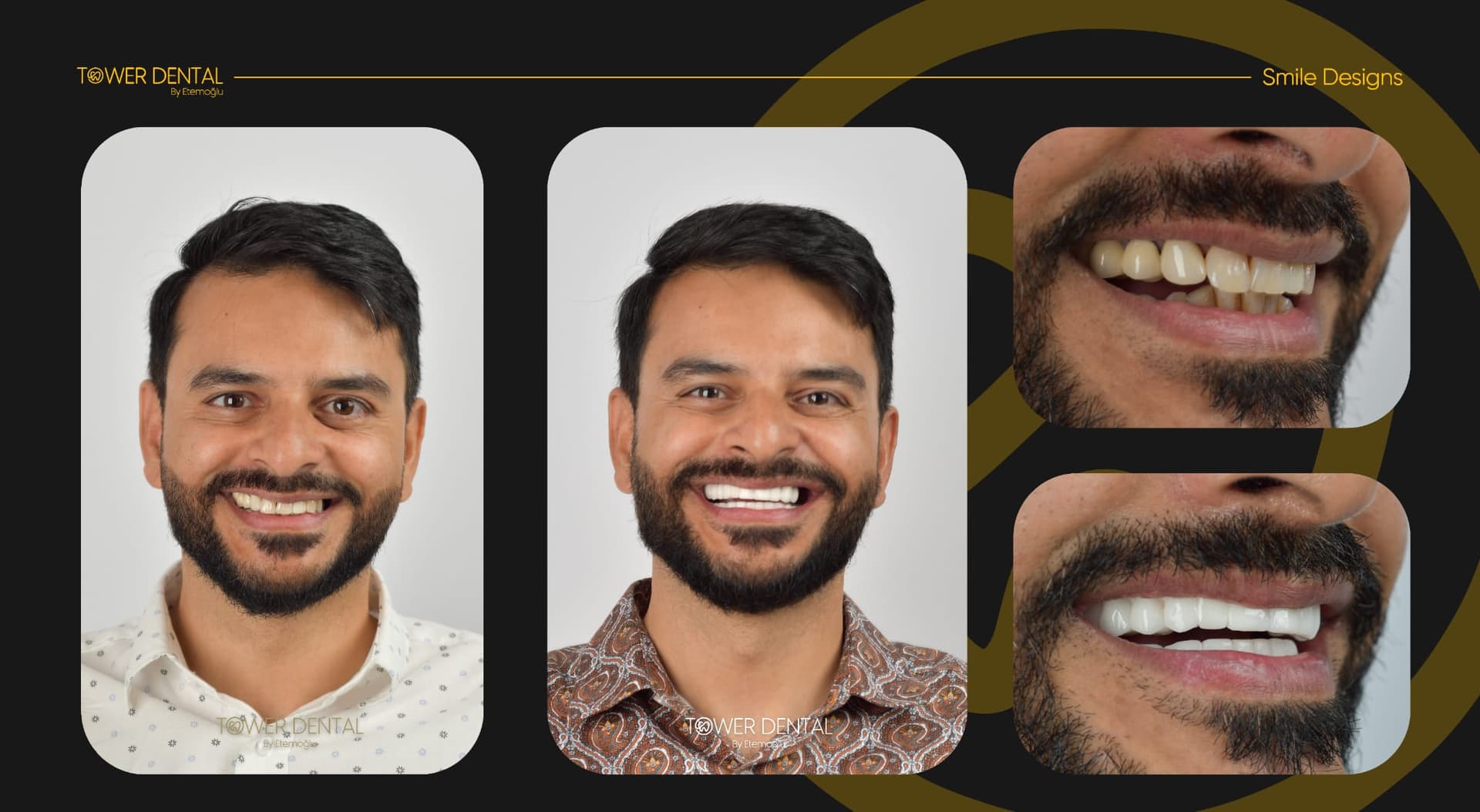
Tower Dental Clinic
Verified clinicHollywood smile · E-max veneers · Istanbul
The 60-Second Clinic Screen
Use this after you've collected 2-3 quotes from different clinics. Each clinic falls into one of three zones.
GREEN — Book with confidence
- Named treating dentist with verifiable credentials
- Video consultation with the actual dentist before any deposit
- CBCT scan required, itemised written treatment plan
- Specific zirconia brand and implant system named
- Night-guard included as standard for full-mouth work
- 10-year written warranty with named clinic legal entity
- Clear follow-up protocol post-treatment
- Willing to say "no" or stage treatment over multiple trips
YELLOW — Ask more questions
- Price is 20-40% below honest market rate but not absurd
- Treatment plan exists but is not fully itemised
- CBCT offered but not automatic
- Warranty described but not yet in writing
- Patient coordinator is first contact — insist on dentist video call
- Hotel included but you can decline and see the clinical price alone
- Reviews are good but thin on long-term follow-up detail
RED — Walk away
- Sub-£150 crown prices, "20 in 4 days"
- No dentist visible on website, coordinator-only
- No CBCT, no 3D planning, no digital scanner
- High-pressure "book today" sales tactics
- Licence number refused or impossible to verify
- No written informed consent in your language
- Night-guard not mentioned, no follow-up plan
- Warranty is verbal only, or tied to return flights at your cost
References & Sources
All clinical claims, pricing data, and statistics in this article are based on peer-reviewed research, official regulatory sources, and publicly verifiable data. We invite you to verify anything before making a treatment decision.
- 1.BBC News, "Turkey teeth: The dental tourism risks patients don't see." February 2023.
- 2.BBC, "Turkey Teeth: Bargain Smiles or Big Mistake?" — documentary investigating dental tourism risks, 2022.
- 3.Euronews, "Medical tourism: Dental expert explains why Turkey teeth can be a costly mistake." October 2024.
- 4.General Dental Council (UK), "Going abroad for dental treatment" — patient guidance.
- 5.British Dental Association (BDA), "Dental tourism: Patients need to know the risks."
- 6.T.C. Saglik Bakanligi (Turkish Ministry of Health), Health Tourism Authorisation Regulations.
- 7.Kontakiotis, E.G. et al. (2015), "A prospective study of the incidence of asymptomatic pulp necrosis following crown preparation," Int. Endod. J., 48(6), 512-517.
- 8.Pjetursson, B.E. et al. (2012), "A systematic review of the survival and complication rates of implant-supported fixed dental prostheses after at least 5 years," Clin. Oral Implants Res., 23(S6), 22-38.
- 9.Sailer, I. et al. (2015), "All-ceramic or metal-ceramic tooth-supported fixed dental prostheses: a systematic review," Dent. Mater., 31(6), 603-624.
- 10.Türkiye Today, "1.5 million health tourists visited Türkiye in 2024, generating $3 billion in revenue." 2025.
Medical disclaimer: This article is for educational purposes and does not replace a clinical examination. Treatment outcomes vary between patients. Always consult a qualified dental professional.

About MyDentalFly
MyDentalFly is a UK-based platform that builds your treatment plan and matches you with vetted specialist clinics abroad — and a dentist at the clinic reviews and confirms every plan before you pay anything.
Our interactive assessment evaluates your dental needs and builds a bespoke package: every treatment explained, a matched clinic with reasons why, your named dentist, flight estimates, transport, and accommodation — all in one place. We maintain a small, vetted network across Turkey, Hungary and Poland, visit clinics in person, help arrange CBCT scans before you fly, and stay with you through the entire journey. Compare. Save. Smile.
Questions Pearl can answer about turkey teeth in 2026: real costs, risks & red flags
- “Is treatment abroad safe?”
- “What would my case cost?”
- “Which clinic suits me?”
She answers in your own language, using prices from clinics we have checked. No sign-up, and she never asks for a phone number to give you an answer.
Tap a question — Pearl answers
Prefer a person? WhatsApp us · 020 4634 2312 ·
Clinically reviewed before booking
Every dental package built on MyDentalFly is reviewed by a qualified dentist before it gets accepted. Our clinical reviewers include specialists like Dr. Hubert Trępatowski — 800+ All-on-4 procedures, trained under Professor Paulo Malo (pioneer of the All-on-4 technique), graduate of Jagiellonian University Medical Faculty, Krakow.
About the author
Adam Smith
Head of Patient Research, MyDentalFly
Adam leads patient research at MyDentalFly, personally vetting clinics across Turkey, Hungary, and Poland. He has reviewed over 200 clinic proposals, analysed patient outcomes, and helped coordinate treatment plans for patients across the UK, USA, and Europe.
Clinically reviewed by
Dr. Ertan EtemogluLead Dentist & Co-Founder, Tower Dental Clinic
26 years in practice · 8,000+ patients/year · Turkish & American Dental Association member · Featured on Reuters
Content last reviewed: 7 September 2026