The Complete Guide to Dental Implants in Turkey (2026)
Turkey has become the world's leading destination for affordable, high-quality dental implants. This guide covers everything from implant brands and clinic standards to costs, travel logistics, and aftercare -- so you can make a fully informed decision.
£350-600
Per implant in Turkey
50-70%
Savings vs home country
95%+
Success rate
5-7 days
Typical trip duration
At a glance
£350-600 per implant, crown extra (vs £2,000-3,000 UK)
Dental Implants Turkey — Real 2026 Prices from 29 Verified Clinics
2 min 27 sec · Prices, brands, success rates, and how to start safely
About MyDentalFly
We build your treatment plan and match you with vetted specialist clinics in Turkey, Hungary and Poland — and a dentist at the clinic confirms every plan before you pay anything.
Hi, I'm Pearl 👋 Ask me anything about dental implants abroad — or tell me what you need and I'll build your package.
What I build for you
Prefer another language?
gap
worn
shade
Smile Analyser
Send one photo. I tell you what I can see.
Try asking about this
What Are Dental Implants?
A Dental Implant (Standard) costs £350-600 in Turkey compared to £2,000-2,500 in the UK, $3,000-5,000 in the USA, and €1,800-3,000 in Europe — a saving of 60-75%. Based on 2026 pricing from 29 verified clinics on MyDentalFly, Turkey is the most affordable destination for dental implants without compromising on quality, using the same implant brands (Nobel Biocare, Straumann, Osstem) found in UK and US practices.
Implants are widely considered the gold standard for replacing missing teeth. Unlike dentures, they do not slip or require adhesive. Unlike bridges, they do not require grinding down adjacent healthy teeth. A well-placed implant from a reputable brand can last 20 years or more with proper care, making them the most durable long-term solution available.
The procedure itself has a well-documented success rate exceeding 95% across major clinical studies. Modern techniques including 3D CBCT scanning, guided implant surgery, and immediate-loading protocols have made the treatment faster, more predictable, and less invasive than ever before.
Best for: People with 1 or more missing teeth who want a permanent, fixed solution that preserves bone and doesn't require grinding down adjacent healthy teeth.
Key Insight
Turkey uses the same Nobel Biocare, Straumann, and MIS implant brands as UK clinics — at 50-70% lower cost due to operating economics, not quality differences.
Types of Treatment
Dental Implant (Standard)
£350-500 per implant in Turkey
The titanium post and the abutment that connects to it, replacing the root of one missing tooth. The crown — the visible tooth on top — is a separate product and a separate price; see Zirconia and E-max crowns below. Standard implant brands include MIS (Israel), Osstem (South Korea), and Megagen (South Korea). These are globally certified, widely used brands with extensive clinical research backing their long-term performance. Standard implants are suitable for the vast majority of patients and represent excellent value.
Dental Implant (Standard) (Premium)
£600-900 per implant in Turkey
A premium-tier implant using brands such as Nobel Biocare (Switzerland), Straumann (Switzerland), or Neodent (part of Straumann Group). These brands carry the longest track records in clinical literature, with some studies spanning 30+ years. Premium implants often feature enhanced surface treatments for faster osseointegration and may be recommended for complex cases, patients with reduced bone density, or those who simply want the most established brand on the market.
All-on-4 Implants (Full Arch)
£4,000-6,500 per arch in Turkey
A full-arch restoration supported by just four strategically placed implants. Developed by Nobel Biocare and Professor Paulo Malo, the All-on-4 protocol allows patients who have lost most or all of their teeth to receive a fixed, non-removable bridge in a single surgical session. Two implants are placed vertically in the front of the jaw, and two are angled at up to 45 degrees in the posterior, maximising bone contact and often eliminating the need for bone grafts. Patients typically leave the clinic with a provisional set of fixed teeth on the same day.
All-on-6 Implants (Full Arch)
£5,500-8,000 per arch in Turkey
Similar to the All-on-4 concept but with six implants per arch, providing additional support and load distribution. The All-on-6 is often recommended for patients with adequate bone volume who want maximum stability, particularly in the upper jaw where bone density tends to be lower. The extra two implants reduce stress on each individual fixture and can support a longer-span bridge with greater confidence. Like All-on-4, a provisional fixed prosthesis is typically fitted on the day of surgery.
Success Rates & Risks
95-98%
overall success rate across major clinical studies
Success by case type
Single implant, healthy bone, non-smoker97-98%
Single implant, smoker89-94%
All-on-4 full arch94-98%
All-on-6 full arch95-98%
Implant with bone graft90-95%
Immediate-load (same-day teeth)92-96%
Why implants fail
Peri-implantitis (infection around the implant)
5-8% over 10 years
Bacterial infection of the gum and bone surrounding the implant. The most common long-term complication. Often caused by poor oral hygiene, smoking, or uncontrolled diabetes. Caught early, it is treatable with antibiotics and deep cleaning. If left untreated, it leads to bone loss and implant failure.
Failed osseointegration (implant doesn't fuse to bone)
1-2% of cases
The implant fails to integrate with the jawbone during the 3-6 month healing period. More common in smokers, patients with poor bone density, or those with uncontrolled diabetes. The implant is removed, the area heals for 2-3 months, and a new implant can usually be placed.
Mechanical failure (fractured implant or abutment)
<1% of cases
The titanium post or connecting abutment fractures due to excessive force, bruxism (teeth grinding), or manufacturing defect. More common with narrow-diameter implants in molar regions. Requires surgical removal and replacement.
Prosthetic failure (crown/bridge chips or loosens)
3-5% within 5 years
The visible crown or bridge attached to the implant chips, cracks, or comes loose. This is a restoration issue, not an implant failure — the implant itself is fine. The crown is simply repaired or replaced.
Complication rates
Complication
Frequency
Severity
Post-operative swelling and bruising
80-100%
mild
Temporary numbness (lower jaw)
5-10%
moderate
Infection at surgical site
2-5%
moderate
Sinus perforation (upper jaw implants)
1-3%
moderate
Permanent nerve damage
<0.5%
serious
Implant fracture
<0.5%
serious
Based on meta-analyses from the Journal of Oral & Maxillofacial Implants (2023), European Journal of Oral Implantology (2024), and International Journal of Oral & Maxillofacial Implants 10-year outcome data.
Are You a Candidate?
Ideal candidates
Healthy gums with no active periodontal disease
Sufficient jawbone density (verified by CBCT scan before treatment)
Non-smoker or willing to quit 2-4 weeks before and after surgery
No uncontrolled chronic conditions (diabetes, autoimmune disorders)
Good general health — able to undergo minor oral surgery under local anaesthesia
Committed to oral hygiene and follow-up care after treatment
Minimum requirements
Adequate jawbone volume and density (assessed via CBCT scan at the clinic)
Healthy gums — any existing gum disease must be treated first
Jaw growth complete (typically 18+ years old)
Willing to commit to two trips if standard healing protocol is recommended
Able to follow soft-food diet for 2-4 weeks post-surgery
Contraindications
Not suitable
Uncontrolled diabetes (HbA1c > 8%)
High blood sugar impairs healing and dramatically increases infection risk. Implants can proceed once diabetes is well-controlled (HbA1c under 7-8%). Your clinic will request a recent blood test.
Not suitable
Active cancer treatment (chemotherapy or radiation to the jaw)
Chemotherapy suppresses the immune system, and radiation to the jaw causes bone changes (osteoradionecrosis risk). Implants are typically delayed until at least 6-12 months after treatment completion, with oncologist clearance.
Not suitable
IV bisphosphonate therapy (for osteoporosis or bone cancer)
Intravenous bisphosphonates (Zometa, Aredia) carry a significant risk of jaw osteonecrosis after dental surgery. Oral bisphosphonates (Fosamax) are a relative contraindication — discuss with your doctor and dentist.
Caution
Smoking (10+ cigarettes per day)
Smoking reduces blood flow to the gums and bone, lowering success rates by 5-10%. Most clinics strongly recommend quitting at least 2 weeks before and 8 weeks after surgery. Some clinics will not place implants for heavy smokers.
Caution
Controlled diabetes (HbA1c 7-8%)
Implants are possible with slightly lower success rates (~93% vs 97%). Your clinic will want a recent HbA1c test and may prescribe prophylactic antibiotics.
Caution
Osteoporosis (without bisphosphonate therapy)
Reduced bone density may require longer healing times and careful implant planning. Bone grafts may be needed. Success rates are only slightly lower with proper planning.
Health conditions that affect outcomes
Controlled diabetesSlightly lower success rate (~93%). Requires HbA1c < 8% and may need prophylactic antibiotics.
Smoking (light, <10/day)Success rate drops to 89-94%. Must stop 2 weeks before and 8 weeks after surgery.
Blood thinners (warfarin, aspirin)Does not prevent implants. Your dentist and GP will coordinate dosage adjustment around surgery.
OsteoporosisMay need bone graft. Healing time may be extended. Avoid if on IV bisphosphonates.
Heart conditionsStable heart conditions are not a contraindication. Prophylactic antibiotics may be prescribed. Get GP clearance.
Bruxism (teeth grinding)Increases prosthetic failure risk. A night guard is essential post-treatment. Discuss with your dentist.
Price Comparison: Turkey vs Home Country
Prices shown in native currencies. Turkey prices in GBP.
UK average
Turkey price
Dental Implant (Standard)
Save 72%
UK
£1,500
Tur
£417
Dental Implant (Premium)
Save 65%
UK
£1,900
Tur
£663
All-on-4 Implants (Full Arch)
Save 62%
UK
£13,000
Tur
£5,000
All-on-6 Implants (Full Arch)
Save 57%
UK
£15,000
Tur
£6,500
Treatment
UK
USA
Europe
UAE
UK
Turkey
Saving
Dental Implant (Standard)
£1,500
$4,000
€2,800
AED 10,000
£1,500
£417
72%
Dental Implant (Premium)
£1,900
$5,000
€3,200
AED 12,000
£1,900
£663
65%
All-on-4 Implants (Full Arch)
£13,000
$25,000
€15,000
AED 55,000
£13,000
£5,000
62%
All-on-6 Implants (Full Arch)
£15,000
$30,000
€18,000
AED 70,000
£15,000
£6,500
57%
Bone Graft
£800
$1,500
€900
AED 4,000
£800
£200
75%
Sinus Lift
£1,200
$2,500
€1,400
AED 6,000
£1,200
£350
71%
Pearl
MyDentalFly’s dental consultant
Worth knowing before you compare any quotes: the number of implants you need isn't a preference, it's decided by how much bone you have and where the gaps sit. Two people missing the same number of teeth can need very different treatment — which is why quotes vary so wildly before anyone has looked at a scan.
How many teeth are you missing or need replacing?
What Can Go Wrong
Complication rates, how likely each is, and how clinics handle them
What Can Go Wrong
Infection at the surgical site
2-5% of casesPreventable
Bacterial infection in the gum tissue around the implant, causing swelling, pain, and possible pus discharge. Usually occurs within the first 1-2 weeks after surgery.
How clinics handle this:
Treated with antibiotics (usually prescribed preventively). If caught within days, oral antibiotics resolve it. Severe cases may need the area cleaned surgically. Rarely requires implant removal.
Nerve damage (inferior alveolar nerve)
<1% of casesPreventable
The nerve running through the lower jaw can be bruised or damaged during implant placement, causing numbness, tingling, or pain in the lower lip, chin, or tongue. Most cases are temporary (weeks to months).
How clinics handle this:
Temporary numbness usually resolves within 3-6 months as the nerve regenerates. Permanent damage is extremely rare (<0.5%) and occurs almost exclusively with lower jaw posterior implants. Guided surgery with 3D planning has significantly reduced this risk.
Implant loosening or failure to integrate
1-3% of casesPreventable
The implant does not fuse to the jawbone (osseointegrate) and becomes mobile. You may notice movement or discomfort when biting. This typically becomes apparent during the 3-6 month healing period.
How clinics handle this:
The loose implant is removed under local anaesthesia (a quick, minor procedure). The bone heals for 2-3 months, then a new implant is placed. Most clinics cover the replacement implant under their guarantee.
Sinus perforation (upper jaw only)
1-3% of upper jaw casesPreventable
When placing implants in the upper back jaw, the drill or implant can perforate the sinus membrane. This is more likely when bone height is limited (which is why sinus lifts exist).
How clinics handle this:
Small perforations heal on their own with antibiotics and nasal precautions (no blowing nose, no flying for 7-10 days). Larger perforations require a sinus lift procedure to repair the membrane and add bone graft material. Experienced surgeons detect this immediately during surgery.
Crown or prosthesis damage
3-5% within 5 yearsPreventable
The porcelain or zirconia crown on top of the implant chips, cracks, or detaches. More common with bruxism (teeth grinding) or biting hard foods too soon after fitting.
How clinics handle this:
The crown is repaired or replaced — the implant itself is unaffected. Most clinics include crown warranty (typically 2-5 years). Replacement crowns cost £150-300 in Turkey vs £500-1,000 in the UK.
If something goes wrong after you return home
MyDentalFly provides direct messaging with your clinic through our patient portal — no chasing emails or phone numbers. If you experience severe pain, swelling that doesn't subside after 48 hours, or signs of infection after returning home, message your clinic directly through the platform. If your clinic doesn't respond within an adequate timeframe, we step in and intermediate on your behalf until the issue is resolved. Your clinic will advise whether remote management (antibiotics, monitoring) is sufficient or if you need to see a local dentist. In urgent cases, your UK/home dentist can perform emergency care — bring your full treatment records and X-rays (downloadable from your patient portal).
Most verified clinics on our platform offer 5-10 year guarantees on implant posts and 2-5 years on crowns/prosthetics. If an implant fails within the guarantee period, the clinic covers replacement (implant, abutment, and crown) at no cost. You pay only for travel. Some clinics also cover accommodation for revision visits.
The Process: Step by Step
1
Online Assessment and Treatment Planning
1-3 days
You complete a detailed dental questionnaire and upload any existing X-rays or panoramic scans through our platform. Our system generates an intelligent treatment plan based on your dental chart, identifying which teeth need implants, whether bone grafting may be required, and which implant type suits your situation. You receive preliminary pricing from multiple accredited clinics so you can compare options before committing to travel.
2
Clinic Selection and Booking
1-7 days
Review detailed clinic profiles including accreditations (JCI, ISO, Turkish Ministry of Health), dentist qualifications, implant brands used, patient reviews, and before-and-after galleries. Once you select a clinic, you secure your booking with a deposit. Your clinic assigns a dedicated patient coordinator who will manage your schedule, airport transfers, and accommodation details.
3
Arrival and In-Person Consultation
Day 1
On arrival in Turkey (typically Istanbul or Antalya), your clinic arranges airport pickup and hotel check-in. Your first appointment includes a comprehensive oral examination, fresh 3D CBCT scan, and a face-to-face consultation with your implant surgeon. The dentist confirms or adjusts the treatment plan based on the in-person findings. You review and approve the final plan before any work begins.
4
Implant Placement Surgery
Day 1-2
The implant surgery itself is performed under local anaesthesia, with sedation available for anxious patients. Using guided surgery protocols and the 3D scan data, the surgeon places the titanium implant posts into the jawbone with sub-millimetre precision. Each implant placement takes approximately 20-40 minutes. For All-on-4 and All-on-6 cases, all implants for a full arch are placed in a single session. You will receive detailed post-operative instructions and any necessary medications.
5
Provisional Restoration (Same-Trip)
Day 2-5
For All-on-4 and All-on-6 patients, a provisional fixed bridge is attached to the implants within 24-48 hours of surgery, so you leave Turkey with functional teeth. For single implants in visible areas, a temporary crown may be placed for aesthetics. In cases where the dentist recommends a healing period before loading (typically 3-6 months), a temporary solution such as a healing cap or removable partial is provided.
6
Osseointegration Period
3-6 months
After returning home, you enter the healing phase where the implant integrates with your jawbone. This process, called osseointegration, typically takes 3-6 months depending on bone quality, implant location, and individual healing. During this time, you follow a soft-food diet initially and maintain careful oral hygiene. Your clinic stays in contact via the patient portal, and you can share progress photos or raise any concerns with your coordinator.
7
Final Restoration (Second Visit)
3-5 days (second trip)
Once osseointegration is confirmed via follow-up imaging, you return to Turkey for a shorter visit (typically 3-5 days) to receive your permanent crowns, bridge, or prosthesis. The final restoration is custom-fabricated in the clinic's on-site or partner laboratory, matched to your natural tooth shade and bite. After fitting and fine adjustments, you leave with your completed, permanent smile. Many clinics include a guarantee of 5-10 years on the final restoration.
Recovery: What to Really Expect
Day by day, pain levels, and when you can eat and fly normally
Recovery: What to Really Expect
1
Day 1 (surgery day)
Pain: Moderate (4-6/10)
Swelling begins within hours. Numbness from anaesthesia wears off after 2-4 hours, then dull aching pain sets in. Bleeding is minimal and controlled with gauze. Cold packs help significantly.
Soft/liquid food onlyNo hot drinksNo smokingNo exerciseSleep with head elevated
2
Day 2-3
Pain: Moderate, decreasing (3-5/10)
Swelling peaks around 48 hours post-surgery. Bruising may appear on the cheek or jawline (especially with multiple implants). Pain is manageable with prescribed painkillers (ibuprofen + paracetamol). Most patients describe it as less painful than expected.
Soft food onlyNo strawsNo smokingGentle salt water rinses
3
Day 4-7
Pain: Mild (2-3/10)
Swelling reduces noticeably. You can switch to over-the-counter painkillers. Many patients feel well enough for light tourism — restaurant meals, sightseeing. Stitches are typically still in place.
Soft to semi-soft foodNo crunchy/hard food on implant sideNo smoking
4
Week 2-3
Pain: Minimal (1-2/10)
Stitches dissolve or are removed (if non-dissolving). Gums are healing. Most patients are back to normal daily activities. If you had a provisional bridge (All-on-4), you can eat most foods carefully.
Avoid very hard foodsContinue gentle oral hygiene around implant site
5
Month 1-3
Pain: None (0/10)
Osseointegration is underway — the bone is growing around and fusing to the implant surface. No pain. The area feels stable. You follow normal oral hygiene with extra care around the implant.
No biting hard objects on the implantRegular brushing and interdental cleaning
6
Month 3-6 (second trip)
Pain: Minimal (1/10 during crown fitting)
You return for the final restoration. The dentist verifies osseointegration with an X-ray, takes impressions, and fits your permanent crown or bridge. Minor adjustments to bite may be needed. No surgery required.
Avoid hard foods for 48 hours while cement setsNormal life resumes
Return to work
Desk work: 2-3 days after surgery. Physical/manual labour: 5-7 days. Most patients combine treatment with a holiday and return to work after their trip.
Return to exercise
Light walking: next day. Gym/cardio: 5-7 days. Heavy lifting/contact sports: 2-3 weeks. Swimming: 2 weeks (to avoid infection risk).
Dietary restrictions
Day 1-3: Liquids and very soft foods (smoothies, soup, yoghurt, mashed potato)
Day 4-14: Soft foods (pasta, scrambled eggs, fish, steamed vegetables)
Week 2-6: Semi-soft foods, gradually reintroducing normal diet
Avoid: nuts, popcorn, hard bread, chewy sweets, and biting into hard fruits (apples) for 4-6 weeks
No alcohol for 48 hours after surgery (interacts with antibiotics and painkillers)
Travel note: Safe to fly 24-48 hours after surgery. Cabin pressure does not affect dental implants. If you had a sinus lift, wait 7-10 days before flying and avoid blowing your nose forcefully.
Why Turkey?
As of 2026, Turkey performs over 1 million dental tourism procedures annually, making it one of the highest-volume dental tourism destinations in the world. This scale has driven investment in modern facilities, advanced equipment, and well-trained specialists. The country's cost advantage stems from lower operating costs, favourable exchange rates, and government incentives for medical tourism -- not from lower quality materials or less experienced dentists.
Same Implant Brands
Nobel Biocare, Straumann, MIS — identical to UK/US clinics with full manufacturer warranty.
JCI-Accredited Clinics
Turkey has more JCI-accredited hospitals than any country outside the US. JCI-accredited clinics meet recognised international safety standards.
50-70% Savings
Lower operating costs, not lower quality. Labs, rent, and labour cost a fraction of Western prices.
3D Imaging & Guided Surgery
CBCT scans, digital planning, and computer-guided implant placement are standard, not premium add-ons.
Short Travel Time
3.5-hour flight from London, no visa required for UK citizens. Many clinics offer airport transfers.
Fast Turnaround
Most implant cases completed in 5-7 days. Some clinics offer same-day temporary teeth with All-on-4.
Verified clinics
Your dental implant plan, clinically reviewed
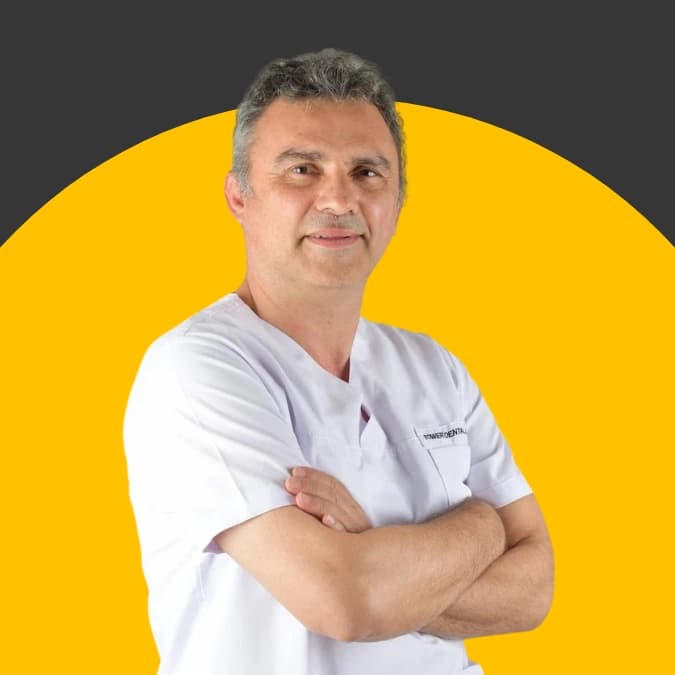
1 You complete the dental assessment2 You get your bespoke dental package3 Dentists like these review it
Your report goes to up to 3 clinics. Their lead dentists create a clinically reviewed treatment plan with exact pricing — so you know everything before you decide.
You've done the reading. Want the file for your own case?
We deal with patients worldwide — from the UK, USA, Canada and across Europe. Tell us what’s bothering you and get your plan with real prices from clinics picked for your case — then their own written quotes, all on one page. No talking to ten clinics, no year of research: one assessment, one page, one day.
Free until you book a date · Everything in writing · A human any time
Long-Term Costs & Maintenance
What it costs to keep over 5, 10 and 15 years
Long-Term Costs & Maintenance
Ongoing maintenance
Frequency
What
Cost
Every 6 months
Professional cleaning around implants (hygienist)
£50-80 in Turkey, £80-150 in UK
Annually
Dental check-up with periapical X-ray of implant
£30-50 in Turkey, £60-120 in UK
Daily
Interdental brushes or water flosser around implant abutments
£5-15/month (home care)
Component lifespan
Implant post (titanium screw)(Lifetime (20-30+ years))
£350-600 in Turkey (only if failure occurs)
Abutment (connector piece)(15-25 years)
£100-200 in Turkey
Crown (single tooth)(10-15 years)
£150-300 in Turkey, £500-1,000 in UK
All-on-4/6 bridge (full arch)(10-15 years (acrylic) / 15-20 years (zirconia))
£2,000-4,000 in Turkey for full replacement
Night guard (for bruxism)(2-5 years)
£50-100 in Turkey, £200-400 in UK
Projected costs over time
Year 5
£200-400
Routine maintenance only. Two hygienist visits + annual check-up.
Year 10
£400-900
Maintenance + possible crown replacement (£150-300 per crown in Turkey).
Year 15
£600-1,500
Maintenance + likely crown replacement. All-on-4 bridge may need replacement.
Total cost of ownership
Over 15 years, a Dental Implant (Standard) placed in Turkey (including the implant, crown, all maintenance, and one crown replacement) costs approximately £1,000-1,500. The same treatment pathway in the UK would cost £3,500-5,500. For All-on-4 full arch: Turkey total ~£8,000-12,000 over 15 years vs £25,000-40,000 in the UK.
Alternatives to Consider
Other treatments that may suit your case better, with pros and cons
Alternatives to Consider
Budget (upfront vs long-term)Bone density and volumeNumber of missing teethLocation in the mouth (front vs back)Health conditionsWillingness to travel twiceHow long you want the restoration to last
Dental Bridge (fixed)
Turkey
£200-500 per unit in Turkey
UK
£800-1,500 per unit
You are missing 1-3 adjacent teeth and the teeth on either side are healthy enough to support crowns. A faster, lower-cost option than implants with no surgery required.
Pros
No surgery — fitted in 2 visits over 5-7 days
Lower upfront cost than implants
Proven long-term track record (10-15 years)
Same-trip completion (no second visit needed)
Cons
Requires grinding down healthy adjacent teeth to anchor the bridge
Does not prevent bone loss where the tooth is missing
If an anchor tooth fails, the entire bridge needs replacing
Harder to clean underneath — floss threaders required
Removable Partial Denture
Turkey
£150-400 in Turkey
UK
£500-1,500
Budget is the primary concern, you are not a candidate for implants (health reasons or insufficient bone), or you need a temporary solution while saving for implants.
Pros
Lowest cost option
No surgery required
Can be made in 2-3 days
Easy to adjust or add teeth later
Cons
Removable — must be taken out at night and for cleaning
Less stable — may move when eating or speaking
Does not prevent bone loss
Can feel bulky and uncomfortable initially
Needs replacing every 5-8 years as bone shape changes
Maryland Bridge (resin-bonded)
Turkey
£200-400 in Turkey
UK
£700-1,200
You are missing a single front tooth and want a minimally invasive option. The adjacent teeth are healthy and you want to avoid grinding them down.
Pros
Minimal preparation of adjacent teeth (just the back surface)
No surgery
Good aesthetics for front teeth
Lower cost than a conventional bridge
Cons
Only suitable for front teeth (not strong enough for molars)
Less durable than conventional bridges (5-10 years)
Can detach under heavy biting forces
Not suitable for patients who grind their teeth
Do Nothing (leave the gap)
Turkey
£0
UK
£0
The missing tooth is not visible, doesn't affect your bite, and you are aware of the long-term consequences.
Pros
Zero cost
No treatment time or recovery
Cons
Adjacent teeth shift into the gap over time (months to years)
Opposing tooth over-erupts (grows into the gap)
Bone loss at the extraction site (up to 25% in the first year)
Can cause bite problems and jaw pain
Makes future implant placement harder (may need bone graft)
Affects chewing efficiency and can limit diet
Key Takeaway
Dental implants in Turkey use the same brands and techniques as the UK — at 50-70% less. But success depends on candidacy screening, implant brand selection, and choosing a clinic with genuine implant experience. Build your bespoke dental package first — you'll see exactly what you need, what it costs, and get matched with a clinic suited to your case.
Example dental packages
Real prices from verified clinics — including flights and hotel
Frequently Asked Questions
Are dental implants in Turkey safe?
Yes. Turkey's top dental clinics operate under strict regulatory oversight from the Turkish Ministry of Health and hold international accreditations such as JCI and ISO 9001. The implant brands used -- Nobel Biocare, Straumann, MIS, Osstem -- are the same globally certified products used by dentists in the UK, USA, and Europe. The key to safety is choosing an accredited clinic with experienced implantologists, which is exactly what our platform verifies before listing any clinic.
What implant brands do Turkish clinics use?
Reputable Turkish clinics use internationally recognised brands. Standard-tier options include MIS (Israel), Osstem (South Korea), and Megagen (South Korea), all of which have extensive clinical research and global certifications. Premium-tier options include Nobel Biocare and Straumann (both Swiss), which have the longest clinical track records in implant dentistry, some exceeding 30 years of published data. Your clinic will confirm the exact brand before treatment begins, and it will be documented in your treatment plan.
Is the implant procedure painful?
The surgery is performed under local anaesthesia, so you should feel pressure but not pain during the procedure. Sedation options (oral or IV) are available for patients who are particularly anxious. Post-operative discomfort is typically mild to moderate and well-managed with prescribed painkillers and anti-inflammatory medication. Most patients report that the procedure was less uncomfortable than they expected. Swelling and tenderness peak around 48-72 hours and subside within a week.
How long do dental implants last?
The titanium implant post itself is designed to last a lifetime -- long-term studies show survival rates above 95% at 10 years and above 90% at 20 years. The crown or prosthesis attached to the implant may need replacement after 10-20 years due to normal wear, similar to any dental restoration. Longevity depends on good oral hygiene, regular dental check-ups, avoiding smoking, and managing conditions like gum disease or bruxism.
What is the success rate of dental implants in Turkey?
The overall success rate for dental implants in accredited Turkish clinics is consistent with global averages: approximately 95-98% for standard cases. Success rates can be slightly lower for complex cases involving significant bone loss, smoking patients, or uncontrolled diabetes. Your dentist will assess your individual risk factors during the initial consultation and CBCT scan, and will recommend any preparatory procedures (such as bone grafting or sinus lifting) needed to maximise success.
What is included in the price of a dental implant in Turkey?
Clinics differ in what a headline implant price covers, and this is the single most common source of surprise on the final bill: some quote the implant alone (post and abutment), others quote an all-in package. A standard implant package in Turkey typically includes: the implant post, abutment, and porcelain or zirconia crown; the CBCT scan and consultation; all surgical and prosthetic appointments; post-operative medication; and follow-up check-ups during your stay. Many clinics also include airport transfers and hotel accommodation. Items that are usually separate include: bone grafts or sinus lifts (if needed), sedation, and additional restorative work. Always confirm exactly what is included in your quote before booking.
Do I need to fly back for a second visit?
In most cases, yes. Single implants typically require an initial visit for placement (2-3 days) and a return visit after 3-6 months of healing for the permanent crown (2-3 days). All-on-4 and All-on-6 patients receive a provisional fixed bridge on the same trip but return after 4-6 months for the permanent prosthesis. Some clinics offer same-day immediate-loading protocols for single implants in select cases, potentially completing treatment in one trip. Your treatment plan will specify the expected number of visits.
What happens if something goes wrong after I return home?
Reputable clinics provide written guarantees covering implant failure and prosthetic defects, typically for 5-10 years. If an issue arises, you contact the clinic through the patient portal, share photos or X-rays, and the clinical team advises on next steps. Minor issues can often be addressed by a local dentist in your home country. If the implant itself fails within the guarantee period, the clinic will typically cover replacement at no additional surgical fee -- you would only need to arrange travel. Our platform also helps mediate if any dispute arises.
What is the recovery time after implant surgery?
Most patients return to normal daily activities within 2-3 days of surgery. You should plan for a soft-food diet for the first 1-2 weeks and avoid strenuous exercise for about a week. Swelling and mild discomfort typically peak at 48-72 hours and resolve within 7-10 days. You are generally fine to fly home 2-3 days after surgery. The full osseointegration period (bone healing around the implant) takes 3-6 months, but this does not prevent you from working or living normally -- it simply means you wait before receiving the final permanent crown.
Do Turkish clinics offer guarantees on dental implants?
Most reputable clinics -- including those on our platform -- provide a written treatment guarantee (commonly 5-10 years on implants). The exact terms are confirmed in your treatment plan. The specifics vary by clinic, but standard guarantees cover the implant post for 5-10 years (some offer lifetime on the post) and the crown or prosthesis for 3-5 years. The guarantee typically covers implant failure due to clinical reasons but may not cover failure caused by patient negligence (such as poor oral hygiene or smoking). Always review the guarantee terms in your treatment plan before proceeding.
What your package would look like
Your package, building
Example
Package total
building…
—
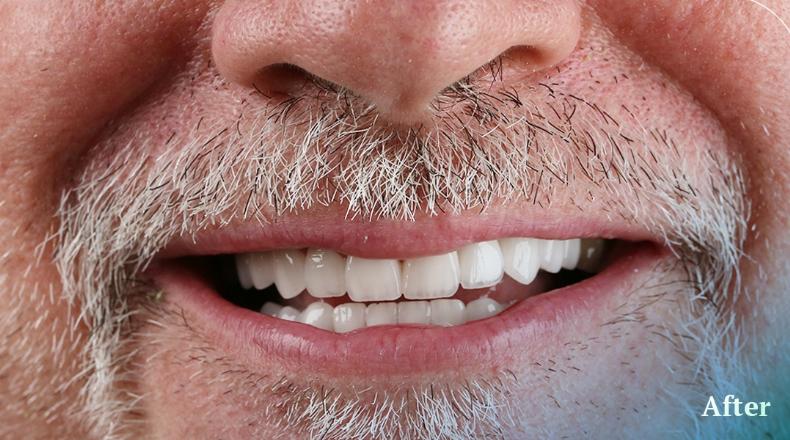
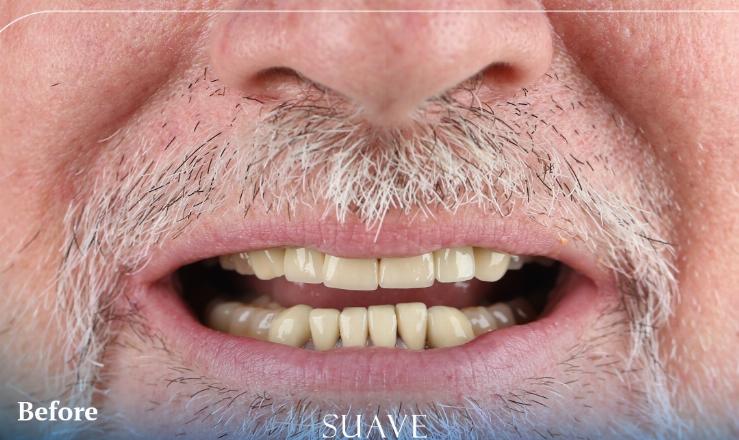
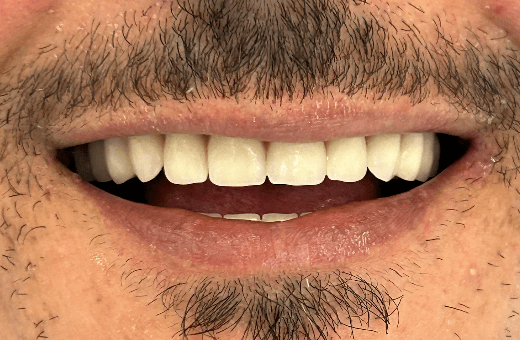
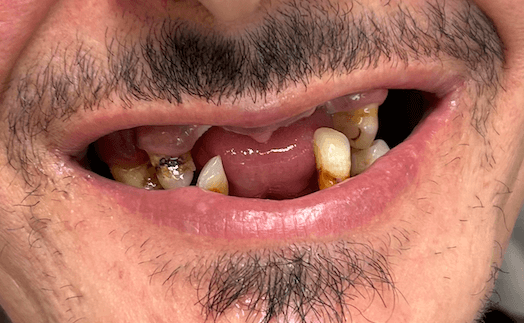
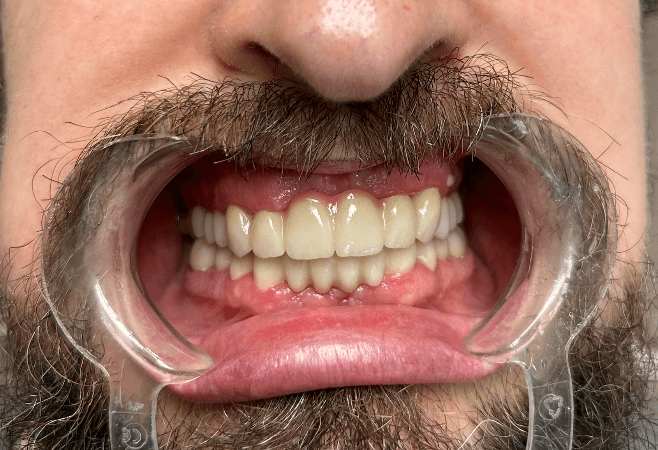
Real results from verified clinics
Drag the slider to compare before & after
AFTER
BEFORE
← Drag to compare →
Suave Clinic
Verified clinic
Full smile restoration · Istanbul
AFTER
BEFORE
← Drag to compare →
MDental Clinic
Verified clinic
Full smile makeover · E-max veneers · Budapest
AFTER
BEFORE
← Drag to compare →
MDental Clinic
Verified clinic
Crowns & restoration · Budapest
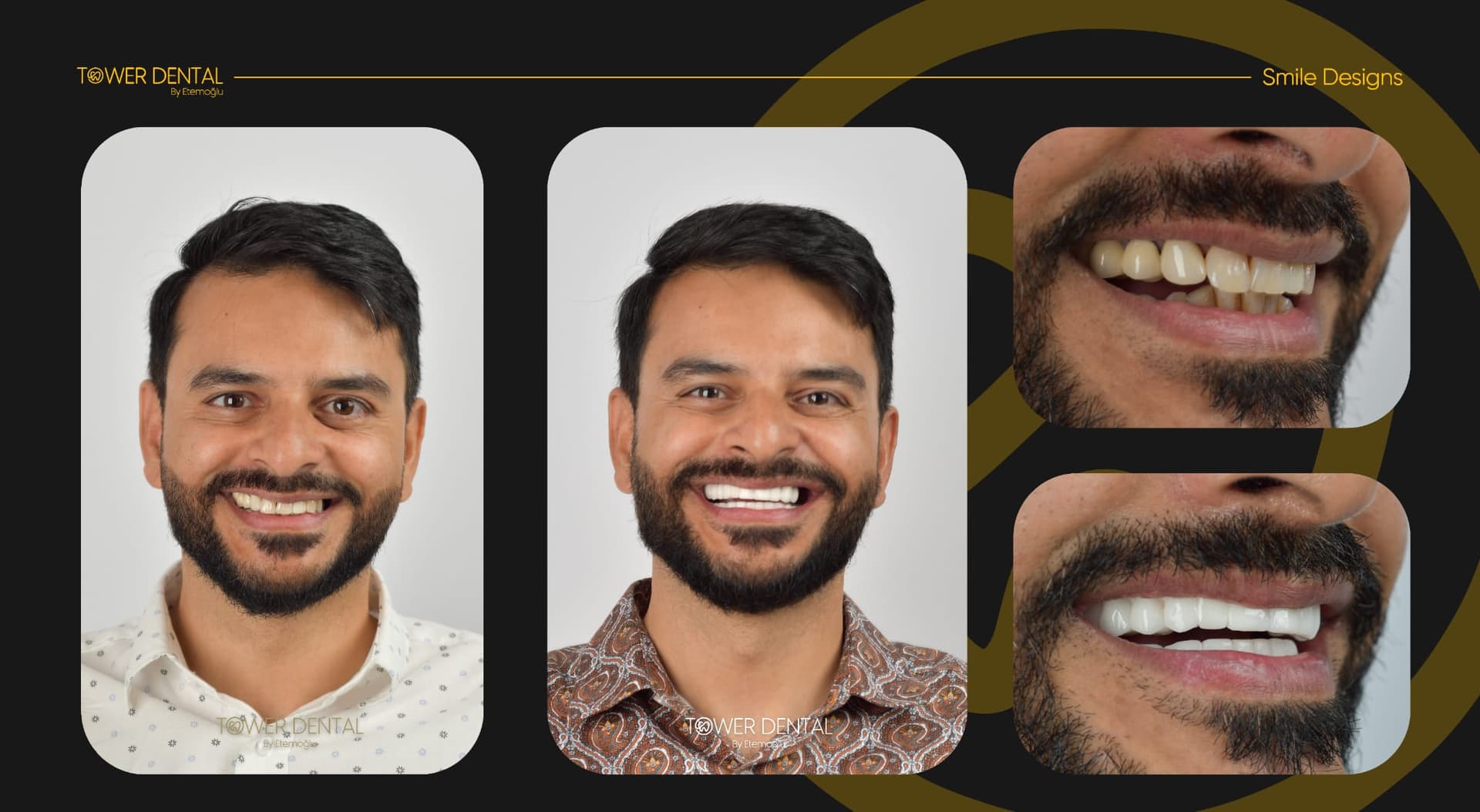
Before → After
Tower Dental Clinic
Verified clinic
Hollywood smile · E-max veneers · Istanbul
References & Sources
All clinical claims, pricing data, and statistics in this article are based on peer-reviewed research, official regulatory sources, and publicly verifiable data. We invite you to verify anything before making a treatment decision.
Medical disclaimer: This article is for educational purposes and does not replace a clinical examination. Treatment outcomes vary between patients. Always consult a qualified dental professional.
About MyDentalFly
MyDentalFly is a UK-based platform that builds your treatment plan and matches you with vetted specialist clinics abroad — and a dentist at the clinic reviews and confirms every plan before you pay anything.
Our interactive assessment evaluates your dental needs and builds a bespoke package: every treatment explained, a matched clinic with reasons why, your named dentist, flight estimates, transport, and accommodation — all in one place. We maintain a small, vetted network across Turkey, Hungary and Poland, visit clinics in person, help arrange CBCT scans before you fly, and stay with you through the entire journey. Compare. Save. Smile.
500+ patients helped·Nothing is charged until the clinic's dentist confirms your plan
Vetted clinics only Turkey · Hungary · Poland1,875 verified pricesAsk Pearl how it works ↓
Adam leads patient research at MyDentalFly, personally vetting clinics across Turkey, Hungary, and Poland. He has reviewed over 200 clinic proposals, analysed patient outcomes, and helped coordinate treatment plans for patients across the UK, USA, and Europe.
EE
Clinically reviewed by
Dr. Ertan Etemoglu
Lead Dentist & Co-Founder, Tower Dental Clinic
26 years in practice · 8,000+ patients/year · Turkish & American Dental Association member · Featured on Reuters