Veneers Cost in Turkey (2026)
By Adam Smith, Head of Patient Research
Updated 1 April 2026 · Dental tourism researcher · Clinic vetting specialist · 40+ clinics assessed on-site
Clinically reviewed by Dr. Ertan Etemoglu, Lead Dentist & Co-Founder
Tower Dental Clinic, Istanbul · 26 years in practice · 8,000+ patients/year · Turkish & American Dental Association member · Featured on Reuters

About MyDentalFly
We build your treatment plan and match you with vetted specialist clinics in Turkey, Hungary and Poland — and a dentist at the clinic confirms every plan before you pay anything.
Vetted clinics only· Turkey · Hungary · Poland·1,875 verified prices
Pearl, our dental consultant
Pearl
Pearl · online
Hi, I'm Pearl 👋 Ask me anything about veneers abroad — or tell me what you need and I'll build your package.
What I build for you

Smile Analyser
Send one photo. I tell you what I can see.
Try asking about this
How much do veneers cost in Turkey in 2026? Per-tooth prices for porcelain, E-max, and composite — plus what a Hollywood Smile actually runs.
You want veneers in Turkey and you want real prices — not "from £150" marketing. Here's what verified clinics in Turkey are actually charging per tooth in 2026, broken down by material and number of teeth.
If you want a veneer price for your own teeth rather than a per-tooth range, MyDentalFly's free assessment builds you a dental package — an itemised plan with real clinic prices and one recommended clinic plus two alternatives — before you speak to any clinic. Start at https://www.mydentalfly.com/quote.
How Much Do Veneers Cost in Turkey?
| Veneer Type | UK (£) | USA ($) | Europe (€) | Turkey (£) | Hungary (£) |
|---|---|---|---|---|---|
| Composite (per tooth) | £400 | $600 | €450 | £70-150 | £100-200 |
| Porcelain (per tooth) | £900 | $1,500 | €1,000 | £160-300 | £220-420 |
| E-max (per tooth) | £1,000 | $1,800 | €1,100 | £180-350 | £260-480 |
| Hollywood Smile (8-10) | £7,500 | $15,000 | €8,500 | £1,600-3,200 | £2,400-4,500 |
Prices from MyDentalFly's verified clinic network. UK/US prices per British Dental Association and ADA surveys.
These are per-tooth prices. Most patients getting veneers are doing 6-20 teeth, so the total saving is substantial. A US patient getting 10 E-max veneers saves roughly $15,000-16,000 by going to Turkey — even after flights and a week's hotel.
Pearl
MyDentalFly’s dental consultant
The bit that matters most and gets discussed least: veneers and crowns are not the same treatment. A veneer is a thin facing that keeps most of your own tooth; a crown means the tooth is reduced right down first, and that can't be undone. A lot of very cheap 'veneer' packages abroad are actually crowns.
What are you hoping to change?
Why Are Turkish Veneers So Much Cheaper?
Three factors — none of them involve cutting corners on materials:
Lab costs. Turkish dental labs charge 60-80% less than UK or US equivalents for identical CAD/CAM work. Many use the same 3Shape and CEREC systems as European labs. The porcelain blanks come from the same manufacturers (Ivoclar Vivadent for E-max, for instance).
Overhead. Running a dental practice in Istanbul's medical districts costs a fraction of London's Harley Street or Manhattan. That feeds directly into treatment pricing.
Volume. A busy Istanbul veneer clinic does 30-50 smile makeovers per month. A typical UK practice does 2-3. Higher volume means more lab negotiation leverage and more experience per dentist.
Composite vs Porcelain vs E-max: Which to Choose
This matters more than where you get them done.
Composite veneers (£70-150 per tooth in Turkey): Applied directly, no-prep or minimal-prep. Last 5-7 years. Cheapest option but stain more easily and chip over time. Good for minor corrections.
Porcelain veneers (£160-300 per tooth): Lab-fabricated, bonded to prepared teeth. Last 10-15 years. Natural translucency, stain-resistant. The standard choice for smile makeovers.
E-max veneers (£180-350 per tooth): Lithium disilicate — stronger than traditional porcelain with better translucency. Last 15-20 years. The premium choice. Same material used at top UK and US practices.
"I got quotes ranging from £3,500 to £9,000 for the same work — the cheapest wasn't always the worst." — UK patient, Dental Tourism Support Group
If you're unsure which material suits your case, MyDentalFly's free dental assessment generates a dental package (worth £50) with personalised recommendations — including which veneer type matches your bite, existing dental work, and cosmetic goals.
What's Included in a Turkish Veneer Package?
This is where you need to read the fine print. "£220 per veneer" at one clinic might include everything. At another, it's just the veneer — and the consultation, temporaries, and adjustments are extra.
A typical verified package on MyDentalFly includes:
- Initial consultation and smile design
- Tooth preparation
- Temporary veneers for the waiting period
- Lab fabrication (3-5 days)
- Try-in and fitting appointment
- Adjustments
- Post-treatment check
What's usually not included: flights, hotel, sedation (if requested), and any pre-treatment work like gum contouring or whitening of untreated teeth.
Always confirm the full package in writing. MyDentalFly's clinic comparison shows exactly what each clinic includes — compare up to 3 clinics side-by-side with real prices and package details in your currency.
The Risks Nobody Talks About
Veneers are irreversible. Once teeth are prepared (filed down), you'll always need veneers or crowns on those teeth. This isn't a risk specific to Turkey — it's true anywhere. But the lower prices abroad can make people rush a decision they should think carefully about.
Colour matching. The number one complaint in dental tourism forums. Clinic lighting makes everything look perfect. Natural daylight tells a different story. "Always check in natural daylight" is the most repeated advice from experienced dental tourists. "Never rush the try-in appointment."
Shade consistency. If you're doing 10 upper teeth but leaving the bottom arch natural, the shades need to work together. A good clinic will plan for this. A rushed clinic won't.
Over-preparation. Some clinics aggressively file teeth down for crowns when veneers (which preserve more tooth structure) would work. If a clinic suggests crowns on healthy teeth, get a second opinion. MyDentalFly's dental package flags this — it recommends the least invasive option first.
"Did you approve them before they were permanently fitted? Always check in natural daylight." — Experienced dental tourist, Dental Tourism Support Group
Turkey vs Hungary for Veneers
Both are strong options. Turkey is cheaper per tooth. Hungary is closer for European patients.
Turkey: Porcelain veneers £160-300/tooth. Huge number of clinics specialising in cosmetic dentistry. Istanbul has the best-known smile makeover clinics. Direct flights from London (3.5h), New York (10h), Frankfurt (3h).
Hungary: Porcelain veneers £220-420/tooth. Budapest has a decades-long reputation for dental tourism. EU consumer protection applies. 2 hours from London, 1.5 from Frankfurt.
For Hollywood Smiles (8+ veneers), Turkey typically saves £800-1,300 more than Hungary. For smaller cases (4-6 veneers), the price difference narrows and Hungary's proximity may tip the balance — especially for European patients.
MyDentalFly's Savings Calculator compares both destinations with your specific treatment needs and shows the total cost including estimated travel.
Your Next Step
Rather than comparing clinic websites one by one, start with the 2-minute dental assessment on MyDentalFly. The interactive dental chart maps your teeth, and the dental package (worth £50) gives you a personalised recommendation on veneer type, material, and realistic pricing — before any clinic sees your case.
From there, compare verified clinics in Turkey and Hungary side-by-side, in your currency, with real treatment plans. Call free from your browser on 020 4634 2312 if you'd rather walk through it with a patient manager.
FAQ
How much does a Hollywood Smile cost in Turkey in 2026?
A Hollywood Smile (8-10 E-max or porcelain veneers) costs £1,600-3,200 in Turkey. The same treatment costs £7,500 in the UK, $15,000 in the USA, and €8,500 in Germany. Packages at MyDentalFly's verified clinics typically include consultation, temporaries, fabrication, fitting, and adjustments.
Are Turkish veneers the same quality as UK veneers?
At accredited clinics, yes. The materials are identical — E-max veneers use Ivoclar Vivadent lithium disilicate blanks worldwide. The difference is in the dentist's skill and the lab's quality, not the country. MyDentalFly's Implant Brand Comparison tool verifies which materials each clinic uses.
How long do veneers from Turkey last?
Composite veneers last 5-7 years. Porcelain veneers last 10-15 years. E-max veneers last 15-20 years. These lifespans are the same regardless of where they're fitted — longevity depends on material quality, bonding technique, and how well you maintain them.
Do I need to make two trips for veneers in Turkey?
Usually one trip of 5-7 days is enough. Day 1-2: consultation, preparation, and temporary veneers fitted. Day 3-5: lab fabrication. Day 5-7: try-in, adjustments, and permanent bonding. Some clinics can do same-day veneers with CAD/CAM for smaller cases (4-6 teeth).
What's the difference between veneers and crowns?
Veneers cover the front surface of the tooth and require minimal preparation. Crowns cover the entire tooth and require more filing. Veneers are the better option for cosmetic improvements on healthy teeth. Crowns are needed when the tooth is significantly damaged or has had root canal treatment. Be cautious of any clinic that recommends crowns on healthy teeth when veneers would work.
Next Steps
The dental assessment maps your teeth in 2 minutes and tells you exactly what's needed. The savings calculator shows verified clinic prices vs home costs. Your dental tourism consultant ensures the clinic understands your shade preferences and manages the whole process.
Want this for your own teeth? MyDentalFly's free assessment builds you a dental package — an itemised plan with real clinic prices and one recommended clinic plus two alternatives — before you speak to any clinic. Start at https://www.mydentalfly.com/quote. Guide: Veneers Turkey Guide
Compare: Veneers: Turkey vs UK
Prices: Dental Implant Prices in Turkey
Related: Veneers Istanbul: Prices & Clinics
Related: Hollywood Smile Turkey: Cost & Clinics
Related: All-on-6 Turkey: 2026 Cost Guide
What your package would look like
Your package, building
ExamplePackage total
building…
—
Real results from verified clinics
Drag the slider to compare before & after
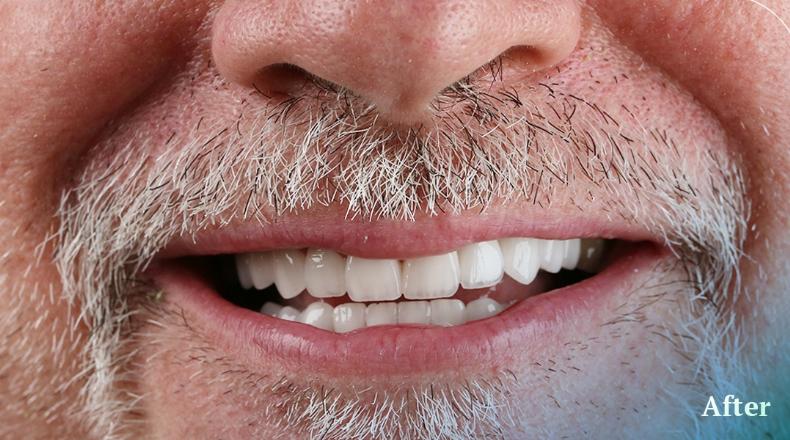
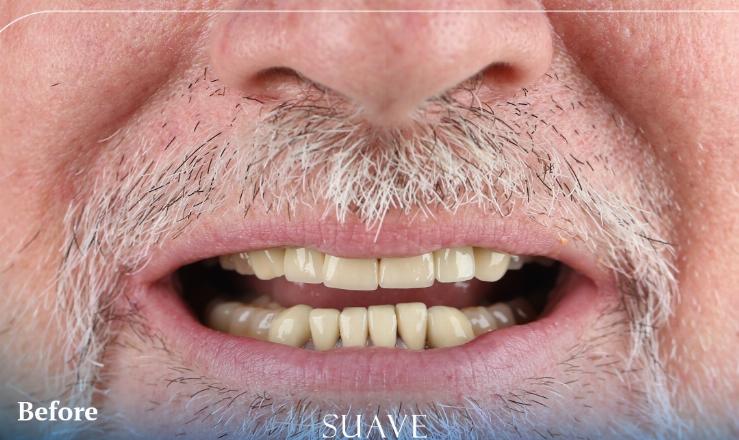
Suave Clinic
Verified clinicFull smile restoration · Istanbul
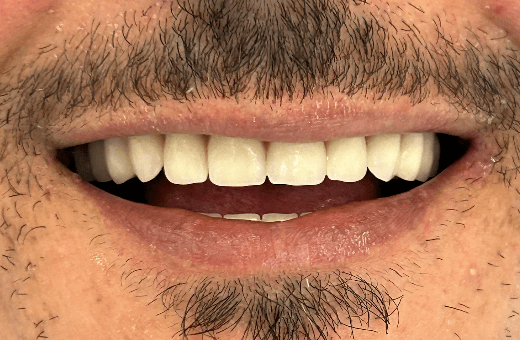
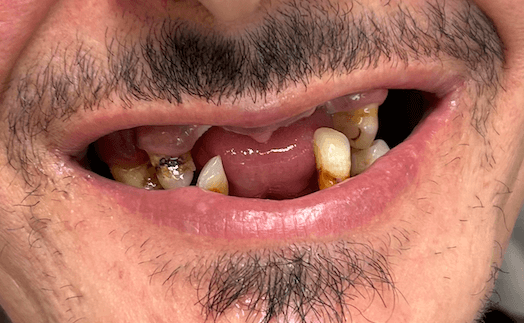
MDental Clinic
Verified clinicFull smile makeover · E-max veneers · Budapest
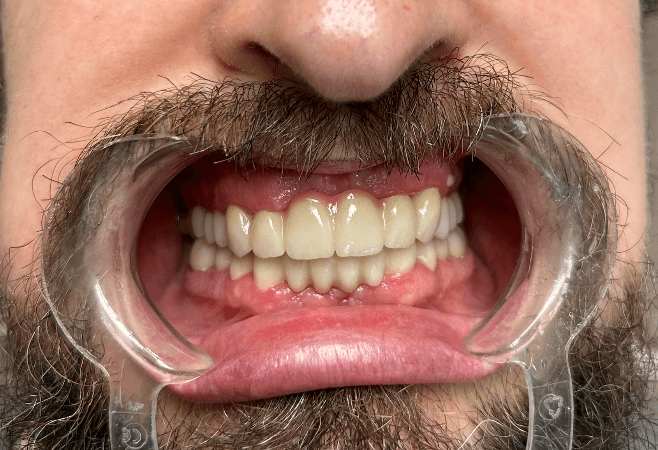
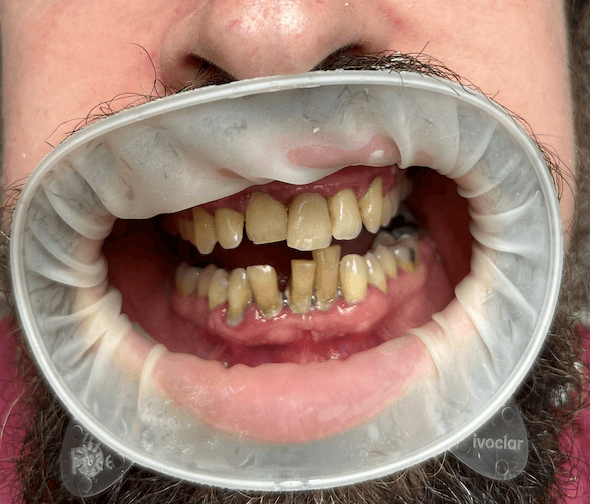
MDental Clinic
Verified clinicCrowns & restoration · Budapest
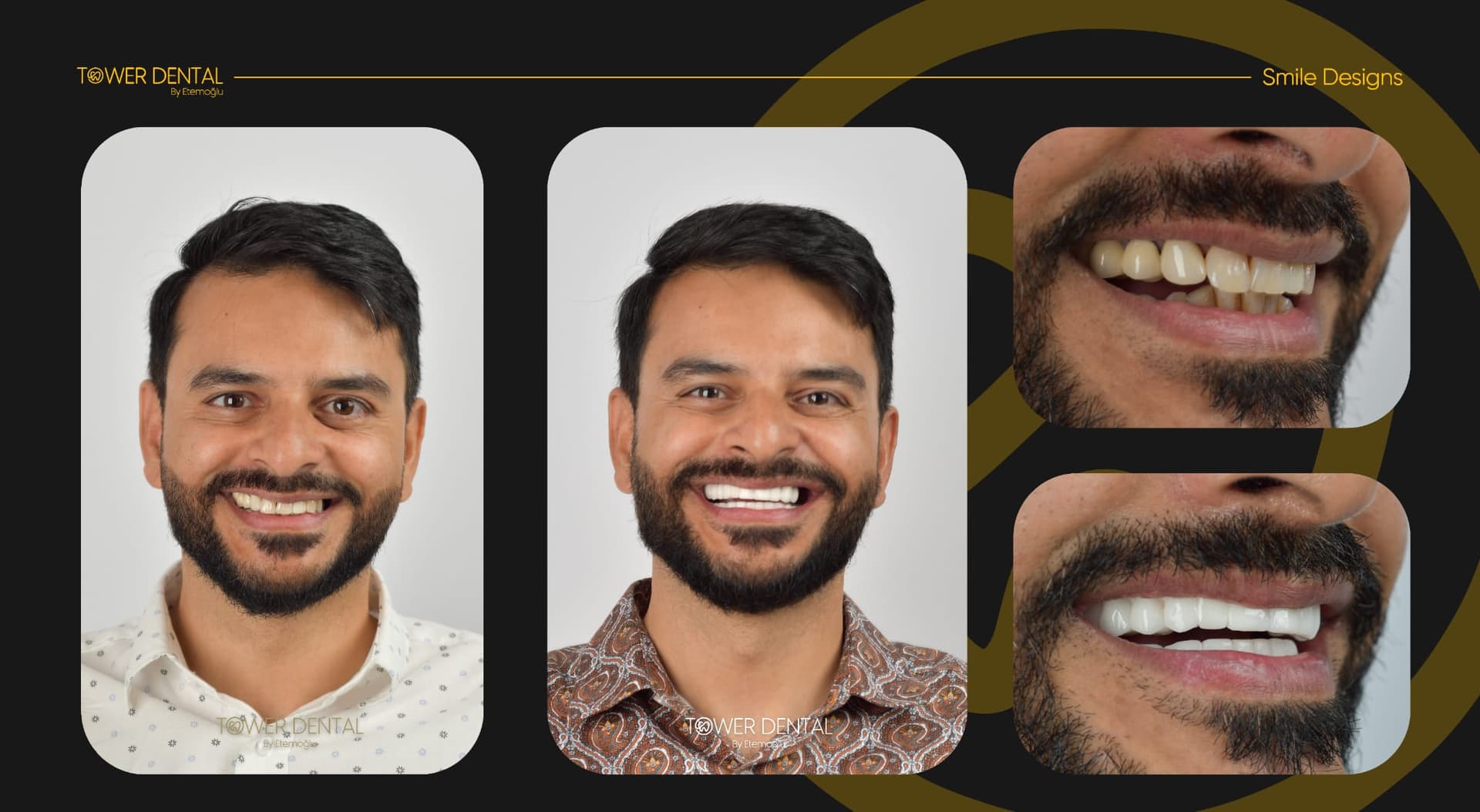 Before → After
Tower Dental Clinic
Verified clinicHollywood smile · E-max veneers · Istanbul
References & Sources
All clinical claims, pricing data, and statistics in this article are based on peer-reviewed research, official regulatory sources, and publicly verifiable data. We invite you to verify anything before making a treatment decision.
- 1.BBC News, "Turkey teeth: The dental tourism risks patients don't see." February 2023.
- 2.BBC, "Turkey Teeth: Bargain Smiles or Big Mistake?" — documentary investigating dental tourism risks, 2022.
- 3.Euronews, "Medical tourism: Dental expert explains why Turkey teeth can be a costly mistake." October 2024.
- 4.General Dental Council (UK), "Going abroad for dental treatment" — patient guidance.
- 5.British Dental Association (BDA), "Dental tourism: Patients need to know the risks."
- 6.T.C. Saglik Bakanligi (Turkish Ministry of Health), Health Tourism Authorisation Regulations.
- 7.Kontakiotis, E.G. et al. (2015), "A prospective study of the incidence of asymptomatic pulp necrosis following crown preparation," Int. Endod. J., 48(6), 512-517.
- 8.Pjetursson, B.E. et al. (2012), "A systematic review of the survival and complication rates of implant-supported fixed dental prostheses after at least 5 years," Clin. Oral Implants Res., 23(S6), 22-38.
- 9.Sailer, I. et al. (2015), "All-ceramic or metal-ceramic tooth-supported fixed dental prostheses: a systematic review," Dent. Mater., 31(6), 603-624.
- 10.Türkiye Today, "1.5 million health tourists visited Türkiye in 2024, generating $3 billion in revenue." 2025.
Medical disclaimer: This article is for educational purposes and does not replace a clinical examination. Treatment outcomes vary between patients. Always consult a qualified dental professional.

About MyDentalFly
MyDentalFly is a UK-based platform that builds your treatment plan and matches you with vetted specialist clinics abroad — and a dentist at the clinic reviews and confirms every plan before you pay anything.
Our interactive assessment evaluates your dental needs and builds a bespoke package: every treatment explained, a matched clinic with reasons why, your named dentist, flight estimates, transport, and accommodation — all in one place. We maintain a small, vetted network across Turkey, Hungary and Poland, visit clinics in person, help arrange CBCT scans before you fly, and stay with you through the entire journey. Compare. Save. Smile.
Questions Pearl can answer about veneers cost in turkey (2026)
- “Is treatment abroad safe?”
- “What would my case cost?”
- “Which clinic suits me?”
She answers in your own language, using prices from clinics we have checked. No sign-up, and she never asks for a phone number to give you an answer.
Tap a question — Pearl answers
Prefer a person? WhatsApp us · 020 4634 2312 ·
Clinically reviewed before booking
Every dental package built on MyDentalFly is reviewed by a qualified dentist before it gets accepted. Our clinical reviewers include specialists like Dr. Hubert Trępatowski — 800+ All-on-4 procedures, trained under Professor Paulo Malo (pioneer of the All-on-4 technique), graduate of Jagiellonian University Medical Faculty, Krakow.
About the author
Adam Smith
Head of Patient Research, MyDentalFly
Adam leads patient research at MyDentalFly, personally vetting clinics across Turkey, Hungary, and Poland. He has reviewed over 200 clinic proposals, analysed patient outcomes, and helped coordinate treatment plans for patients across the UK, USA, and Europe.
Clinically reviewed by
Dr. Ertan EtemogluLead Dentist & Co-Founder, Tower Dental Clinic
26 years in practice · 8,000+ patients/year · Turkish & American Dental Association member · Featured on Reuters
Content last reviewed: 1 April 2026