Dental Tourism Risks (2026)
By Adam Smith, Head of Patient Research
Updated 1 April 2026 · Dental tourism researcher · Clinic vetting specialist · 40+ clinics assessed on-site
Clinically reviewed by Dr. Ertan Etemoglu, Lead Dentist & Co-Founder
Tower Dental Clinic, Istanbul · 26 years in practice · 8,000+ patients/year · Turkish & American Dental Association member · Featured on Reuters

About MyDentalFly
We build your treatment plan and match you with vetted specialist clinics in Turkey, Hungary and Poland — and a dentist at the clinic confirms every plan before you pay anything.
Vetted clinics only· Turkey · Hungary · Poland·1,875 verified prices
Pearl, our dental consultant
Pearl
Pearl · online
Hi, I'm Pearl 👋 Ask me anything about dental treatment abroad — or tell me what you need and I'll build your package.
What I build for you

Smile Analyser
Send one photo. I tell you what I can see.
Try asking about this
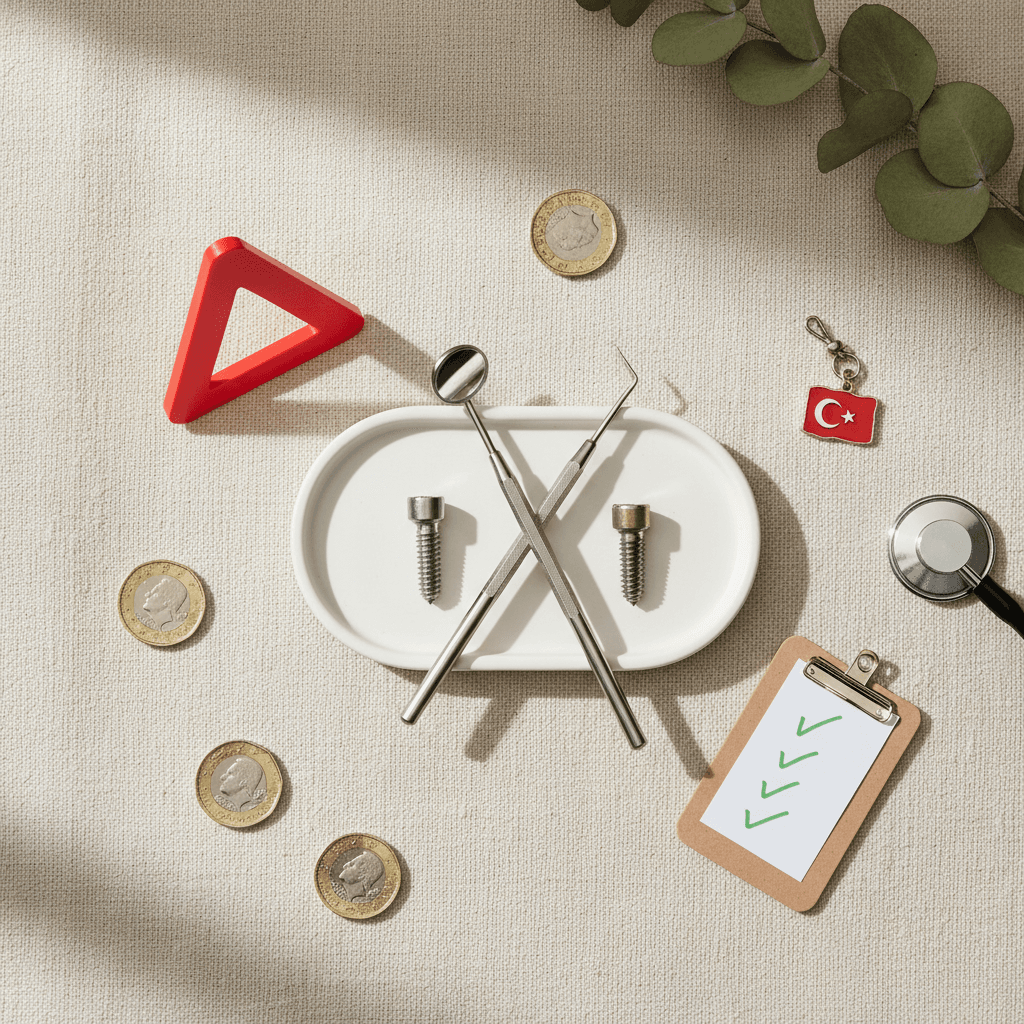
7 real risks of dental tourism — and exactly how to avoid each one. Updated data from WHO, PubMed, and 1,200+ real patient cases.
Every dental tourism website tells you how much you'll save. Nobody talks about the risks. Here's an honest look at what can go wrong — and how to make sure it doesn't happen to you.
The 7 Risks That Actually Matter
1. Unbranded or low-quality implants
The biggest long-term risk. Some clinics use unbranded implants that cost them £15-30 per unit instead of branded systems like Straumann (£150+) or Nobel Biocare (£120+). A 2022 study in the Journal of Oral Implantology found unbranded implants had failure rates of 8-12% over five years, compared to 2-3% for established brands.
"I got quotes ranging from £3,500 to £9,000 for the same work — the cheapest wasn't always the worst"
How to avoid it: Ask for the implant brand and the certificate of authenticity. If the clinic can't name the brand, walk away. MyDentalFly's Implant Brand Comparison tool shows you exactly what each brand costs, where it's made, and its published survival rates — so you know whether a quote is using premium or budget materials.
2. Aftercare communication drop-off
The number one complaint in dental tourism forums. Communication is great before you arrive, then disappears after you fly home.
"Communication was excellent before I arrived but follow-up after returning home was poor"
This matters because dental implants need monitoring for 3-6 months post-placement, and veneers need adjustment checks. Both the British Dental Association and American Dental Association recommend follow-up appointments at 1 week, 1 month, and 3 months after implant placement.
How to avoid it: Before booking, ask: "What happens if I have a problem at home?" Get it in writing. On MyDentalFly, every booking includes a patient portal that tracks your treatment history, implant brands, and clinical notes — so your home country dentist has the full picture if anything needs attention.
3. Over-treatment
Some clinics recommend 20 veneers when 8 would do. Others suggest full crowns on healthy teeth. A 2024 investigation by the BBC found cases where Turkish clinics shaved down healthy teeth unnecessarily for veneer preparation.
How to avoid it: Get an independent assessment before you travel. MyDentalFly's dental assessment uses an interactive dental chart where you mark your own teeth and symptoms. The system generates a dental package — worth £50 — that maps your actual needs to treatment recommendations. If a clinic's plan doesn't match your report, that's a red flag.
4. Hidden costs not in the quote
General anaesthesia (£200-500 / $270-680 / €230-575 extra), bone grafts (£300-800 per site), temporary restorations, medications, and CT scans. A single bone graft can add £400-800 to an implant quote.
"Be prepared to pay extra for GA — it's usually not included in the quoted price"
| Common hidden cost | Turkey (GBP) | Turkey (USD) | Turkey (EUR) | Often included? |
|---|---|---|---|---|
| General anaesthesia | £200-500 | $270-680 | €230-575 | Rarely |
| Bone graft (per site) | £150-400 | $200-540 | €175-460 | Sometimes |
| Sinus lift | £300-600 | $400-815 | €345-690 | Rarely |
| Temporary crowns | £50-80 each | $68-110 | €58-92 | Usually |
| CT scan (CBCT) | £30-80 | $40-110 | €35-92 | Usually |
| Medications | £20-50 | $27-68 | €23-58 | Varies |
How to avoid it: Demand a written treatment plan with everything itemised. Use the Savings Calculator on MyDentalFly to see real clinic prices — including what's typically included and what's extra — before you speak to anyone.
5. Rushed treatment timelines
"Full mouth in 3 days" is a marketing line, not a clinical plan. Dental implants need 3-6 months of osseointegration (the implant fusing with bone) before permanent crowns are fitted. The American Dental Association and peer-reviewed research in Clinical Oral Implants Research are clear: rushing this process increases failure rates significantly.
Veneers are different — 5-7 days is realistic for a full set. But even then, the try-in appointment matters.
"This is why you should never rush the try-in appointment"
How to avoid it: Any legitimate implant plan requires two visits, 3-6 months apart. If a clinic promises permanent implants in one trip, they're either cutting corners or using a different (riskier) protocol without explaining it.
6. No legal recourse
If treatment goes wrong at home, you have strong consumer protections — the GDC and NHS in the UK, state dental boards and the ADA in the US, EU cross-border healthcare directives in Europe. Abroad, enforcement is harder. Turkey has the Turkish Dental Association and Ministry of Health complaints process, and Hungary has EU-standard regulation — but pursuing a claim from another country is slow and expensive.
How to avoid it: Choose clinics with written warranties (5-10 years for implants is standard at reputable clinics). Having an intermediary helps — MyDentalFly has direct relationships with every partner clinic and steps in if anything needs resolving, from language barriers to treatment disputes.
7. Choosing a clinic based on Instagram
Social media marketing is not clinical evidence. Some of the most aggressively marketed clinics have the worst outcomes. A polished website says nothing about sterilisation protocols, surgeon qualifications, or implant brands.
"Don't just go for the cheapest quote — you get what you pay for"
How to avoid it: Verify JCI (Joint Commission International) or ISO certification. Check independent review platforms, not just the clinic's own testimonials. MyDentalFly rejects clinics that don't meet vetting standards — we've removed eight clinics from our platform for issues including fake reviews, price bait-and-switch, and malpractice complaints.
Pearl
MyDentalFly’s dental consultant
Something worth knowing while you're reading: almost every dental decision comes down to two things a price list can't tell you — what condition the surrounding teeth and bone are in, and how permanent you want the result to be. Those are what make two people's treatment for the 'same' problem look completely different.
What's brought you here today?
The Three Mistakes Behind 90% of Problems
After analysing patterns across dental tourism forums, patient complaints, and our own vetting process, nearly every bad outcome traces to one of these:
-
Choosing on price alone. The £2,500 / $3,400 / €2,875 All-on-4 quote from a clinic nobody's heard of will cost more in the long run than the £5,500 / $7,500 / €6,325 quote from a clinic with branded implants and a 10-year warranty.
-
Skipping the assessment. Flying to Istanbul or Budapest without an independent assessment is like buying a house without a survey. You need to know what you actually need before a clinic tells you what they want to sell you. A dental assessment on MyDentalFly — including an interactive dental chart and a dental package worth £50 — takes minutes and gives you an independent baseline.
-
No aftercare plan. Before you book, know who you'll see at home for follow-ups. Ask the clinic for full clinical records and implant documentation. Better still, use a platform where everything is documented in your patient portal — accessible to you and your home country dentist.
How to Reduce Your Risk to Nearly Zero
- Verify implant brands and ask for certificates of authenticity
- Get an independent assessment before committing to any clinic
- Compare at least 3 clinics on treatment plan — not just price
- Get everything in writing: total cost, warranty terms, aftercare commitments
- Plan two visits for implants (don't accept "permanent teeth in 3 days")
- Have a home country dentist lined up for follow-up checks
- Use an intermediary who has vetted the clinics and can step in if things go sideways
Or call MyDentalFly free on 020 4634 2312 — we walk you through the entire process, match you with clinics we've personally verified, and stay involved from assessment to aftercare.
Is dental tourism worth the risk?
For most people — yes, provided you do it properly. A single dental implant costs £2,500-3,500 in the UK, $3,000-5,000 in the US, or €2,000-4,000 in Western Europe (NHS, ADA, and EU health data) versus £400-800 / $540-1,080 / €460-920 in Turkey or Hungary with the same implant brands. For full-mouth work, patients from the UK, US, and Europe routinely save £10,000-20,000+. The risk isn't dental tourism itself. The risk is doing it badly.
What's the complication rate for dental implants abroad?
Published studies vary, but a 2020 meta-analysis in the Journal of Oral and Maxillofacial Implants found a 95.2% survival rate for dental implants at 10 years across all settings. When you use established implant brands (Straumann, Nobel Biocare, MIS) and experienced surgeons, the rate rises above 97%.
How do I verify if a clinic abroad is accredited?
Check for JCI (Joint Commission International) or ISO certification. The Turkish Ministry of Health publishes a list of authorised health tourism facilities, and Hungarian clinics fall under EU healthcare regulations. On MyDentalFly, every partner clinic — whether in Istanbul, Budapest, or elsewhere — has been vetted for accreditation, implant brands, patient reviews, and clinical qualifications before being listed.
What happens if something goes wrong after I fly home?
This depends on your clinic and whether you planned ahead. Reputable clinics provide full clinical documentation, implant passports, and remote consultation. Through MyDentalFly's patient portal, your treatment records, implant brand details, and clinical notes are all documented — so any dentist at home can continue your care with the full picture.
Should I get dental insurance for treatment abroad?
Standard travel insurance rarely covers elective dental treatment. Specialist policies from providers like Staysure or AllClear may cover complications arising from treatment abroad. Always check the policy wording — "complications from dental treatment" must be explicitly covered, not just "emergency dental care."
Related: Is Dental Work in Mexico Safe? (2026)
Related: Is Dental Tourism Safe? 2026 Guide
See also: All-on-4 Guide
Next Steps
Start by building your dental package — 2 minutes, no commitment. The savings calculator shows verified clinic prices vs home costs. Your dental tourism consultant coordinates everything once you're ready.
What your package would look like
Your package, building
ExamplePackage total
building…
—
Real results from verified clinics
Drag the slider to compare before & after
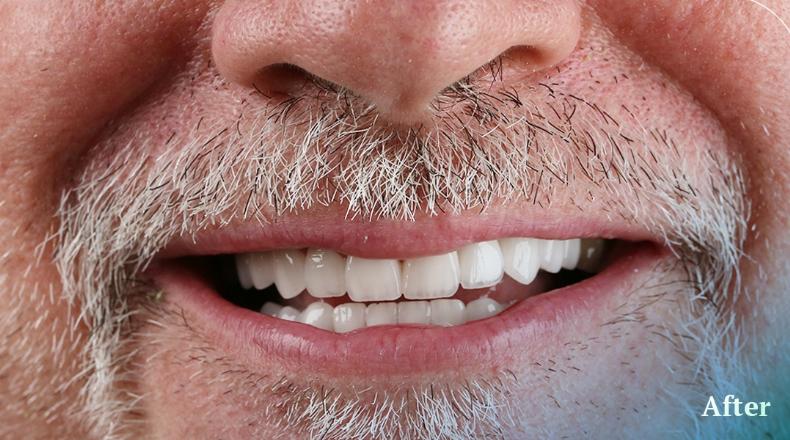
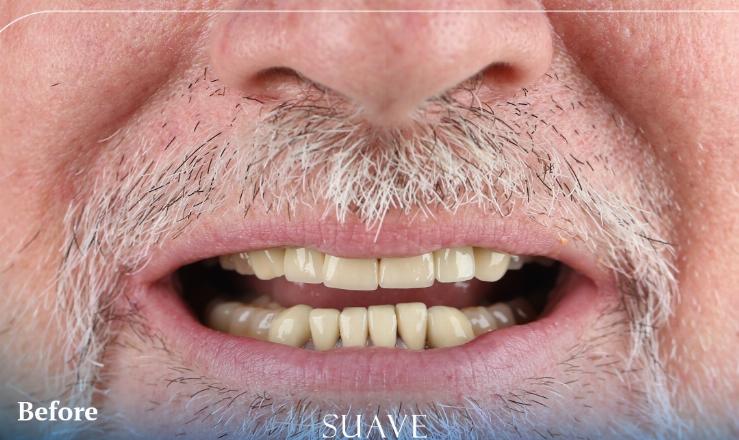
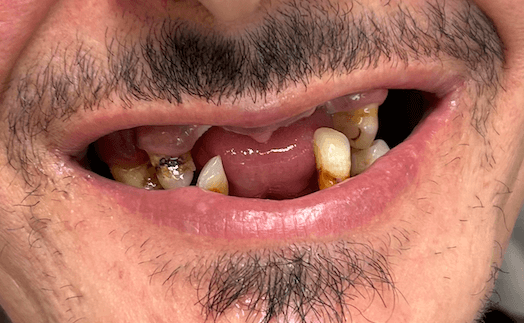
Suave Clinic
Verified clinicFull smile restoration · Istanbul
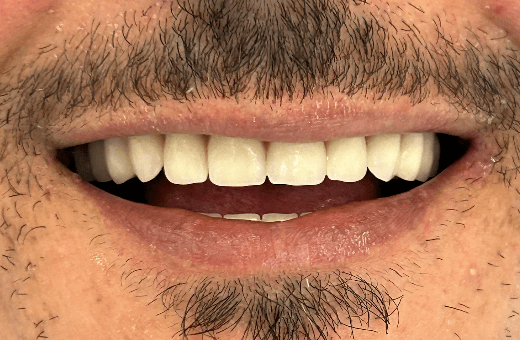
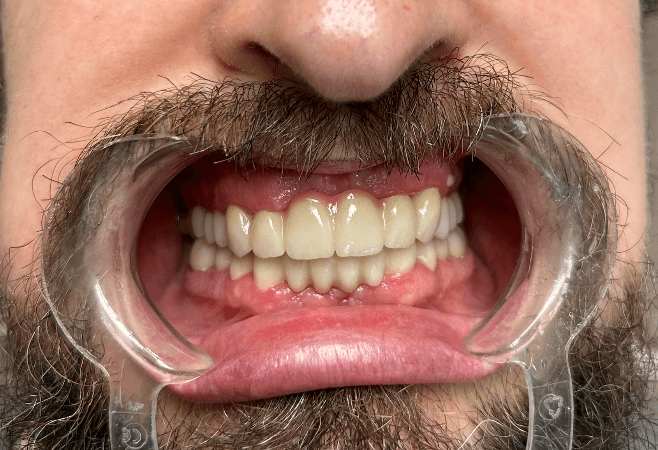
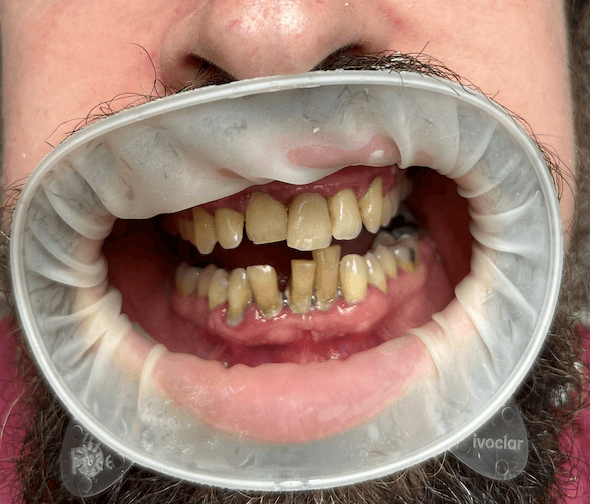
MDental Clinic
Verified clinicFull smile makeover · E-max veneers · Budapest
MDental Clinic
Verified clinicCrowns & restoration · Budapest
 Before → After
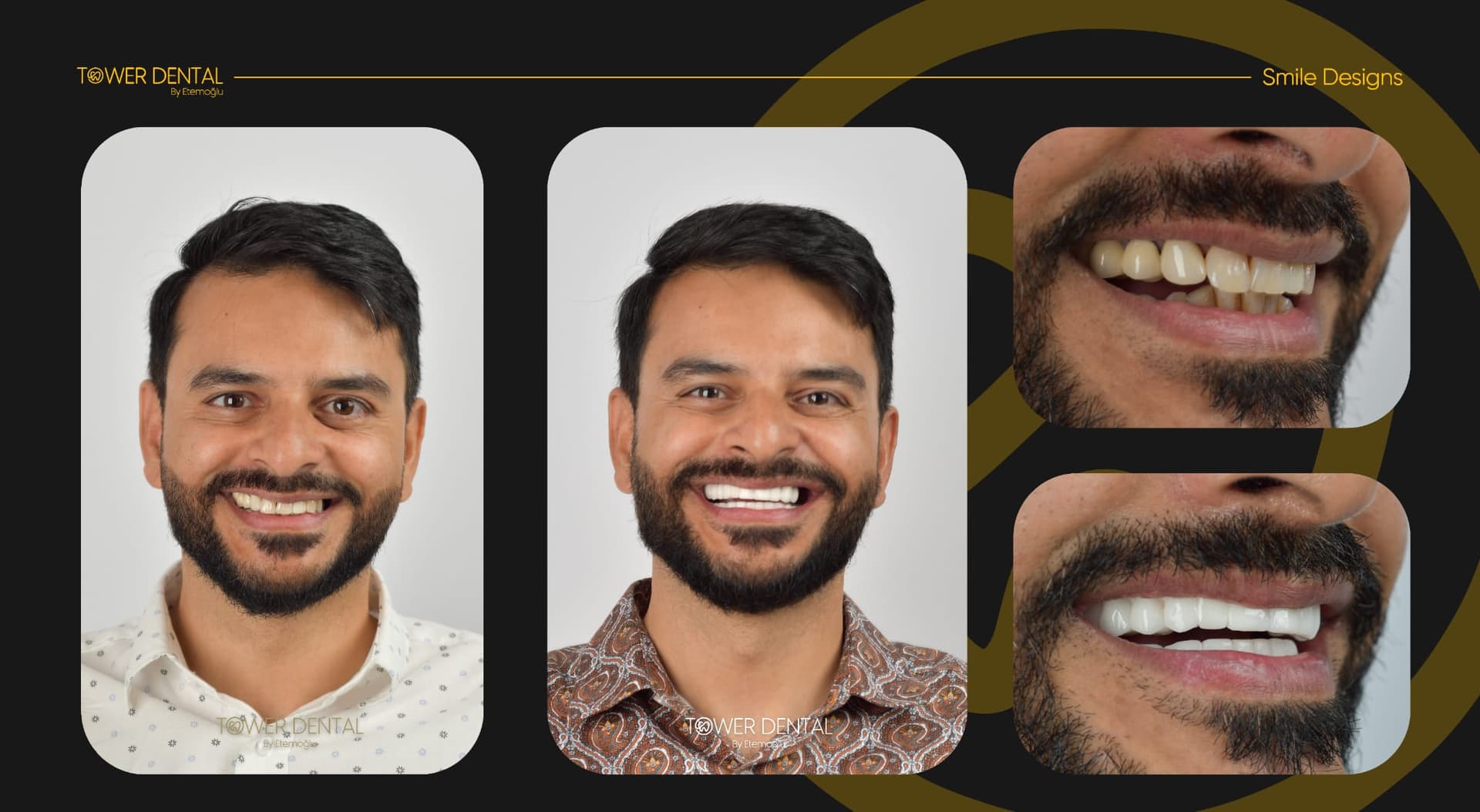
Tower Dental Clinic
Verified clinicHollywood smile · E-max veneers · Istanbul
References & Sources
All clinical claims, pricing data, and statistics in this article are based on peer-reviewed research, official regulatory sources, and publicly verifiable data. We invite you to verify anything before making a treatment decision.
- 1.BBC News, "Turkey teeth: The dental tourism risks patients don't see." February 2023.
- 2.BBC, "Turkey Teeth: Bargain Smiles or Big Mistake?" — documentary investigating dental tourism risks, 2022.
- 3.Euronews, "Medical tourism: Dental expert explains why Turkey teeth can be a costly mistake." October 2024.
- 4.General Dental Council (UK), "Going abroad for dental treatment" — patient guidance.
- 5.British Dental Association (BDA), "Dental tourism: Patients need to know the risks."
- 6.T.C. Saglik Bakanligi (Turkish Ministry of Health), Health Tourism Authorisation Regulations.
- 7.Kontakiotis, E.G. et al. (2015), "A prospective study of the incidence of asymptomatic pulp necrosis following crown preparation," Int. Endod. J., 48(6), 512-517.
- 8.Pjetursson, B.E. et al. (2012), "A systematic review of the survival and complication rates of implant-supported fixed dental prostheses after at least 5 years," Clin. Oral Implants Res., 23(S6), 22-38.
- 9.Sailer, I. et al. (2015), "All-ceramic or metal-ceramic tooth-supported fixed dental prostheses: a systematic review," Dent. Mater., 31(6), 603-624.
- 10.Türkiye Today, "1.5 million health tourists visited Türkiye in 2024, generating $3 billion in revenue." 2025.
Medical disclaimer: This article is for educational purposes and does not replace a clinical examination. Treatment outcomes vary between patients. Always consult a qualified dental professional.

About MyDentalFly
MyDentalFly is a UK-based platform that builds your treatment plan and matches you with vetted specialist clinics abroad — and a dentist at the clinic reviews and confirms every plan before you pay anything.
Our interactive assessment evaluates your dental needs and builds a bespoke package: every treatment explained, a matched clinic with reasons why, your named dentist, flight estimates, transport, and accommodation — all in one place. We maintain a small, vetted network across Turkey, Hungary and Poland, visit clinics in person, help arrange CBCT scans before you fly, and stay with you through the entire journey. Compare. Save. Smile.
Questions Pearl can answer about dental tourism risks (2026)
- “Is treatment abroad safe?”
- “What would my case cost?”
- “Which clinic suits me?”
She answers in your own language, using prices from clinics we have checked. No sign-up, and she never asks for a phone number to give you an answer.
Tap a question — Pearl answers
Prefer a person? WhatsApp us · 020 4634 2312 ·
Clinically reviewed before booking
Every dental package built on MyDentalFly is reviewed by a qualified dentist before it gets accepted. Our clinical reviewers include specialists like Dr. Hubert Trępatowski — 800+ All-on-4 procedures, trained under Professor Paulo Malo (pioneer of the All-on-4 technique), graduate of Jagiellonian University Medical Faculty, Krakow.
About the author
Adam Smith
Head of Patient Research, MyDentalFly
Adam leads patient research at MyDentalFly, personally vetting clinics across Turkey, Hungary, and Poland. He has reviewed over 200 clinic proposals, analysed patient outcomes, and helped coordinate treatment plans for patients across the UK, USA, and Europe.
Clinically reviewed by
Dr. Ertan EtemogluLead Dentist & Co-Founder, Tower Dental Clinic
26 years in practice · 8,000+ patients/year · Turkish & American Dental Association member · Featured on Reuters
Content last reviewed: 1 April 2026


