General Anaesthetic Dental Work in Turkey
By Adam Smith, Head of Patient Research
Updated 12 February 2026 · Dental tourism researcher · Clinic vetting specialist · 40+ clinics assessed on-site
Clinically reviewed by Dr. Ertan Etemoglu, Lead Dentist & Co-Founder
Tower Dental Clinic, Istanbul · 26 years in practice · 8,000+ patients/year · Turkish & American Dental Association member · Featured on Reuters

About MyDentalFly
We build your treatment plan and match you with vetted specialist clinics in Turkey, Hungary and Poland — and a dentist at the clinic confirms every plan before you pay anything.
Vetted clinics only· Turkey · Hungary · Poland·1,875 verified prices
Pearl, our dental consultant
Pearl
Pearl · online
Hi, I'm Pearl 👋 Ask me anything about dental treatment abroad — or tell me what you need and I'll build your package.
What I build for you

Smile Analyser
Send one photo. I tell you what I can see.
Try asking about this

IV sedation and GA are not the same. How to get proper general anaesthetic in Turkey, what it costs, and which clinics have anaesthesiologists.
Roughly one in three adults avoids the dentist because of anxiety. For some, that avoidance stretches into decades. By the time they finally seek help, they need extensive work — extractions, implants, full-arch restorations — and the thought of sitting through it all conscious is a dealbreaker.
Turkey has become the go-to destination for these patients because the savings on major dental work are 50-70% versus the UK. But here's what catches people off guard: sedation options aren't standardised across clinics, and "sedation" on a website doesn't necessarily mean general anaesthetic.
"Can anyone recommend a good clinic in Turkey for multiple implants and getting some lower teeth removed, but that offers general anaesthetic as I have severe anxiety?"
This question appears in dental tourism Facebook groups every week. The answers reveal just how confusing sedation options really are.
IV Sedation vs Conscious Sedation vs General Anaesthetic
These three terms get thrown around interchangeably online, but they're completely different procedures with different risks, costs, and staffing requirements.
| Factor | Conscious Sedation | IV Sedation (Deep) | General Anaesthetic |
|---|---|---|---|
| Awareness | Relaxed but awake, can respond to commands | Twilight state, minimal awareness | Completely unconscious |
| Breathing | Patient breathes independently | Patient breathes independently (monitored) | Breathing tube (intubation), machine-assisted |
| Administration | Oral tablet or inhaled (nitrous oxide) | IV line with midazolam or propofol | IV induction + inhaled maintenance agents |
| Who administers | Dentist or nurse | Dentist with sedation training or anaesthetist | Qualified anaesthesiologist only |
| Memory of procedure | Partial or full memory | Usually no memory | No memory at all |
| Recovery time | 30-60 minutes | 1-2 hours | 2-4 hours, grogginess may last all day |
| Monitoring required | Basic (pulse oximeter) | Continuous (pulse ox, blood pressure, ECG) | Full anaesthetic monitoring suite |
| Cost in Turkey | Usually included or £50-100 extra | £150-300 extra | £300-600 extra |
| Suitable for | Mild to moderate anxiety | Moderate to severe anxiety | Severe phobia, lengthy procedures, gag reflex issues |
Here's the critical distinction: general anaesthetic requires an anaesthesiologist — a qualified medical doctor who specialises in keeping unconscious patients safe. Not all dental clinics have one on staff.
"Most clinics say they offer sedation but it's not always general anaesthetic — make sure you clarify this before booking"
Exactly right. A clinic advertising "sedation available" almost always means conscious sedation or IV sedation. If you specifically need GA, you need to ask explicitly and verify the answer.
Pearl
MyDentalFly’s dental consultant
Something worth knowing while you're reading: almost every dental decision comes down to two things a price list can't tell you — what condition the surrounding teeth and bone are in, and how permanent you want the result to be. Those are what make two people's treatment for the 'same' problem look completely different.
What's brought you here today?
What General Anaesthetic Actually Involves
GA for dental work follows the same protocol as GA for any surgery. Here's what happens.
Pre-assessment (1-2 days before). The anaesthesiologist reviews your medical history, current medications, allergies, and any previous reactions to anaesthesia. Blood tests and an ECG might be required. You'll be assessed for airway management — this determines how straightforward intubation will be.
Fasting. No food for 6-8 hours before the procedure. No water for 2 hours before. This isn't negotiable. An empty stomach prevents aspiration (inhaling stomach contents while unconscious), which is a serious and potentially fatal complication.
The procedure. You get an IV line. The anaesthesiologist administers induction agents (usually propofol). You lose consciousness within 30 seconds. A breathing tube is placed. The anaesthesiologist monitors your vital signs continuously while the dental team works. For a full-arch extraction and implant placement, this can take 2-4 hours.
Recovery. You wake in a recovery area with nursing supervision. Expect grogginess, mild nausea (common), and a sore throat from the breathing tube. Most patients feel reasonably normal within 4-6 hours but shouldn't drive, make decisions, or be left alone for 24 hours.
The Cost: GA Is Extra, Always
"Be prepared to pay extra for GA — it's usually not included in the quoted price"
This is universally true. When a Turkish clinic quotes you for implants or veneers, that price covers the dental work under local anaesthetic. GA is a separate fee because it requires a separate specialist.
Typical GA costs in Turkey:
| Duration | Estimated Cost |
|---|---|
| Up to 1 hour | £300-400 |
| 1-2 hours | £350-450 |
| 2-4 hours | £400-550 |
| 4+ hours (complex full-arch cases) | £500-600 |
Compare this to the UK, where GA in a hospital setting adds £1,500-3,000 to your dental bill. Even with the GA surcharge, treatment in Turkey remains dramatically cheaper.
How to Verify a Clinic Actually Offers GA
Not every clinic that says "general anaesthetic available" has an anaesthesiologist on staff. Some contract one in when needed. Others use the term loosely to mean deep IV sedation. Here are the specific questions to ask before booking.
"Do you have a qualified anaesthesiologist on your team?" You want a medical doctor (MD) who specialised in anaesthesiology, not a dentist with sedation training. Ask for their name and credentials.
"Is the anaesthesiologist on staff or contracted per case?" On-staff is better. It means the clinic regularly handles GA cases and has the infrastructure for it. Contracted is acceptable but means less routine experience with dental GA specifically.
"Do you have a full anaesthetic monitoring suite?" This means: pulse oximetry, capnography (CO2 monitoring), ECG, non-invasive blood pressure, and a defibrillator. If the clinic hesitates or can't list these, they're not set up for GA.
"Where is the procedure performed — in the dental chair or a surgical theatre?" GA should be administered in a proper operating theatre or surgical suite, not a standard dental chair. The environment must be equipped for emergency airway management.
"What's your protocol if there's an anaesthetic complication?" A proper answer includes: immediate access to resuscitation equipment, transfer agreement with a nearby hospital, and an emergency protocol that the team rehearses regularly.
"I have the same issue. Ended up going to Teknident because they have an anaesthesiologist on staff"
Clinics that invest in having a permanent anaesthesiologist signal that they're serious about treating anxious patients. It's not just a marketing add-on — it means the infrastructure, training, and protocols are built into how the clinic operates.
The Dental Phobia Patient: A Common Story
"That's me you're talking about. I finally took the Plunge. Off to Antalya in two weeks for all out and 6 lower and upper. Terrified but at the same time excited about it. Choose to have general Anesthesia."
Dental phobia patients follow a remarkably similar pattern. Years — sometimes decades — of avoidance. Teeth deteriorating. Shame about their smile. Social withdrawal. Then a tipping point: pain that can't be ignored, or a life event (wedding, new job, grandchildren) that finally outweighs the fear.
The 30-year avoidance story isn't unusual in these groups. Patients who haven't seen a dentist since childhood often need the most extensive work: multiple extractions, bone grafting, full-arch implants. The combination of severe anxiety and major treatment makes GA not just a preference but a clinical necessity. Sitting still for 4+ hours of surgery while awake and terrified isn't realistic, and a patient who flinches during implant placement creates a safety risk for everyone.
For these patients, GA transforms an impossible situation into a manageable one. You go to sleep. You wake up. The work is done.
Your GA Dental Trip Timeline
Day 0 (arrival day). Fly to Istanbul or Antalya. Transfer to hotel. Rest.
Day 1 (consultation). Full examination, panoramic X-ray, CBCT scan. Meet the anaesthesiologist for pre-assessment. Blood tests if required. Confirm the treatment plan and GA schedule. Begin fasting from midnight.
Day 2 (procedure day). Arrive at the clinic early morning. GA administered. Dental work completed (extractions, implant placement, temporary prosthetics). Wake in recovery. Transfer to hotel with a companion. Liquid diet. Pain medication and antibiotics prescribed.
Day 3-4 (recovery). Swelling peaks. Soft foods only. Brief clinic check-up to inspect surgical sites. Rest at the hotel. The worst discomfort passes by day 4 for most patients.
Day 5-7 (follow-up and departure). Final check-up. Temporary prosthetics adjusted if needed. Written aftercare instructions. Fly home.
For two-stage implant cases, you return in 3-6 months for the permanent prosthetics. The second trip typically doesn't require GA — it's a fitting and adjustment process under local anaesthetic.
Who Shouldn't Have GA
GA isn't appropriate for everyone. Your anaesthesiologist will assess you, but common contraindications include:
- Severe respiratory conditions (uncontrolled asthma, COPD) — intubation carries higher risk
- Significant cardiac conditions — the cardiovascular stress of GA can be dangerous
- Morbid obesity — airway management becomes more difficult; some clinics have BMI limits for GA
- Allergies to anaesthetic agents — rare but must be disclosed
- Pregnancy — GA is avoided during pregnancy unless medically essential
- Certain medications — blood thinners, MAOIs, and some other drugs interact with anaesthetic agents
If GA isn't suitable for you, deep IV sedation with midazolam or propofol is the next best option. You won't be fully unconscious, but you'll have minimal awareness and typically no memory of the procedure.
Making the Decision
If your anxiety is the barrier between you and the dental work you need, GA removes that barrier completely. The extra £300-600 is negligible compared to the total cost of treatment and the years of deterioration that continued avoidance will cause.
Start by building your dental package to understand what treatment you need. Once you have a treatment plan, you can discuss sedation options directly with clinics. If you use MyDentalFly's quote builder, you can specify that you require GA and receive quotes from clinics equipped to provide it.
The patients who finally take the plunge after years of avoidance almost universally say the same thing: they wish they'd done it sooner.
Next Steps
The candidacy checker tells you in 60 seconds if you're suitable for implants. The dental assessment builds your bespoke dental package — mapping your teeth and matching you with the right clinic. The savings calculator shows verified clinic prices vs home costs.
We've verified every clinic on our platform and removed eight that didn't meet our standards — unlike directories that list anyone who pays. Your dental tourism consultant coordinates everything once you're ready.
Guide: Dental Implants Turkey Guide
Compare: Compare: Turkey vs UK Prices
What your package would look like
Your package, building
ExamplePackage total
building…
—
Real results from verified clinics
Drag the slider to compare before & after
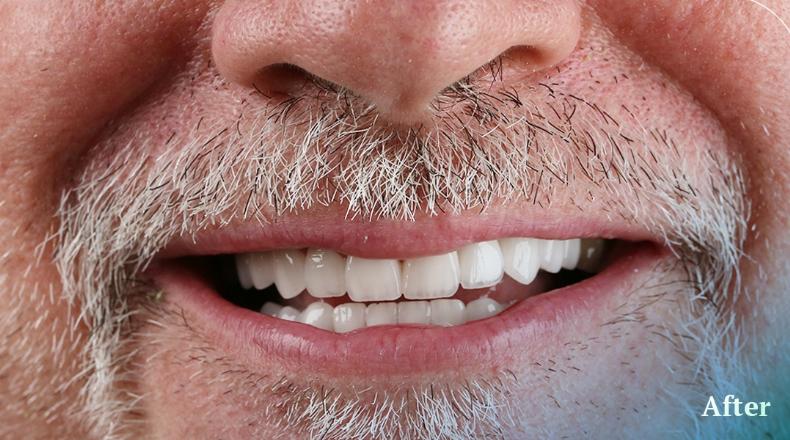
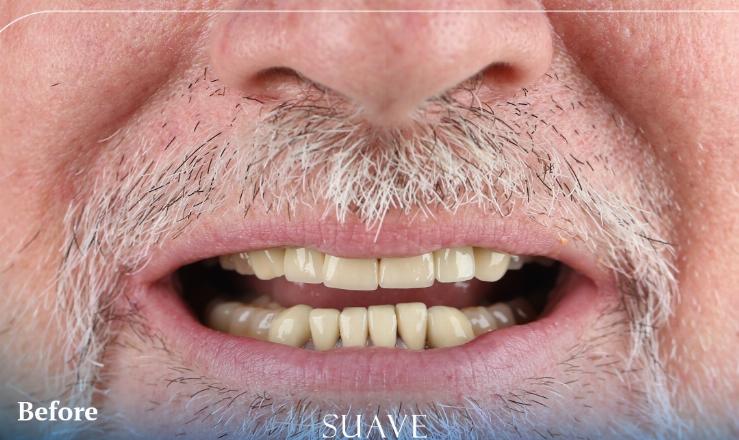
Suave Clinic
Verified clinicFull smile restoration · Istanbul
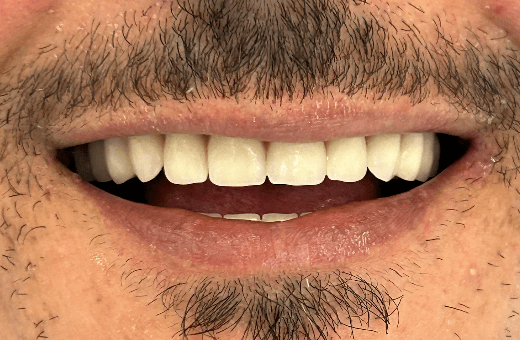
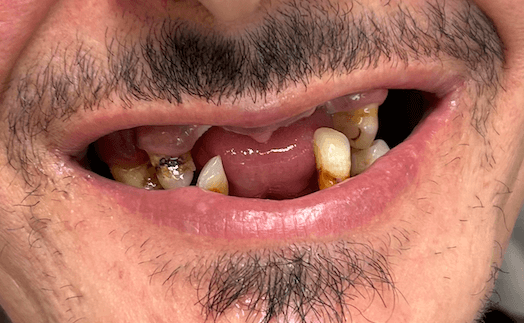
MDental Clinic
Verified clinicFull smile makeover · E-max veneers · Budapest
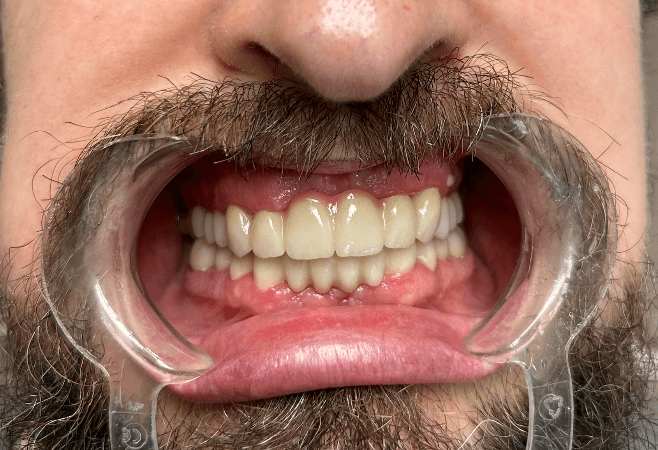
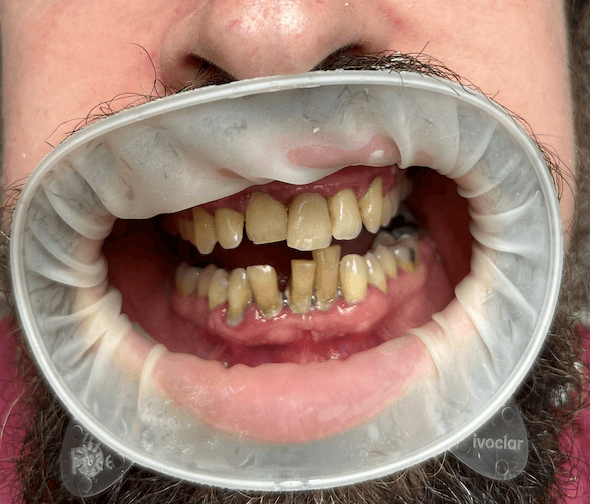
MDental Clinic
Verified clinicCrowns & restoration · Budapest
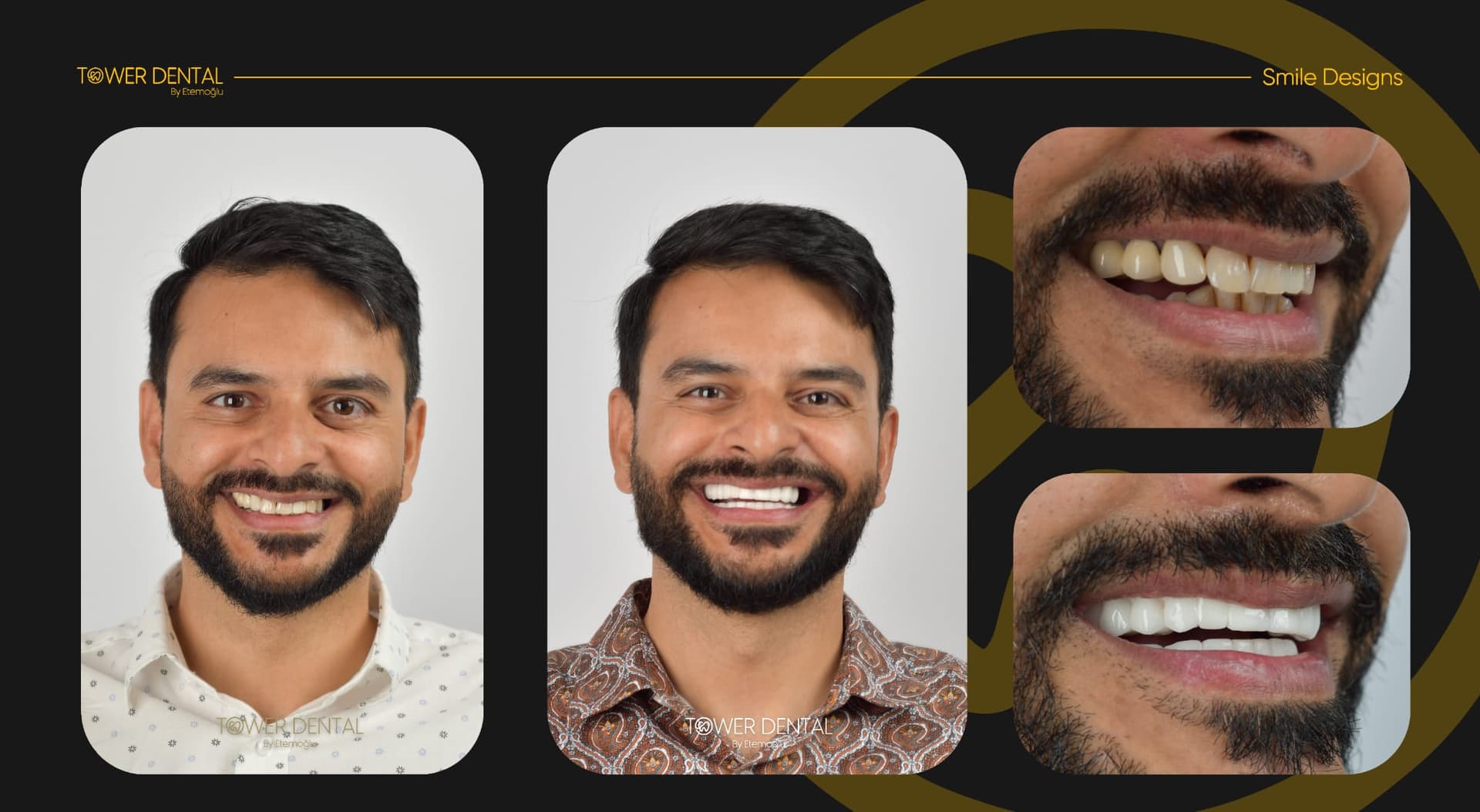 Before → After
Tower Dental Clinic
Verified clinicHollywood smile · E-max veneers · Istanbul
References & Sources
All clinical claims, pricing data, and statistics in this article are based on peer-reviewed research, official regulatory sources, and publicly verifiable data. We invite you to verify anything before making a treatment decision.
- 1.BBC News, "Turkey teeth: The dental tourism risks patients don't see." February 2023.
- 2.BBC, "Turkey Teeth: Bargain Smiles or Big Mistake?" — documentary investigating dental tourism risks, 2022.
- 3.Euronews, "Medical tourism: Dental expert explains why Turkey teeth can be a costly mistake." October 2024.
- 4.General Dental Council (UK), "Going abroad for dental treatment" — patient guidance.
- 5.British Dental Association (BDA), "Dental tourism: Patients need to know the risks."
- 6.T.C. Saglik Bakanligi (Turkish Ministry of Health), Health Tourism Authorisation Regulations.
- 7.Kontakiotis, E.G. et al. (2015), "A prospective study of the incidence of asymptomatic pulp necrosis following crown preparation," Int. Endod. J., 48(6), 512-517.
- 8.Pjetursson, B.E. et al. (2012), "A systematic review of the survival and complication rates of implant-supported fixed dental prostheses after at least 5 years," Clin. Oral Implants Res., 23(S6), 22-38.
- 9.Sailer, I. et al. (2015), "All-ceramic or metal-ceramic tooth-supported fixed dental prostheses: a systematic review," Dent. Mater., 31(6), 603-624.
- 10.Türkiye Today, "1.5 million health tourists visited Türkiye in 2024, generating $3 billion in revenue." 2025.
Medical disclaimer: This article is for educational purposes and does not replace a clinical examination. Treatment outcomes vary between patients. Always consult a qualified dental professional.

About MyDentalFly
MyDentalFly is a UK-based platform that builds your treatment plan and matches you with vetted specialist clinics abroad — and a dentist at the clinic reviews and confirms every plan before you pay anything.
Our interactive assessment evaluates your dental needs and builds a bespoke package: every treatment explained, a matched clinic with reasons why, your named dentist, flight estimates, transport, and accommodation — all in one place. We maintain a small, vetted network across Turkey, Hungary and Poland, visit clinics in person, help arrange CBCT scans before you fly, and stay with you through the entire journey. Compare. Save. Smile.
Questions Pearl can answer about general anaesthetic dental work in turkey
- “Is treatment abroad safe?”
- “What would my case cost?”
- “Which clinic suits me?”
She answers in your own language, using prices from clinics we have checked. No sign-up, and she never asks for a phone number to give you an answer.
Tap a question — Pearl answers
Prefer a person? WhatsApp us · 020 4634 2312 ·
Clinically reviewed before booking
Every dental package built on MyDentalFly is reviewed by a qualified dentist before it gets accepted. Our clinical reviewers include specialists like Dr. Hubert Trępatowski — 800+ All-on-4 procedures, trained under Professor Paulo Malo (pioneer of the All-on-4 technique), graduate of Jagiellonian University Medical Faculty, Krakow.
About the author
Adam Smith
Head of Patient Research, MyDentalFly
Adam leads patient research at MyDentalFly, personally vetting clinics across Turkey, Hungary, and Poland. He has reviewed over 200 clinic proposals, analysed patient outcomes, and helped coordinate treatment plans for patients across the UK, USA, and Europe.
Clinically reviewed by
Dr. Ertan EtemogluLead Dentist & Co-Founder, Tower Dental Clinic
26 years in practice · 8,000+ patients/year · Turkish & American Dental Association member · Featured on Reuters
Content last reviewed: 12 February 2026


