Dental Tourism for Americans (2026)
By Adam Smith, Head of Patient Research
Updated 21 February 2026 · Dental tourism researcher · Clinic vetting specialist · 40+ clinics assessed on-site
Clinically reviewed by Dr. Ertan Etemoglu, Lead Dentist & Co-Founder
Tower Dental Clinic, Istanbul · 26 years in practice · 8,000+ patients/year · Turkish & American Dental Association member · Featured on Reuters

About MyDentalFly
We build your treatment plan and match you with vetted specialist clinics in Turkey, Hungary and Poland — and a dentist at the clinic confirms every plan before you pay anything.
Vetted clinics only· Turkey · Hungary · Poland·1,875 verified prices
Pearl, our dental consultant
Pearl
Pearl · online
Hi, I'm Pearl 👋 Ask me anything about dental treatment abroad — or tell me what you need and I'll build your package.
What I build for you

Smile Analyser
Send one photo. I tell you what I can see.
Try asking about this

850,000+ Americans went abroad for dental work in 2025. Here's what you need to know about destinations, costs, safety, and whether it makes sense for you.
850,000 Americans sought dental care outside the US in 2025. That figure has grown 15-20% year-on-year since 2019. The reason is simple: American dental costs have outpaced inflation by 3x over the past decade, while insurance coverage has barely moved.
The average American spends $1,040 out-of-pocket on dental care annually. For anyone needing implants, crowns, or cosmetic work, that number jumps to $5,000-$50,000 — costs that most insurance plans cap at $1,500-$2,500/year.
Where Americans Actually Go
Five destinations dominate. Each serves a different patient profile:
Mexico
Best for: Americans in border states, quick procedures, implants and crowns.
550,000+ US patients in 2024. Cities like Tijuana, Los Algodones, and Cancún have entire dental districts built around American patients. Los Algodones — nicknamed "Molar City" — has more dentists per capita than anywhere on Earth.
- Flight: 2-5 hours from most US cities (or drive from border states)
- Savings: 50-70% vs US prices
- Single implant: $900-$1,500
Turkey
Best for: Cosmetic makeovers, veneers, full mouth work, combining treatment with travel.
Istanbul leads globally for dental tourism volume. Turkish clinics are particularly strong in cosmetic dentistry — veneers, Hollywood Smiles, and combined aesthetic treatments. The city itself makes for a genuine vacation.
- Flight: 10-14 hours from US (direct from 10+ cities)
- Savings: 60-75% vs US prices
- Single implant: $700-$1,100
Costa Rica
Best for: Americans wanting a nearby English-friendly option with vacation appeal.
San José has a well-developed dental tourism industry, particularly popular with retirees. ADA-equivalent standards, many US-trained dentists.
- Flight: 3-5 hours from most US cities
- Savings: 40-60% vs US prices
- Single implant: $1,000-$1,800
Colombia
Best for: Budget-conscious patients, growing medical tourism infrastructure.
Medellín and Bogotá have rapidly expanded their dental tourism offerings. Strong value, though less established than Mexico or Turkey for dental specifically.
- Flight: 4-6 hours from Miami/Houston
- Savings: 50-70% vs US prices
- Single implant: $800-$1,400
Hungary (Budapest)
Best for: Americans already traveling to Europe, premium implant work.
Budapest pioneered dental tourism 20+ years ago. EU-regulated, established, slightly pricier than Turkey or Mexico but with a strong reputation.
- Flight: 9-11 hours from East Coast
- Savings: 50-65% vs US prices
- Single implant: $1,000-$1,500
Pearl
MyDentalFly’s dental consultant
Something worth knowing while you're reading: almost every dental decision comes down to two things a price list can't tell you — what condition the surrounding teeth and bone are in, and how permanent you want the result to be. Those are what make two people's treatment for the 'same' problem look completely different.
What's brought you here today?
What Treatments Make Sense Abroad?
The rule of thumb: if your US quote is over $5,000, going abroad saves money even after flights and hotel.
Worth the Flight
| Treatment | US Cost | Abroad Range | Min. Saving |
|---|---|---|---|
| 4+ dental implants | $16,000+ | $2,800-$6,000 | $10,000+ |
| All-on-4 (per arch) | $18,000-$35,000 | $4,000-$8,000 | $10,000+ |
| 10-20 veneers | $10,000-$30,000 | $2,200-$6,000 | $7,000+ |
| Full mouth crowns | $10,000-$20,000 | $2,000-$5,000 | $5,000+ |
| Smile makeover | $15,000-$50,000 | $4,000-$10,000 | $10,000+ |
Not Worth It
- Single crown ($1,200-$1,800 in US — savings don't cover travel)
- Routine fillings
- Orthodontics (braces require monthly adjustments)
- Emergencies (time-sensitive)
The Safety Question
This is what stops most people. Here's the honest answer:
Accredited international clinics follow the same sterilization, equipment, and safety protocols as US practices. The implant brands are identical — Nobel Biocare, Straumann, Osstem are manufactured globally. An Osstem implant placed in Istanbul is the same product placed at a clinic in Chicago.
The risk isn't the treatment quality — it's choosing the wrong clinic. Just like in the US, there are excellent clinics and mediocre ones. The difference: abroad, you can't rely on word-of-mouth from friends or Yelp reviews.
How to protect yourself:
- Check JCI accreditation (international gold standard)
- Verify your specific dentist's qualifications and experience
- Ask for before/after photos of similar cases
- Get a detailed treatment plan in writing before committing
- Use a platform that pre-vets clinics (that's what we do)
What US Insurance Covers Abroad
Short answer: almost nothing. US dental insurance plans don't reimburse for treatment received outside the country. A few exceptions:
- Some PPO plans reimburse based on "usual and customary" fees regardless of where treatment was performed — check your plan details
- Cigna Global and Aetna International cover dental abroad, but these are expat/global plans, not standard domestic PPOs
- FSA/HSA funds can generally be used for dental treatment abroad — it's a qualified medical expense regardless of location
The Real Process
Before you contact any clinic, get a proper dental assessment. You need to know exactly what you need — not what a clinic wants to sell you. That changes the entire dynamic.
With your assessment in hand, get itemized quotes from 2-3 clinics. Compare treatment plans, not just prices. A cheaper quote that skips a bone graft you actually need is not cheaper.
Once you've chosen a clinic, confirm treatment dates before booking flights. Most clinics arrange airport transfers and have partner hotel rates. Treatment itself runs 5-7 days for most cases — full arch implants may need two trips spaced 3-6 months apart.
After you return, your US dentist handles routine check-ups. The overseas clinic covers warranty support if anything needs attention.
Getting Started
Our dental assessment takes 10 minutes. No insurance needed. You'll get:
- A map of which teeth need treatment
- Recommended procedures based on your situation
- Real USD prices from verified clinics across multiple countries
Start your free assessment — straightforward pricing, no insurance runaround.
Related: Best Country for Dental Implants (2026 Comparison)
See also: All-on-4 Guide
Next Steps
The candidacy checker tells you in 60 seconds if you're suitable for implants. The dental assessment builds your bespoke dental package — mapping your teeth and matching you with the right clinic. The savings calculator shows verified clinic prices vs home costs.
We've verified every clinic on our platform and removed eight that didn't meet our standards — unlike directories that list anyone who pays. Your dental tourism consultant coordinates everything once you're ready.
Guide: Dental Tourism from UK Guide
Related: Dental Tourism for Nervous Patients
What your package would look like
Your package, building
ExamplePackage total
building…
—
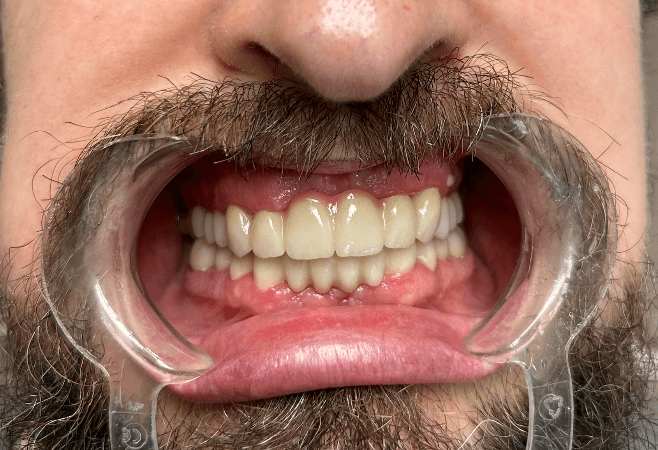
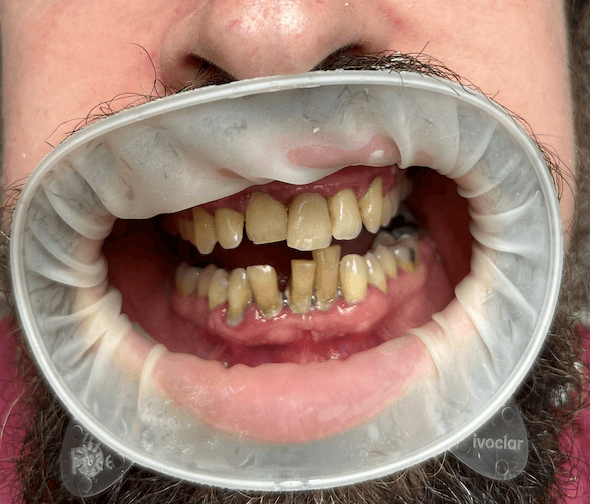
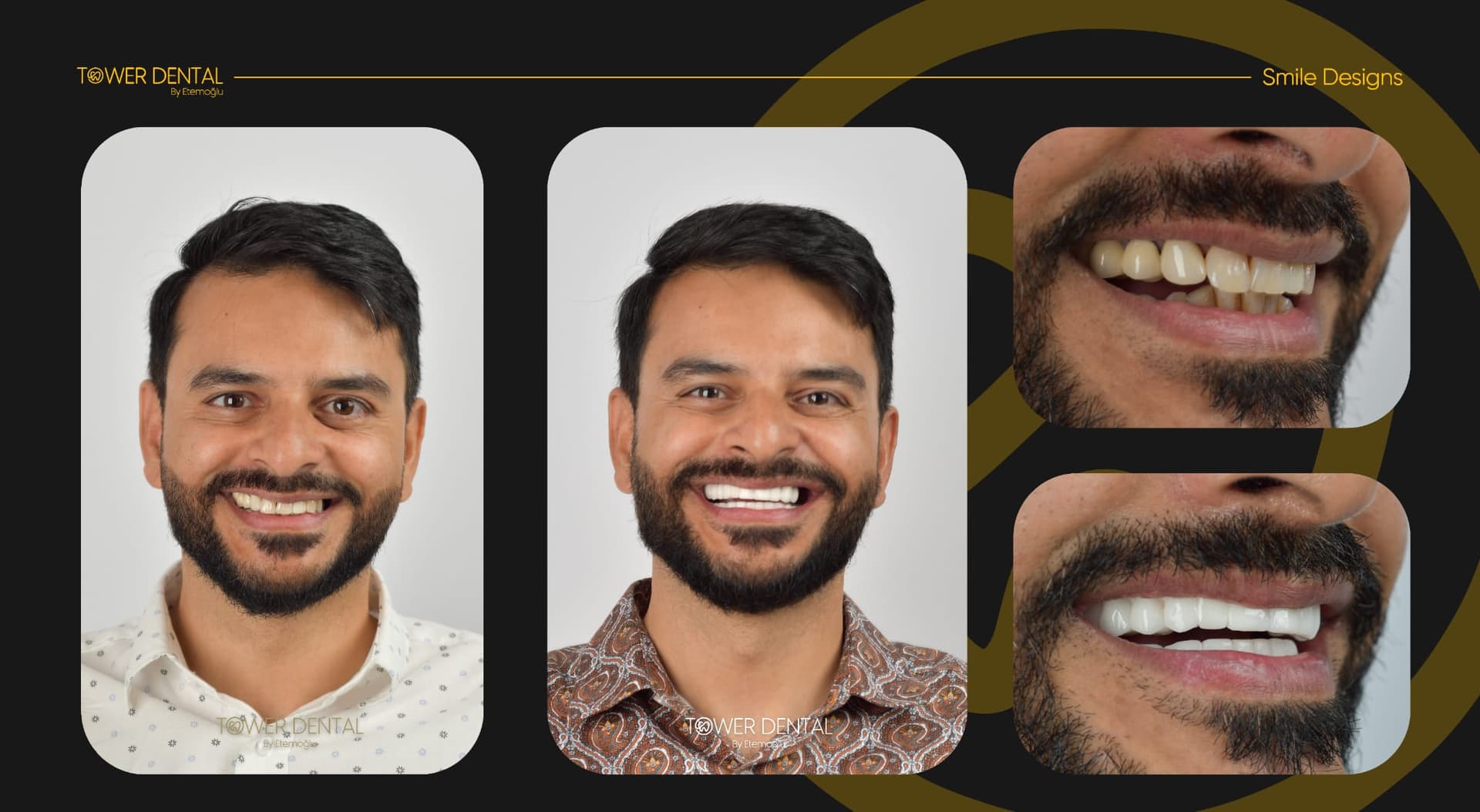
Real results from verified clinics
Drag the slider to compare before & after
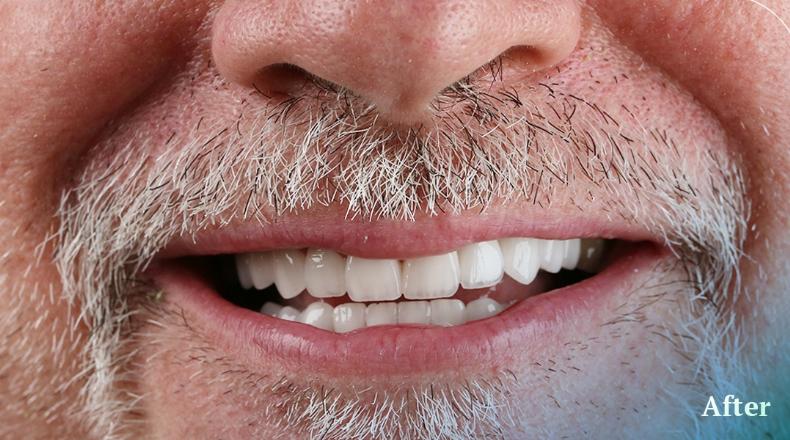
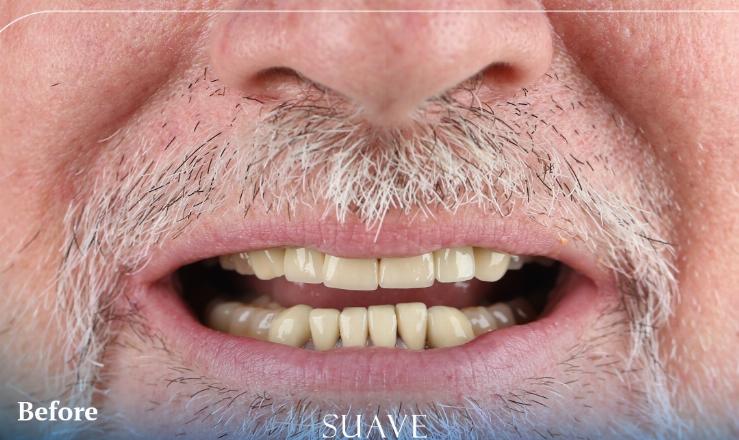
Suave Clinic
Verified clinicFull smile restoration · Istanbul
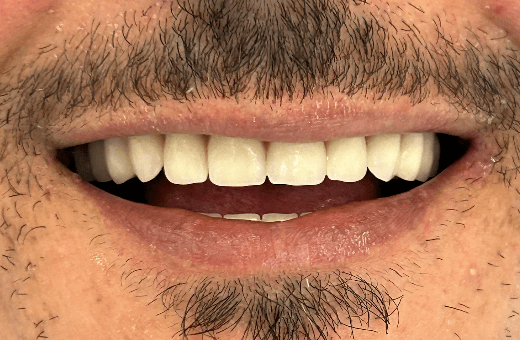
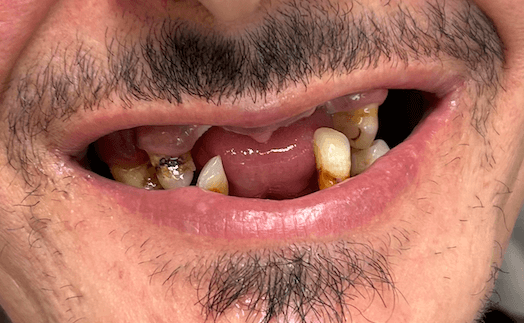
MDental Clinic
Verified clinicFull smile makeover · E-max veneers · Budapest
MDental Clinic
Verified clinicCrowns & restoration · Budapest
 Before → After
Tower Dental Clinic
Verified clinicHollywood smile · E-max veneers · Istanbul
The 60-Second Clinic Screen
Use this after you've collected 2-3 quotes from different clinics. Each clinic falls into one of three zones.
GREEN — Book with confidence
- Named treating dentist with verifiable credentials
- Video consultation with the actual dentist before any deposit
- CBCT scan required, itemised written treatment plan
- Specific zirconia brand and implant system named
- Night-guard included as standard for full-mouth work
- 10-year written warranty with named clinic legal entity
- Clear follow-up protocol post-treatment
- Willing to say "no" or stage treatment over multiple trips
YELLOW — Ask more questions
- Price is 20-40% below honest market rate but not absurd
- Treatment plan exists but is not fully itemised
- CBCT offered but not automatic
- Warranty described but not yet in writing
- Patient coordinator is first contact — insist on dentist video call
- Hotel included but you can decline and see the clinical price alone
- Reviews are good but thin on long-term follow-up detail
RED — Walk away
- Sub-£150 crown prices, "20 in 4 days"
- No dentist visible on website, coordinator-only
- No CBCT, no 3D planning, no digital scanner
- High-pressure "book today" sales tactics
- Licence number refused or impossible to verify
- No written informed consent in your language
- Night-guard not mentioned, no follow-up plan
- Warranty is verbal only, or tied to return flights at your cost
References & Sources
All clinical claims, pricing data, and statistics in this article are based on peer-reviewed research, official regulatory sources, and publicly verifiable data. We invite you to verify anything before making a treatment decision.
- 1.BBC News, "Turkey teeth: The dental tourism risks patients don't see." February 2023.
- 2.BBC, "Turkey Teeth: Bargain Smiles or Big Mistake?" — documentary investigating dental tourism risks, 2022.
- 3.Euronews, "Medical tourism: Dental expert explains why Turkey teeth can be a costly mistake." October 2024.
- 4.General Dental Council (UK), "Going abroad for dental treatment" — patient guidance.
- 5.British Dental Association (BDA), "Dental tourism: Patients need to know the risks."
- 6.T.C. Saglik Bakanligi (Turkish Ministry of Health), Health Tourism Authorisation Regulations.
- 7.Kontakiotis, E.G. et al. (2015), "A prospective study of the incidence of asymptomatic pulp necrosis following crown preparation," Int. Endod. J., 48(6), 512-517.
- 8.Pjetursson, B.E. et al. (2012), "A systematic review of the survival and complication rates of implant-supported fixed dental prostheses after at least 5 years," Clin. Oral Implants Res., 23(S6), 22-38.
- 9.Sailer, I. et al. (2015), "All-ceramic or metal-ceramic tooth-supported fixed dental prostheses: a systematic review," Dent. Mater., 31(6), 603-624.
- 10.Türkiye Today, "1.5 million health tourists visited Türkiye in 2024, generating $3 billion in revenue." 2025.
Medical disclaimer: This article is for educational purposes and does not replace a clinical examination. Treatment outcomes vary between patients. Always consult a qualified dental professional.

About MyDentalFly
MyDentalFly is a UK-based platform that builds your treatment plan and matches you with vetted specialist clinics abroad — and a dentist at the clinic reviews and confirms every plan before you pay anything.
Our interactive assessment evaluates your dental needs and builds a bespoke package: every treatment explained, a matched clinic with reasons why, your named dentist, flight estimates, transport, and accommodation — all in one place. We maintain a small, vetted network across Turkey, Hungary and Poland, visit clinics in person, help arrange CBCT scans before you fly, and stay with you through the entire journey. Compare. Save. Smile.
Questions Pearl can answer about dental tourism for americans (2026)
- “Is treatment abroad safe?”
- “What would my case cost?”
- “Which clinic suits me?”
She answers in your own language, using prices from clinics we have checked. No sign-up, and she never asks for a phone number to give you an answer.
Tap a question — Pearl answers
Prefer a person? WhatsApp us · 020 4634 2312 ·
Clinically reviewed before booking
Every dental package built on MyDentalFly is reviewed by a qualified dentist before it gets accepted. Our clinical reviewers include specialists like Dr. Hubert Trępatowski — 800+ All-on-4 procedures, trained under Professor Paulo Malo (pioneer of the All-on-4 technique), graduate of Jagiellonian University Medical Faculty, Krakow.
About the author
Adam Smith
Head of Patient Research, MyDentalFly
Adam leads patient research at MyDentalFly, personally vetting clinics across Turkey, Hungary, and Poland. He has reviewed over 200 clinic proposals, analysed patient outcomes, and helped coordinate treatment plans for patients across the UK, USA, and Europe.
Clinically reviewed by
Dr. Ertan EtemogluLead Dentist & Co-Founder, Tower Dental Clinic
26 years in practice · 8,000+ patients/year · Turkish & American Dental Association member · Featured on Reuters
Content last reviewed: 21 February 2026


