Best Denture Adhesive: A Practical Guide
By Adam Smith, Head of Patient Research
Updated 28 March 2026 · Dental tourism researcher · Clinic vetting specialist · 40+ clinics assessed on-site

About MyDentalFly
We build your treatment plan and match you with vetted specialist clinics in Turkey, Hungary and Poland — and a dentist at the clinic confirms every plan before you pay anything.
Vetted clinics only· Turkey · Hungary · Poland·1,875 verified prices
Pearl, our dental consultant
Pearl
Pearl · online
Hi, I'm Pearl 👋 Ask me anything about dentures and implant-supported teeth abroad — or tell me what you need and I'll build your package.
What I build for you

Smile Analyser
Send one photo. I tell you what I can see.
Try asking about this

Fixodent, Poligrip, Sea-Bond or Cushion Grip? We compare the top 5 denture adhesives — plus what to do when adhesive isn't enough.
You're using denture adhesive every day and it's affecting your life — the taste, the mess, the constant worry about slipping. Here's what actually works, and when it might be time to consider a permanent alternative.
Types of Denture Adhesive
There are four main formats, and each suits a different situation.
Cream/paste adhesives (Fixodent, Poligrip) are the most popular. You apply small dots or strips to the denture, press in place, and bite down. They offer strong hold and are the easiest to find in any pharmacy.
Powder adhesives work similarly but dissolve more cleanly. Some wearers prefer them for upper dentures because there's less product buildup throughout the day.
Adhesive pads/wafers (Sea-Bond, Cushion Grip) come pre-cut to fit upper or lower arches. They're less messy than paste and good for people with dexterity issues.
Cushion liners (Ezo, Cushion Grip thermoplastic strips) sit between the denture base and gum, acting as both adhesive and a soft buffer. These are particularly useful if your denture causes soreness.
Pearl
MyDentalFly’s dental consultant
One thing worth knowing: if you're reapplying adhesive through the day just to keep a denture in place, the adhesive usually isn't the problem — the fit is. The gum and bone underneath keep changing shape after teeth are lost, so a denture that fitted well a few years ago won't sit the same now. That part is fixable.
How old is your denture?
Top 5 Denture Adhesives Compared
| Product | Type | Hold Strength | Ease of Removal | Approximate Price | Best For |
|---|---|---|---|---|---|
| Fixodent Original | Cream | Strong | Moderate | £4–6 | Daily use, full dentures |
| Super Poligrip | Cream | Very strong | Moderate | £4–7 | Active users, all-day wear |
| Cushion Grip | Thermoplastic | Medium-long (3 days) | Easy | £8–12 | Comfort + moderate hold |
| Sea-Bond Pads | Adhesive wafer | Medium | Very easy | £5–8 | Mess-free, sensitive gums |
| Ezo Cushion Liners | Fabric liner | Light-medium | Easy | £5–8 | Sore gums, older dentures |
Notes on each:
Fixodent Original is the benchmark. Most NHS dental practices still recommend it. It's reliable, widely available, and works well for most full-denture wearers.
Super Poligrip has a slightly longer hold and is zinc-free in its current formula — an important note for people who've used older versions and worried about zinc toxicity from overuse.
Cushion Grip hardens into a thermoplastic, so you apply it every few days rather than daily. Many users find this less fatiguing. It also cushions dentures that have developed a slightly loose fit over time.
Sea-Bond pads are genuinely underrated. The clean removal is a real quality-of-life improvement, especially if you find residue cleanup difficult or unpleasant.
Ezo liners are a soft fabric strip, gentle on inflamed or receded gum tissue. They're not the strongest option, but for people dealing with sore spots, they can be more comfortable than paste alternatives.
When Adhesive Isn't Enough
Denture adhesive is a tool for managing minor fit issues. It's not a substitute for a well-fitting denture.
If you're using more than one small strip of adhesive per use, the denture probably needs relining or replacement. Bone resorption — the natural shrinkage of the jaw that happens after tooth loss — gradually changes the shape of your gums. Dentures don't change with them.
"I was going through a tube of Fixodent every 10 days. My dentist kept telling me to use less but nothing worked. Turns out my lower jaw had changed shape and the denture was just... wrong." — denture wearer, 58, from a dental tourism forum
Warning signs that adhesive is masking a bigger problem:
- You need to reapply mid-day
- The denture shifts while eating, even with adhesive
- You're developing persistent sore spots
- You've had the same denture for more than 5–7 years
A denture reline (where the inside base is reshaped to match your current gum contour) costs roughly £200–400 in the UK and can buy you several more years of better fit.
If the bone loss is more advanced, a reline won't help — and this is often where implant-supported dentures enter the conversation.
The Permanent Fix: Implant-Supported Dentures
Implant-supported dentures don't rely on adhesive or suction. Instead, 2–6 dental implants anchor the prosthetic permanently to the jawbone.
The most well-known version is All-on-4 — four implants placed at angles to support a full arch prosthetic. There's also All-on-6 for greater stability, and implant-retained dentures which snap onto 2–4 implants but can still be removed for cleaning.
The practical difference is significant. No adhesive, no removal at night (for fixed options), no diet restrictions, and — critically — implants actually stimulate the jawbone and slow further bone loss, which conventional dentures don't do.
If you're already using denture adhesive daily, it's worth knowing whether you're a candidate. An online dental assessment can identify the likely requirements before you speak to any clinic. Our Pearl AI assistant can also explain bone grafting requirements if your case is more complex — which is relevant here, since advanced bone loss sometimes needs grafting before implants are placed.
Unlike directories that list whoever pays for placement, a proper assessment gives you a clearer picture of what your specific situation requires before you compare any prices.
What Implant Dentures Cost (UK, USA vs Turkey)
| Treatment | UK | USA | Turkey |
|---|---|---|---|
| All-on-4 (full arch) | £15,000–20,000 | $20,000–30,000 | £3,800–7,000 |
| All-on-6 (full arch) | £18,000–25,000 | $25,000–35,000 | £4,500–8,000 |
| Implant-retained denture (2–4 implants) | £8,000–12,000 | $10,000–18,000 | £4,000–6,000 |
Turkey is the primary destination for this type of work due to the volume of cases and the resulting specialist experience. Hungary is a strong alternative, particularly for patients from mainland Europe — Hungarian clinics have been taking dental patients from Germany, Austria, and the Netherlands for over 20 years.
The savings on an All-on-4 are substantial enough that many patients cover flights, accommodation, and several days in Istanbul or Budapest and still spend less than half of the UK or US price.
For context on implant pricing across destinations, the dental implants Turkey guide has a detailed treatment-by-treatment breakdown, and how much are implants in Turkey in 2026 covers current pricing in more detail.
If implants aren't right for your situation, there are also alternatives to dental implants worth understanding — including high-quality implant-retained dentures that combine affordability with much better stability than conventional dentures.
Next Steps
If you're tired of adhesive and considering implants, the candidacy checker tells you in 60 seconds if you're suitable. The dental assessment maps your teeth and shows you what permanent options would cost at verified clinics abroad — often less than a year's worth of premium adhesive.
See also: All-on-4 Guide
Next Steps
The candidacy checker tells you in 60 seconds if you're suitable for implants. The dental assessment builds your bespoke dental package — mapping your teeth and matching you with the right clinic. The savings calculator shows verified clinic prices vs home costs.
We've verified every clinic on our platform and removed eight that didn't meet our standards — unlike directories that list anyone who pays. Your dental tourism consultant coordinates everything once you're ready.
What your package would look like
Your package, building
ExamplePackage total
building…
—
Real results from verified clinics
Drag the slider to compare before & after
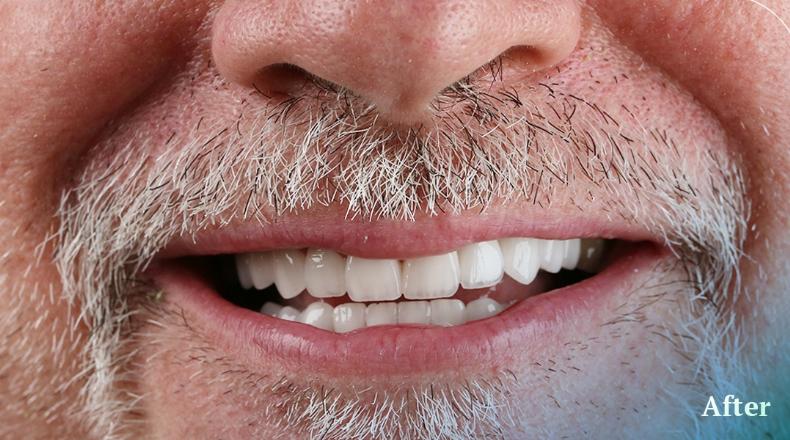
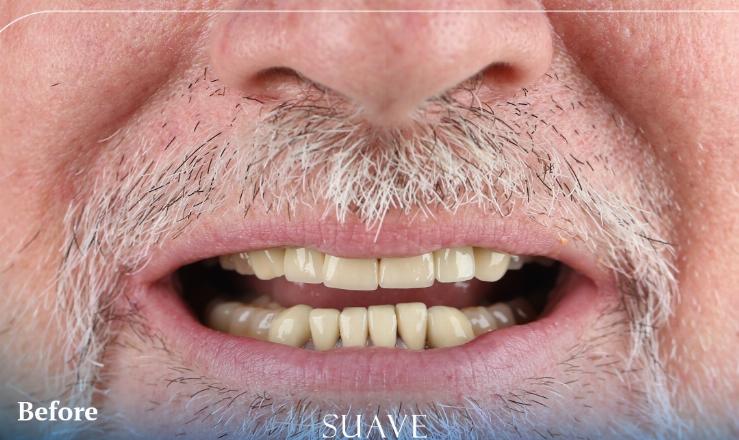
Suave Clinic
Verified clinicFull smile restoration · Istanbul
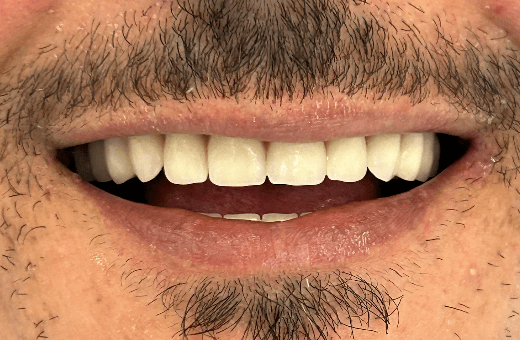
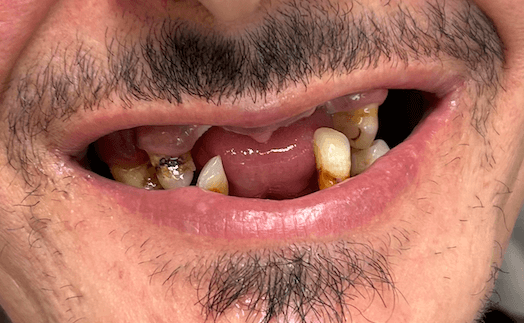
MDental Clinic
Verified clinicFull smile makeover · E-max veneers · Budapest
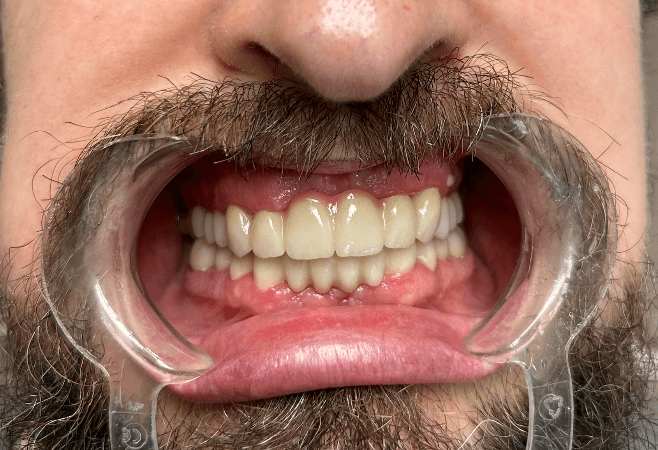
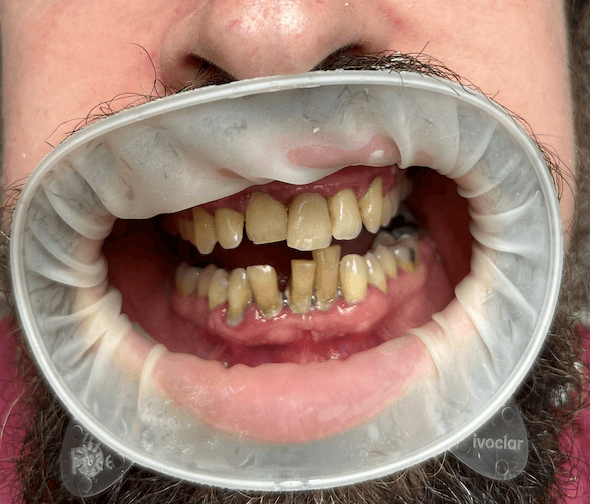
MDental Clinic
Verified clinicCrowns & restoration · Budapest
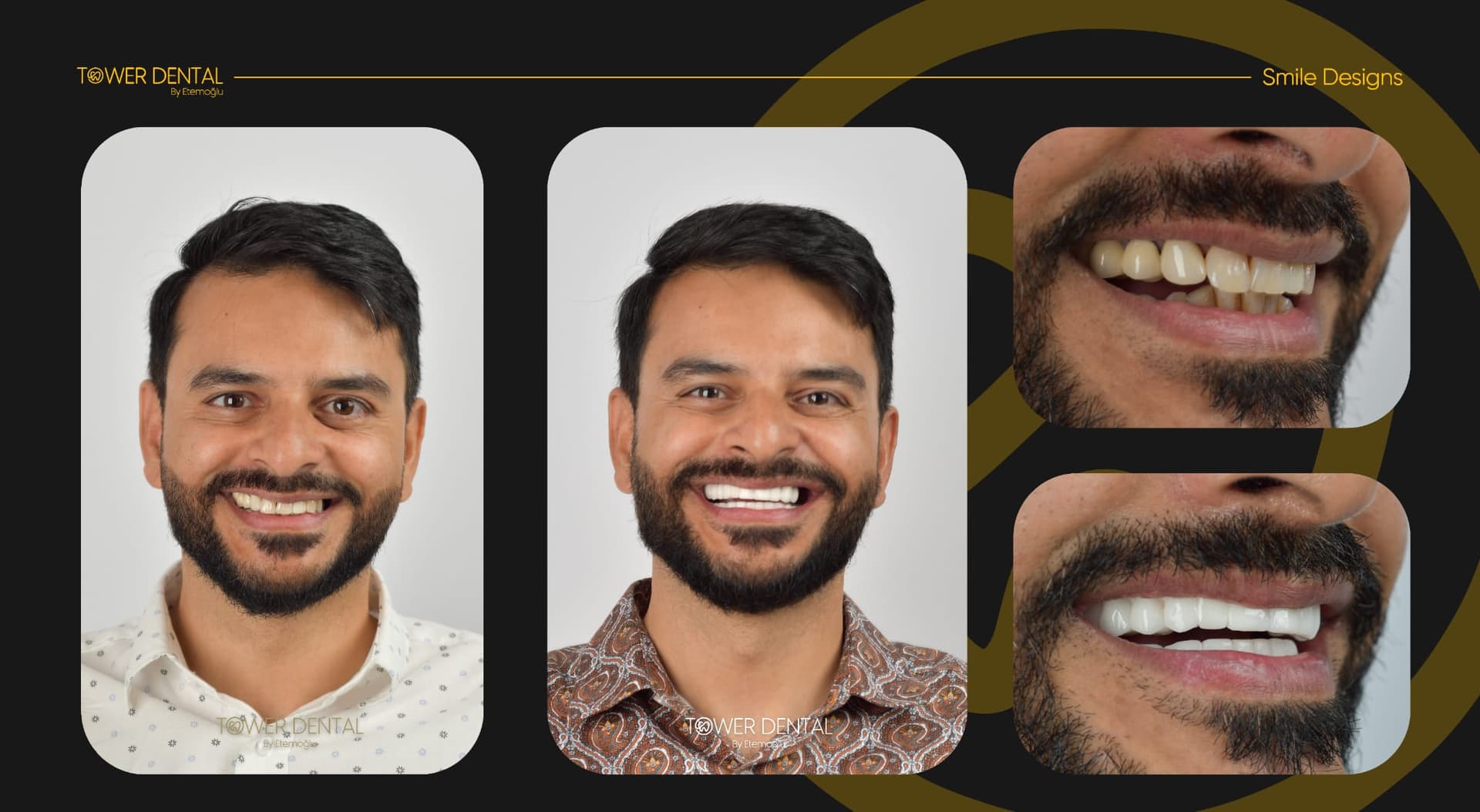 Before → After
Tower Dental Clinic
Verified clinicHollywood smile · E-max veneers · Istanbul
References & Sources
All clinical claims, pricing data, and statistics in this article are based on peer-reviewed research, official regulatory sources, and publicly verifiable data. We invite you to verify anything before making a treatment decision.
- 1.BBC News, "Turkey teeth: The dental tourism risks patients don't see." February 2023.
- 2.BBC, "Turkey Teeth: Bargain Smiles or Big Mistake?" — documentary investigating dental tourism risks, 2022.
- 3.Euronews, "Medical tourism: Dental expert explains why Turkey teeth can be a costly mistake." October 2024.
- 4.General Dental Council (UK), "Going abroad for dental treatment" — patient guidance.
- 5.British Dental Association (BDA), "Dental tourism: Patients need to know the risks."
- 6.T.C. Saglik Bakanligi (Turkish Ministry of Health), Health Tourism Authorisation Regulations.
- 7.Kontakiotis, E.G. et al. (2015), "A prospective study of the incidence of asymptomatic pulp necrosis following crown preparation," Int. Endod. J., 48(6), 512-517.
- 8.Pjetursson, B.E. et al. (2012), "A systematic review of the survival and complication rates of implant-supported fixed dental prostheses after at least 5 years," Clin. Oral Implants Res., 23(S6), 22-38.
- 9.Sailer, I. et al. (2015), "All-ceramic or metal-ceramic tooth-supported fixed dental prostheses: a systematic review," Dent. Mater., 31(6), 603-624.
- 10.Türkiye Today, "1.5 million health tourists visited Türkiye in 2024, generating $3 billion in revenue." 2025.
Medical disclaimer: This article is for educational purposes and does not replace a clinical examination. Treatment outcomes vary between patients. Always consult a qualified dental professional.

About MyDentalFly
MyDentalFly is a UK-based platform that builds your treatment plan and matches you with vetted specialist clinics abroad — and a dentist at the clinic reviews and confirms every plan before you pay anything.
Our interactive assessment evaluates your dental needs and builds a bespoke package: every treatment explained, a matched clinic with reasons why, your named dentist, flight estimates, transport, and accommodation — all in one place. We maintain a small, vetted network across Turkey, Hungary and Poland, visit clinics in person, help arrange CBCT scans before you fly, and stay with you through the entire journey. Compare. Save. Smile.
Questions Pearl can answer about best denture adhesive: a practical guide
- “Is treatment abroad safe?”
- “What would my case cost?”
- “Which clinic suits me?”
She answers in your own language, using prices from clinics we have checked. No sign-up, and she never asks for a phone number to give you an answer.
Tap a question — Pearl answers
Prefer a person? WhatsApp us · 020 4634 2312 ·
Clinically reviewed before booking
Every dental package built on MyDentalFly is reviewed by a qualified dentist before it gets accepted. Our clinical reviewers include specialists like Dr. Hubert Trępatowski — 800+ All-on-4 procedures, trained under Professor Paulo Malo (pioneer of the All-on-4 technique), graduate of Jagiellonian University Medical Faculty, Krakow.
About the author
Adam Smith
Head of Patient Research, MyDentalFly
Adam leads patient research at MyDentalFly, personally vetting clinics across Turkey, Hungary, and Poland. He has reviewed over 200 clinic proposals, analysed patient outcomes, and helped coordinate treatment plans for patients across the UK, USA, and Europe.


