Buck Teeth: Causes, Fixes and Costs
By Adam Smith, Head of Patient Research
Updated 28 March 2026 · Dental tourism researcher · Clinic vetting specialist · 40+ clinics assessed on-site

About MyDentalFly
We build your treatment plan and match you with vetted specialist clinics in Turkey, Hungary and Poland — and a dentist at the clinic confirms every plan before you pay anything.
Vetted clinics only· Turkey · Hungary · Poland·1,875 verified prices
Pearl, our dental consultant
Pearl
Pearl · online
Hi, I'm Pearl 👋 Ask me anything about the cost of dental treatment abroad — or tell me what you need and I'll build your package.

Smile Analyser
Send one photo. I tell you what I can see.
Try asking about this

Protruding teeth affect 15% of people. Braces, Invisalign, or veneers? Here's which fix actually works for your type of overjet — and what each costs.
You've had buck teeth your whole life and you're finally ready to do something about it. But the options are confusing — braces, veneers, surgery? And the costs range from £500 to £15,000 depending on who you ask. Here's the real breakdown.
What Causes Buck Teeth?
Buck teeth — also called protruding teeth, an overjet, or bunny teeth — occur when the upper front teeth extend further forward than the lower teeth. The causes are usually one of these:
Skeletal: The upper jaw (maxilla) is positioned further forward than the lower jaw, or the lower jaw is underdeveloped. This is a structural issue, not just a tooth position problem.
Dental: The teeth themselves are angled outward, even if the jaw position is normal. Often caused by childhood habits like thumb-sucking, prolonged dummy/pacifier use, or tongue thrusting.
Genetics: Jaw shape and tooth size are largely inherited. If a parent had buck teeth, there is a reasonable chance their children will too.
Understanding which type you have matters — because it changes which treatment will actually work.
Pearl
MyDentalFly’s dental consultant
Something worth doing before you compare any prices: a quote is only comparable if you know what's inside it. The gap between two quotes for 'the same' treatment is usually the parts nobody itemises — the abutments on an implant, the temporary teeth, the follow-up visits. Same headline number, very different job.
Have you been quoted for anything yet?
5 Treatment Options for Buck Teeth
1. Metal Braces
Traditional braces use brackets and wires to gradually reposition teeth over 18 to 36 months. For dental-origin buck teeth (where the issue is tooth angle rather than jaw position), braces are one of the most effective long-term fixes.
They work on complex cases, including severe overjets, and are often the only option for teenagers whose jaws are still developing.
2. Invisalign (Clear Aligners)
A series of removable clear trays that shift teeth incrementally. Invisalign can correct mild to moderate overjets effectively — the technology has improved significantly and many cases that once required braces can now be treated with aligners.
The tradeoff: you need to wear them 20 to 22 hours a day. Discipline matters.
3. Porcelain Veneers
Veneers are thin shells bonded to the front surface of teeth. They can make protruding teeth appear more uniform and improve the cosmetic appearance of your smile.
Honest caveat: Veneers do not move your teeth or correct your bite. If your overjet is causing bite problems, veneers alone will not fix them — and may even require significant enamel removal to accommodate the new shape. They are a cosmetic option, not an orthodontic one.
For mild cases where the protrusion is minor and bite function is unaffected, veneers can produce a dramatic aesthetic result — particularly popular alongside a hollywood smile transformation in Turkey.
4. Dental Crowns
Crowns cover the entire tooth and can reshape how a tooth sits visually. Like veneers, they are a restorative and cosmetic solution, not an orthodontic one. Crowns are more commonly considered when there is existing damage or decay to the tooth alongside the protrusion.
5. Orthognathic (Jaw) Surgery
For severe skeletal cases — where the jaw itself is significantly misaligned — surgery may be the only option that produces a functional result. Typically combined with braces before and after.
This is major surgery with a significant recovery period. It is reserved for cases where non-surgical options cannot achieve a stable, functional bite. Your orthodontist and oral surgeon would assess this together.
What Each Treatment Costs (UK, USA vs Turkey)
| Treatment | UK Cost | USA Cost | Turkey Cost | Saving vs UK |
|---|---|---|---|---|
| Metal Braces (full course) | £2,000–£3,000 | $3,000–$7,000 | £700–£1,400 | Up to 77% |
| Invisalign (full course) | £3,500–£5,500 | $3,000–$8,000 | £1,400–£2,500 | Up to 60% |
| Porcelain Veneers (per tooth) | £900 | $1,200–$2,500 | £220 | Up to 75% |
| Composite Veneers (per tooth) | £400 | $400–$1,000 | £100 | Up to 75% |
Turkey prices are indicative ranges across verified clinics. Hungary offers similar savings to Turkey on orthodontics and is popular with patients from Germany and the Netherlands.
Which Treatment Is Right for You?
The answer depends on two things: the cause of your overjet and the severity.
If your bite is affected (teeth don't meet properly, you have jaw pain, or chewing is difficult): you need orthodontic treatment — braces or Invisalign. Veneers will not fix this.
If your bite is fine and your concern is purely cosmetic: veneers or composite bonding may achieve the result you want faster and with less disruption to daily life.
If you have a significant skeletal jaw discrepancy: a consultation with an orthodontist or oral surgeon is the starting point. Online assessments can only go so far — jaw position needs clinical evaluation, often with a CBCT scan.
"I spent two years assuming I just needed veneers because that's what I kept seeing on Instagram. When I finally did the MyDentalFly assessment and uploaded my photos, Pearl flagged that my overjet might need orthodontic review first. I ended up doing Invisalign in Turkey for £1,800 — total cost including flights and hotel was still less than braces in London." — Emma R., Manchester
Getting Buck Teeth Fixed Abroad
Orthodontics and cosmetic dentistry are both well-suited to dental tourism — particularly in Turkey and Hungary, which have strong orthodontic training and established international patient programmes.
A few practical realities to understand:
Invisalign abroad works well — clinics send you home with your full set of trays, and check-ins can often be managed remotely or with your local dentist.
Braces abroad require more visits — if you need wire adjustments, you'll either need to return or arrange a local orthodontist to manage the ongoing treatment. Some patients do the initial fitting in Turkey and manage ongoing adjustments at home.
Veneers are the most straightforward for a single trip — the prep, fitting, and final placement typically happens within 5 to 7 days.
Most directories will show you a list of clinics and prices. What they don't tell you is which clinics have the specific orthodontic experience for complex overjet cases, or whether veneers are even appropriate for your situation.
MyDentalFly's approach is different. You complete an interactive dental chart marking which teeth are affected, answer a short health and dental assessment, and Pearl — our intelligent review layer — flags whether your case looks cosmetic or functional before you receive your dental package. Clinics then review your full case, not just a photo you sent via WhatsApp.
You can then compare treatment plans side by side across verified clinics in Istanbul, Antalya, Budapest, and other destinations — with prices shown in your home currency.
For a detailed breakdown of veneer options and costs, see our guide on how much veneers cost in Turkey in 2026, and if you're weighing veneer types, the veneers vs Lumineers comparison covers the key differences.
Next Steps
Not sure which fix is right for your teeth? The dental assessment maps your teeth in 2 minutes and recommends the right treatment. The savings calculator shows what it costs at verified clinics abroad vs UK prices.
Next Steps
The dental assessment maps your teeth in 2 minutes and recommends the right treatment for each one. The savings calculator shows verified clinic prices vs home costs.
We've verified every clinic on our platform. Your dental tourism consultant ensures the clinic follows the right treatment plan and manages the whole process — from patient file to deposit protection.
What your package would look like
Your package, building
ExamplePackage total
building…
—
Real results from verified clinics
Drag the slider to compare before & after
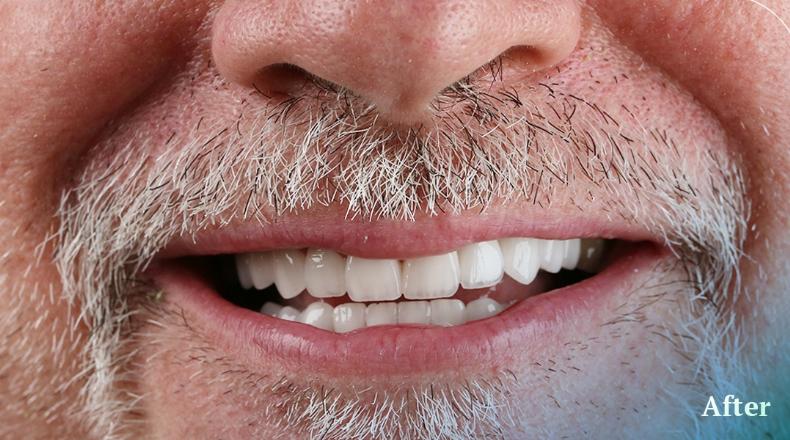
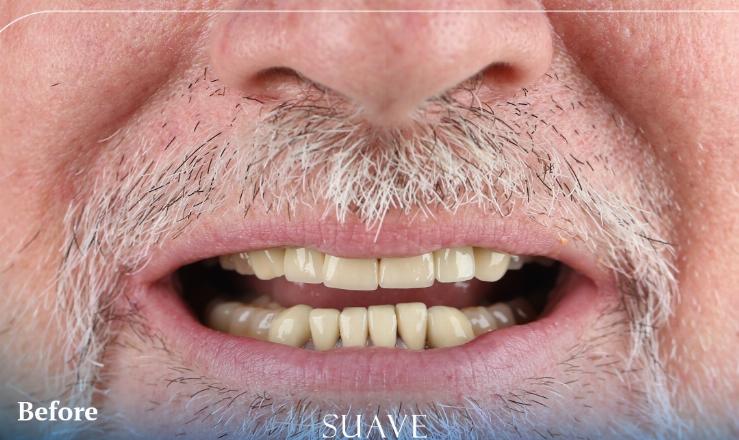
Suave Clinic
Verified clinicFull smile restoration · Istanbul
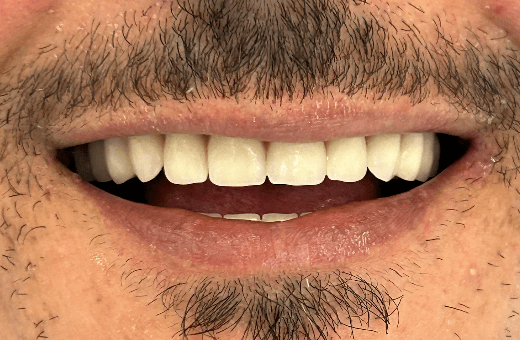
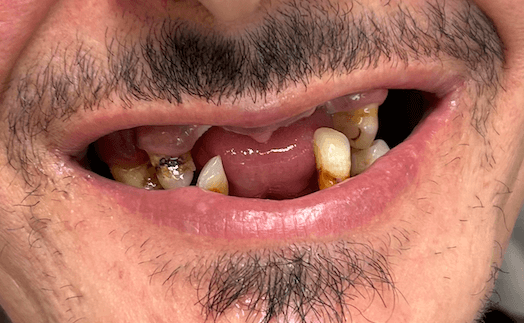
MDental Clinic
Verified clinicFull smile makeover · E-max veneers · Budapest
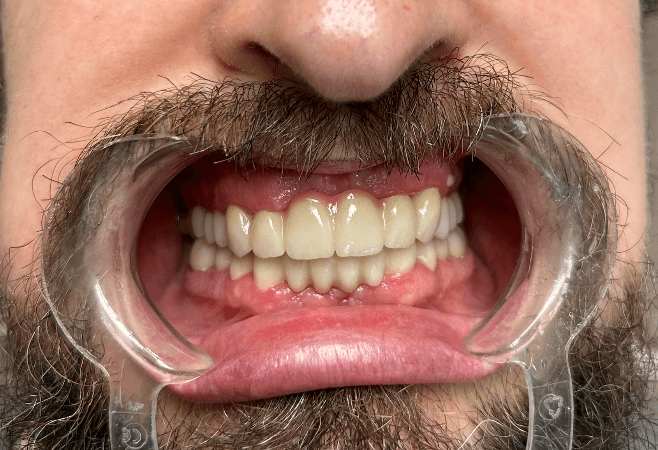
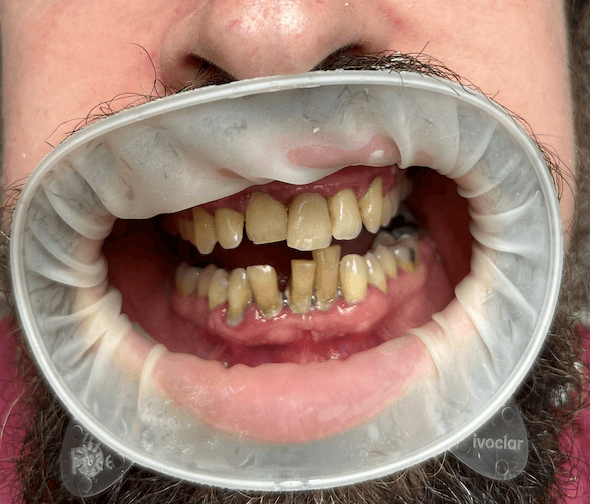
MDental Clinic
Verified clinicCrowns & restoration · Budapest
 Before → After
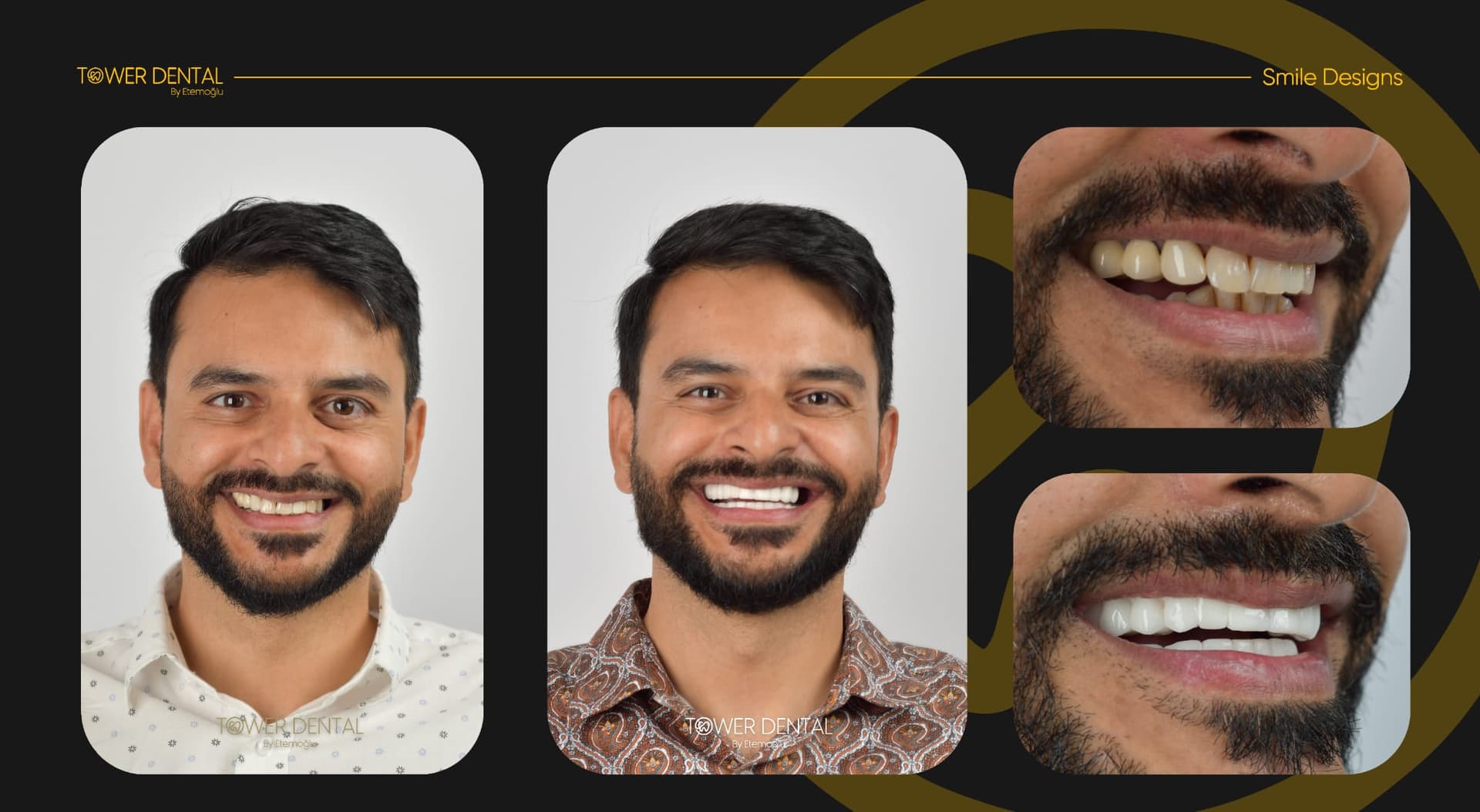
Tower Dental Clinic
Verified clinicHollywood smile · E-max veneers · Istanbul
References & Sources
All clinical claims, pricing data, and statistics in this article are based on peer-reviewed research, official regulatory sources, and publicly verifiable data. We invite you to verify anything before making a treatment decision.
- 1.BBC News, "Turkey teeth: The dental tourism risks patients don't see." February 2023.
- 2.BBC, "Turkey Teeth: Bargain Smiles or Big Mistake?" — documentary investigating dental tourism risks, 2022.
- 3.Euronews, "Medical tourism: Dental expert explains why Turkey teeth can be a costly mistake." October 2024.
- 4.General Dental Council (UK), "Going abroad for dental treatment" — patient guidance.
- 5.British Dental Association (BDA), "Dental tourism: Patients need to know the risks."
- 6.T.C. Saglik Bakanligi (Turkish Ministry of Health), Health Tourism Authorisation Regulations.
- 7.Kontakiotis, E.G. et al. (2015), "A prospective study of the incidence of asymptomatic pulp necrosis following crown preparation," Int. Endod. J., 48(6), 512-517.
- 8.Pjetursson, B.E. et al. (2012), "A systematic review of the survival and complication rates of implant-supported fixed dental prostheses after at least 5 years," Clin. Oral Implants Res., 23(S6), 22-38.
- 9.Sailer, I. et al. (2015), "All-ceramic or metal-ceramic tooth-supported fixed dental prostheses: a systematic review," Dent. Mater., 31(6), 603-624.
- 10.Türkiye Today, "1.5 million health tourists visited Türkiye in 2024, generating $3 billion in revenue." 2025.
Medical disclaimer: This article is for educational purposes and does not replace a clinical examination. Treatment outcomes vary between patients. Always consult a qualified dental professional.

About MyDentalFly
MyDentalFly is a UK-based platform that builds your treatment plan and matches you with vetted specialist clinics abroad — and a dentist at the clinic reviews and confirms every plan before you pay anything.
Our interactive assessment evaluates your dental needs and builds a bespoke package: every treatment explained, a matched clinic with reasons why, your named dentist, flight estimates, transport, and accommodation — all in one place. We maintain a small, vetted network across Turkey, Hungary and Poland, visit clinics in person, help arrange CBCT scans before you fly, and stay with you through the entire journey. Compare. Save. Smile.
Questions Pearl can answer about buck teeth: causes, fixes and costs
- “Is treatment abroad safe?”
- “What would my case cost?”
- “Which clinic suits me?”
She answers in your own language, using prices from clinics we have checked. No sign-up, and she never asks for a phone number to give you an answer.
Tap a question — Pearl answers
Prefer a person? WhatsApp us · 020 4634 2312 · or
Clinically reviewed before booking
Every dental package built on MyDentalFly is reviewed by a qualified dentist before it gets accepted. Our clinical reviewers include specialists like Dr. Hubert Trępatowski — 800+ All-on-4 procedures, trained under Professor Paulo Malo (pioneer of the All-on-4 technique), graduate of Jagiellonian University Medical Faculty, Krakow.
About the author
Adam Smith
Head of Patient Research, MyDentalFly
Adam leads patient research at MyDentalFly, personally vetting clinics across Turkey, Hungary, and Poland. He has reviewed over 200 clinic proposals, analysed patient outcomes, and helped coordinate treatment plans for patients across the UK, USA, and Europe.


