Veneers vs Lumineers: Which Are Right for You?
By Adam Smith, Head of Patient Research
Updated 28 March 2026 · Dental tourism researcher · Clinic vetting specialist · 40+ clinics assessed on-site
Clinically reviewed by Dr. Ertan Etemoglu, Lead Dentist & Co-Founder
Tower Dental Clinic, Istanbul · 26 years in practice · 8,000+ patients/year · Turkish & American Dental Association member · Featured on Reuters

About MyDentalFly
We build your treatment plan and match you with vetted specialist clinics in Turkey, Hungary and Poland — and a dentist at the clinic confirms every plan before you pay anything.
Vetted clinics only· Turkey · Hungary · Poland·1,875 verified prices
Pearl, our dental consultant
Pearl
Pearl · online
Hi, I'm Pearl 👋 Ask me anything about veneers abroad — or tell me what you need and I'll build your package.

Smile Analyser
Send one photo. I tell you what I can see.
Try asking about this

Veneers or Lumineers? One requires shaving your teeth, the other doesn't. Here's the full comparison.
Lumineers promise no-prep veneers — no drilling, no pain, reversible. Sounds perfect. But there's a reason most cosmetic dentists still recommend traditional veneers for most patients. Here's the real comparison.
The Fundamental Difference
The core issue is enamel removal.
Traditional porcelain veneers require the dentist to shave a thin layer off the front of each tooth — typically 0.5 to 0.7mm. This is permanent. Once that enamel is gone, you'll need veneers on those teeth for life.
Lumineers are thinner (around 0.2 to 0.3mm) and are marketed as "no-prep" or "minimal-prep." In many cases, no enamel is removed. That sounds better — but thinner isn't always better.
Pearl
MyDentalFly’s dental consultant
The bit that matters most and gets discussed least: veneers and crowns are not the same treatment. A veneer is a thin facing that keeps most of your own tooth; a crown means the tooth is reduced right down first, and that can't be undone. A lot of very cheap 'veneer' packages abroad are actually crowns.
What are you hoping to change?
Lumineers: The No-Prep Option
Pros:
- No enamel removed (reversible in some cases)
- Less tooth sensitivity during and after treatment
- No temporaries required in most cases
- Faster process overall
Cons:
- Thinner material means less ability to mask dark staining or misshapen teeth
- Can look bulky if placed over existing teeth without any prep
- Shorter lifespan than traditional porcelain — typically 10-15 years vs 15-20+
- Only available through DenMat-certified labs, which limits availability abroad
- More expensive per tooth in some markets despite being thinner
If your teeth are fairly healthy, well-aligned, and only lightly stained, Lumineers can work well. If you have tetracycline staining, heavily discoloured teeth, or significant shape issues, they often can't deliver the result you want.
Porcelain Veneers: The Clinical Standard
Pros:
- Superior ability to correct colour, shape, and size
- Stronger and more durable than ultra-thin Lumineers
- E-max ceramic (lithium disilicate) offers exceptional aesthetics and strength
- More predictable results for dramatic smile makeovers
- Widely available from skilled clinics in Turkey, Hungary, and Poland
Cons:
- Enamel removal is irreversible — this is the single biggest drawback
- Tooth sensitivity is common for 1-3 weeks after prep
- Requires temporaries while the lab makes the permanent veneers
- If one cracks or falls off years later, you can't just leave that tooth unrestored
"This is why you should never rush the try-in appointment. Check everything in natural daylight before they cement them. Veneers on one side a different shade to the other? You'll only see it outside. Once they're bonded, that's it."
The try-in stage — where you wear temporary veneers for a few days — is not optional. It's the only chance you have to review colour, shape, and bite before they're permanent.
What They Cost: UK, USA vs Turkey
| Treatment | UK (per tooth) | USA (per tooth) | Turkey (per tooth) |
|---|---|---|---|
| Porcelain Veneer | £900 | $1,200–2,500 | £220 (£160–300) |
| E-max Veneer | £1,000 | $1,500–2,500 | £250 (£180–350) |
| Composite Veneer | £400 | $400–1,500 | £100 (£70–150) |
| Lumineers | £800–1,200 | $800–2,000 | Not widely available |
A full upper arch of 8 porcelain veneers costs roughly £7,200 in the UK or up to $20,000 in the US. In Istanbul or Budapest, the same treatment on E-max veneers typically runs £1,400–2,800 depending on the clinic and material.
The savings are significant. But Lumineers specifically are harder to find abroad — most clinics in Turkey and Hungary don't stock DenMat products. They offer E-max veneers instead, which are comparable in aesthetics and in some respects superior in strength. If you specifically want the Lumineers brand, you'll usually need to stay in the UK or US, or source a clinic that imports them.
Unlike general directories, MyDentalFly verifies which veneer brands and materials each clinic actually uses — E-max, zirconia, Lumineers, or composite — so you're not comparing apples with oranges when you see clinic prices side by side.
For a full breakdown of veneer costs in Turkey, see how much are veneers in Turkey.
Which Looks More Natural?
In skilled hands, both can look natural. But the key variables are shade selection, translucency, and fit — and these depend as much on the dental technician as the material.
E-max porcelain (used widely in Turkey and Hungary) replicates the translucency of natural enamel very well. Lumineers, being thinner, can sometimes look slightly flat or opaque in certain lighting.
Always ask to see before-and-after photos taken in natural light, not just clinical photos under flash. A shade that looks perfect under surgery lighting can appear grey or overly white outdoors. This is why the try-in stage exists — and why patients who skip it often end up unhappy.
Not sure which type suits your specific teeth and goals? The interactive dental chart on MyDentalFly maps your exact tooth condition. The dental package generated at the end recommends treatments based on what you've marked — including whether you'd be a good candidate for no-prep options.
How Long Do They Last?
- Porcelain veneers (E-max): 15–20 years with good care. Some last 25+.
- Lumineers: 10–20 years according to DenMat. Clinical reality averages 10–15 years.
- Composite veneers: 5–7 years. Less expensive but require more maintenance.
All veneers — regardless of type — can chip or crack. Avoid biting nails, opening packaging with your teeth, or grinding without a night guard. Smoking and red wine accelerate staining at the margins.
If you're comparing porcelain veneers vs crowns for a tooth that's heavily filled or structurally compromised, the calculus changes. See veneers vs crowns — which do you need? for a full breakdown.
Getting Veneers or Lumineers Abroad
Turkey (primarily Istanbul and Antalya) and Hungary (Budapest) are the two most established markets for veneer work abroad. Both have large concentrations of cosmetic dentistry specialists, competitive lab costs, and shorter lead times than most UK or US clinics.
The typical trip for 8–10 veneers takes around 5–7 days. Day one is prep and temporaries. Days two to four you wait while the lab fabricates the veneers. Day five is the try-in and final bonding.
A few things to confirm before booking any clinic abroad:
- Which ceramic material do they use? (E-max is the benchmark — ask if they offer it)
- Do they include a try-in stage with temporaries?
- What's their warranty policy if a veneer chips or debonds within the first two years?
- Can you see 5+ before/after photos of similar cases?
On MyDentalFly, you can compare clinics for veneers side by side — materials used, before/after photos, per-tooth prices, and patient reviews. Pearl AI can also walk you through the try-in process in detail and explain exactly what to look for at each stage.
For a broader look at the smile makeover journey, the Hollywood smile Turkey guide covers the full treatment arc including smile design consultations.
Are Lumineers better than veneers?
Not categorically. Lumineers have the advantage of requiring little or no enamel removal. But they're thinner, which limits what they can correct. For significant colour changes or shape corrections, traditional porcelain veneers typically produce better results. The right choice depends on your starting point.
Can I get Lumineers in Turkey?
Most Turkish clinics don't offer the Lumineers brand specifically, as it requires sourcing from DenMat in the US. They typically offer E-max veneers instead, which are manufactured by Ivoclar and are widely regarded as the clinical standard. If you specifically want the Lumineers brand, verify this directly with any clinic before booking.
Is the enamel removal for porcelain veneers always necessary?
For most cases, yes. The prep removes a thin layer to create space for the veneer so it doesn't look bulky or sit proud of the adjacent teeth. Some dentists offer minimal-prep veneers that fall between no-prep (Lumineers) and full-prep, depending on tooth size and position. This is worth discussing during your consultation.
How do I know which veneer type suits my teeth?
Complete the interactive dental chart on MyDentalFly. The dental package generated from your assessment gives treatment recommendations based on your specific tooth condition — including whether your teeth are good candidates for minimal-prep options or whether you'll need full prep to achieve the result you want.
What's the biggest mistake people make when getting veneers abroad?
Rushing the shade approval. Many patients accept the temporaries too quickly and don't test them in different lighting conditions over several days. Once the final veneers are cemented, changing the shade means replacing them entirely. Take your time at the try-in stage — it's the most important appointment in the whole process.
Next Steps
The dental assessment maps your teeth in 2 minutes and tells you exactly what's needed. The savings calculator shows verified clinic prices vs home costs. Your dental tourism consultant ensures the clinic understands your shade preferences and manages the whole process.
Guide: Veneers Turkey Guide
Compare: Veneers: Turkey vs UK
Related: Composite vs Porcelain vs Zirconia
Related: E-Max vs Zirconia: Which Is Better?
What your package would look like
Your package, building
ExamplePackage total
building…
—
Real results from verified clinics
Drag the slider to compare before & after
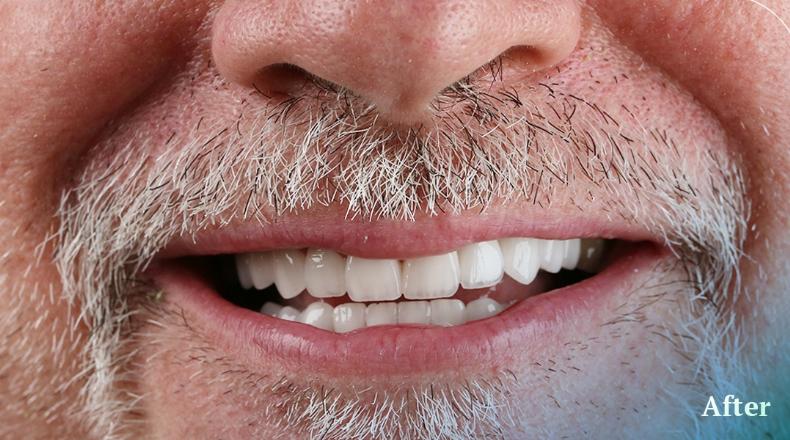
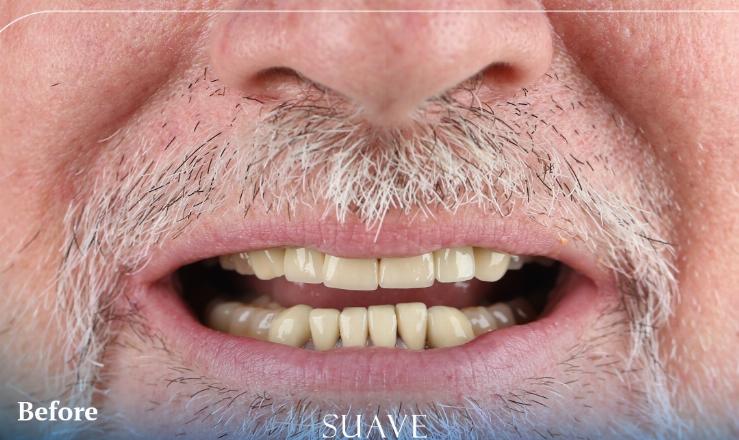
Suave Clinic
Verified clinicFull smile restoration · Istanbul
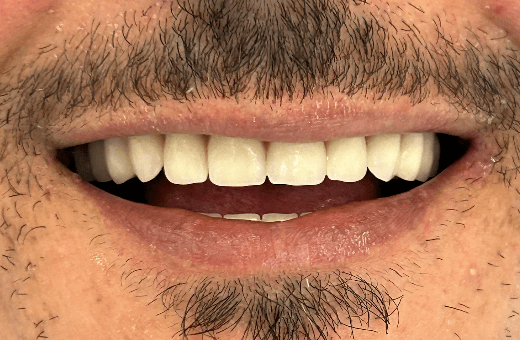
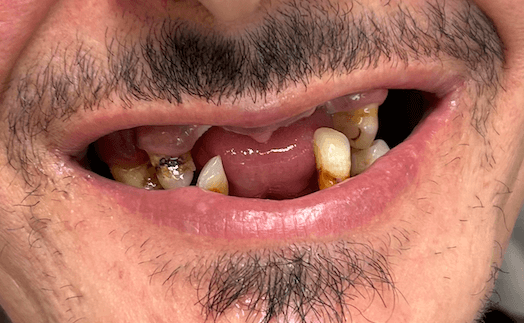
MDental Clinic
Verified clinicFull smile makeover · E-max veneers · Budapest
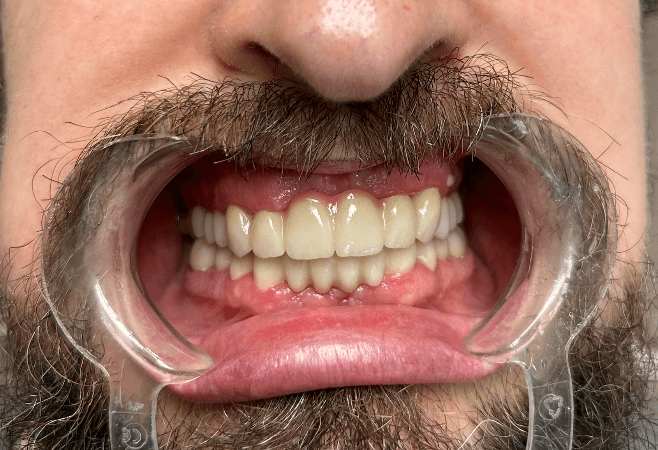
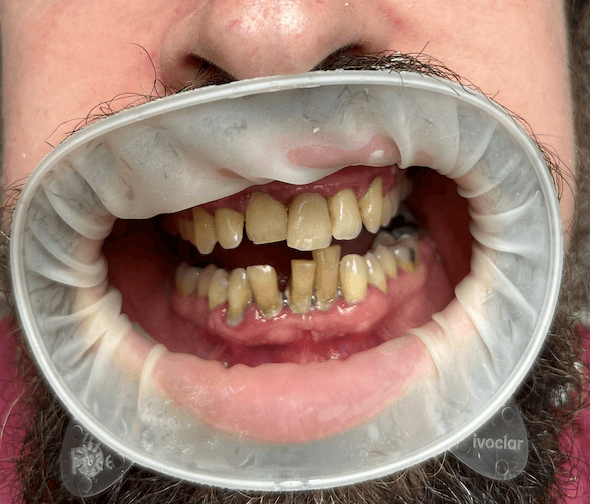
MDental Clinic
Verified clinicCrowns & restoration · Budapest
 Before → After
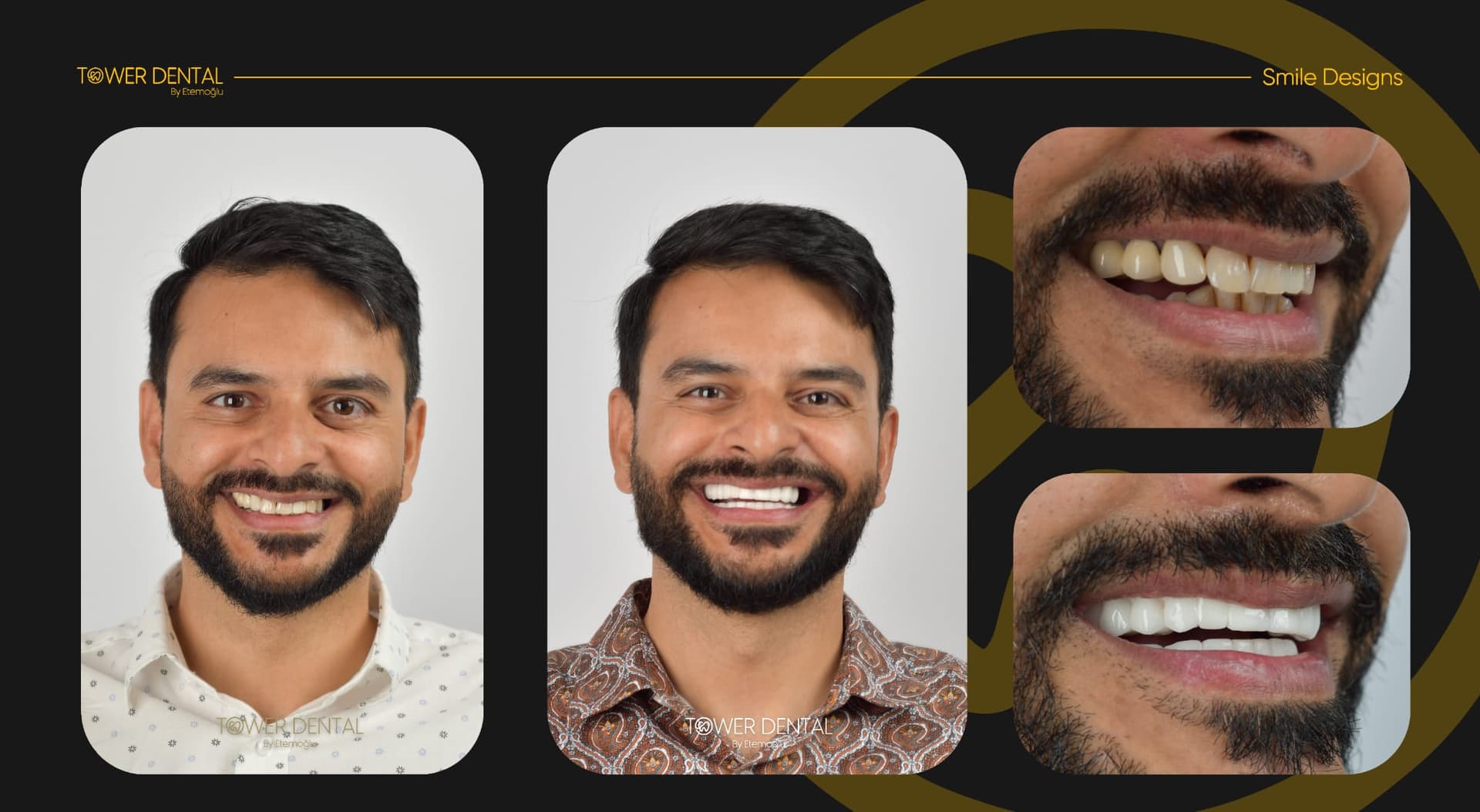
Tower Dental Clinic
Verified clinicHollywood smile · E-max veneers · Istanbul
References & Sources
All clinical claims, pricing data, and statistics in this article are based on peer-reviewed research, official regulatory sources, and publicly verifiable data. We invite you to verify anything before making a treatment decision.
- 1.BBC News, "Turkey teeth: The dental tourism risks patients don't see." February 2023.
- 2.BBC, "Turkey Teeth: Bargain Smiles or Big Mistake?" — documentary investigating dental tourism risks, 2022.
- 3.Euronews, "Medical tourism: Dental expert explains why Turkey teeth can be a costly mistake." October 2024.
- 4.General Dental Council (UK), "Going abroad for dental treatment" — patient guidance.
- 5.British Dental Association (BDA), "Dental tourism: Patients need to know the risks."
- 6.T.C. Saglik Bakanligi (Turkish Ministry of Health), Health Tourism Authorisation Regulations.
- 7.Kontakiotis, E.G. et al. (2015), "A prospective study of the incidence of asymptomatic pulp necrosis following crown preparation," Int. Endod. J., 48(6), 512-517.
- 8.Pjetursson, B.E. et al. (2012), "A systematic review of the survival and complication rates of implant-supported fixed dental prostheses after at least 5 years," Clin. Oral Implants Res., 23(S6), 22-38.
- 9.Sailer, I. et al. (2015), "All-ceramic or metal-ceramic tooth-supported fixed dental prostheses: a systematic review," Dent. Mater., 31(6), 603-624.
- 10.Türkiye Today, "1.5 million health tourists visited Türkiye in 2024, generating $3 billion in revenue." 2025.
Medical disclaimer: This article is for educational purposes and does not replace a clinical examination. Treatment outcomes vary between patients. Always consult a qualified dental professional.

About MyDentalFly
MyDentalFly is a UK-based platform that builds your treatment plan and matches you with vetted specialist clinics abroad — and a dentist at the clinic reviews and confirms every plan before you pay anything.
Our interactive assessment evaluates your dental needs and builds a bespoke package: every treatment explained, a matched clinic with reasons why, your named dentist, flight estimates, transport, and accommodation — all in one place. We maintain a small, vetted network across Turkey, Hungary and Poland, visit clinics in person, help arrange CBCT scans before you fly, and stay with you through the entire journey. Compare. Save. Smile.
Questions Pearl can answer about veneers vs lumineers: which are right for you?
- “Is treatment abroad safe?”
- “What would my case cost?”
- “Which clinic suits me?”
She answers in your own language, using prices from clinics we have checked. No sign-up, and she never asks for a phone number to give you an answer.
Tap a question — Pearl answers
Prefer a person? WhatsApp us · 020 4634 2312 · or
Clinically reviewed before booking
Every dental package built on MyDentalFly is reviewed by a qualified dentist before it gets accepted. Our clinical reviewers include specialists like Dr. Hubert Trępatowski — 800+ All-on-4 procedures, trained under Professor Paulo Malo (pioneer of the All-on-4 technique), graduate of Jagiellonian University Medical Faculty, Krakow.
About the author
Adam Smith
Head of Patient Research, MyDentalFly
Adam leads patient research at MyDentalFly, personally vetting clinics across Turkey, Hungary, and Poland. He has reviewed over 200 clinic proposals, analysed patient outcomes, and helped coordinate treatment plans for patients across the UK, USA, and Europe.
Clinically reviewed by
Dr. Ertan EtemogluLead Dentist & Co-Founder, Tower Dental Clinic
26 years in practice · 8,000+ patients/year · Turkish & American Dental Association member · Featured on Reuters
Content last reviewed: 9 September 2026


