Back in the UK After Dental Abroad
By Adam Smith, Head of Patient Research
Updated 10 June 2026 · Dental tourism researcher · Clinic vetting specialist · 40+ clinics assessed on-site

About MyDentalFly
We build your treatment plan and match you with vetted specialist clinics in Turkey, Hungary and Poland — and a dentist at the clinic confirms every plan before you pay anything.
Vetted clinics only· Turkey · Hungary · Poland·1,875 verified prices
Pearl, our dental consultant
Pearl
Pearl · online
Hi, I'm Pearl 👋 Ask me anything about dental treatment abroad — or tell me what you need and I'll build your package.
What I build for you

Smile Analyser
Send one photo. I tell you what I can see.
Try asking about this

Had dental work abroad? Here is what to do when you land — GP registration, UK dentist follow-up, and what to expect.
The treatment is done. You are on the plane home with new teeth and a folder of paperwork. Now what? This is the part most dental tourism articles skip — and the part that matters most for long-term success.
I am Adam Smith, Head of Patient Research at MyDentalFly. I have helped patients through the aftercare process for implants, crowns, veneers, and full-arch work done in Turkey, Hungary, and Poland. Here is exactly what to do when you get back to the UK.
Week 1: The First 7 Days Home
What is normal:
- Mild swelling (peaks day 2-3, gone by day 7)
- Sensitivity to hot and cold (crowns and veneers)
- Slight discomfort around implant sites
- Temporary bite feeling "different" (your muscles need to adjust)
- Minor bleeding at gum line (crowns and implant sites)
What is NOT normal (contact your clinic immediately):
- Severe pain that increases after day 3
- Swelling that gets worse after day 4
- Pus or bad taste from any surgical site
- A crown or veneer that feels loose
- Numbness that does not resolve (possible nerve involvement)
- Fever above 38°C
"Some pressure is normal but sharp pain isn't — might need adjusting." — advice from our patient community
Week 1 checklist:
- Take all prescribed medications on schedule (antibiotics if given, painkillers)
- Soft food only for implant patients (soup, yoghurt, scrambled eggs, mashed potato)
- No smoking — minimum 72 hours, ideally 2 weeks
- Salt water rinses 3-4 times daily (after 24 hours)
- Sleep with head elevated for the first 2-3 nights
- Send progress photos to your clinic via WhatsApp on day 3 and day 7
Pearl
MyDentalFly’s dental consultant
Something worth knowing while you're reading: almost every dental decision comes down to two things a price list can't tell you — what condition the surrounding teeth and bone are in, and how permanent you want the result to be. Those are what make two people's treatment for the 'same' problem look completely different.
What's brought you here today?
Finding a UK Dentist for Follow-Up
This is the part that worries people most. Will a UK dentist refuse to treat you because you went abroad?
The honest answer: Some will be dismissive. Most will be professional. A few will be supportive. Here is how to handle it.
What to tell the UK dentist:
- "I had dental treatment abroad and I would like to register for ongoing care"
- Bring: your treatment plan, X-rays (CBCT if available), the implant brand certificate, and your warranty document
- Do NOT apologise or be defensive — you made a legitimate healthcare decision
What to ask for:
- Registration as a new patient
- A check-up appointment at 6-8 weeks post-treatment
- Hygienist appointment (crucial for implant longevity)
- Confirmation they can access the implant system used (for future maintenance)
If a dentist refuses: This is their right but it is uncommon. Ask another practice. Private dentists who accept international patients are usually the most open-minded. We can recommend UK dentists in major cities who work cooperatively with patients who had treatment abroad — ask Pearl AI below.
"Communication was excellent before I arrived but follow-up after returning home was poor." — a real patient concern from Facebook groups
This is exactly why having a UK follow-up plan matters. Your abroad clinic handles the treatment. A UK dentist handles the maintenance.
The Documents You Need (Get These Before You Leave)
| Document | Why You Need It | Who Gives It |
|---|---|---|
| Written treatment plan | Shows UK dentist exactly what was done | Your clinic |
| CBCT scan (DICOM file) | Digital X-ray your UK dentist can view | Your clinic |
| Implant certificate | Brand, model, lot number for each implant | Your clinic or manufacturer |
| Warranty document | Written guarantee with clinic legal entity | Your clinic |
| Prescription list | What medications were given/prescribed | Your clinic |
| Post-op instructions | Care instructions in English | Your clinic |
| Clinic contact details | WhatsApp, email, emergency phone | Your clinic |
At MyDentalFly, all of this is stored in your patient portal. Your treatment records, X-rays, implant certificates, and clinic communication are in one place — accessible to you and any UK dentist you share it with. No paper folders, no lost WhatsApp messages.
Follow-Up Timeline
| When | What | Where |
|---|---|---|
| Day 3 | Progress photos to clinic | |
| Day 7 | Progress photos, report any concerns | |
| Week 2 | Suture check (if applicable) — can be done by UK dentist | UK or video call |
| Week 6-8 | First UK dentist check-up | UK dentist |
| Month 3 | Bite adjustment check (crowns/veneers) | UK dentist or return trip |
| Month 6 | Hygienist clean + periodontal check | UK dentist |
| Month 12 | Annual check-up + X-rays | UK dentist |
| Annually | Ongoing maintenance | UK dentist |
For implant patients specifically:
- X-ray at 6 months and 12 months to check bone integration
- Professional cleaning every 4-6 months (implants need more frequent hygiene than natural teeth)
- Night-guard wear every night if you were given one (bruxism is the #1 cause of implant failure)
What About the Warranty?
Most quality clinics offer 5-10 year written warranties. Here is what that actually means:
What is typically covered:
- Crown or veneer fracture or debonding
- Implant failure (failure to integrate)
- Material defects
What is typically NOT covered:
- Damage from accidents or trauma
- Failure to follow aftercare instructions
- Poor oral hygiene leading to peri-implantitis
- Not wearing your night-guard
Who pays for the return trip? This varies. Some clinics cover flights and accommodation for warranty work. Others cover the clinical work but not travel. Ask before you book — and get it in writing.
"The warranty is only useful if you can afford to fly back." — a real concern from Facebook groups
At MyDentalFly, your deposit is held by us, not the clinic. If something goes wrong within the warranty period, we coordinate with the clinic on your behalf. For patients on our platform, we negotiate return trip costs as part of the resolution.
Implant-Specific Aftercare
If you had implants placed abroad, the next 3-6 months are critical:
Osseointegration period (3-6 months):
- The implant is fusing with your jaw bone
- Do NOT bite hard on the implant side
- No sticky, crunchy, or very hard foods on the implant site
- If you have a temporary prosthesis, treat it gently — it is a placeholder, not a final restoration
Signs of implant failure (rare but important):
- Implant feels mobile or loose
- Persistent pain around the implant after 2 weeks
- Gum recession exposing the implant collar
- Bad taste or discharge from the implant site
If you notice any of these: Contact your clinic AND a UK dentist immediately. Early intervention can often save a failing implant.
Your Aftercare Toolkit
Before you leave the clinic, make sure you have:
- Written treatment plan and invoice
- CBCT scan on USB or emailed as DICOM file
- Implant certificates (brand, serial numbers)
- Written warranty document
- Post-op care sheet in English
- Prescription medications for the flight home
- Clinic WhatsApp number saved
- Night-guard fitted and packed in hand luggage
- Follow-up appointment schedule agreed
Need help with anything above? Pearl AI below can answer specific aftercare questions based on your treatment type. Or call Adam on 020 4634 2312 — we are available for our patients throughout the aftercare period.
Will my UK dentist know how to maintain implants placed abroad?
Yes, if the implant system is a major brand (Straumann, Nobel Biocare, MIS, MegaGen). UK dentists stock components for these systems. If an obscure brand was used, maintenance can be more difficult — this is why we only work with clinics that use internationally recognised implant systems.
How soon can I fly after dental implants?
Most patients fly home 2-3 days after implant surgery without issues. The cabin pressure does not affect dental implants. Avoid alcohol during the flight, stay hydrated, and take your medications on schedule. For sinus lift patients, wait at least 7 days before flying — discuss with your surgeon.
What if I need an adjustment and cannot fly back?
Minor adjustments (bite adjustment, slight crown reshaping) can be done by any UK dentist. Major work (replacing a crown, re-cementing) should ideally be done by the original clinic. Many clinics now offer telemedicine consultations to assess whether a return trip is necessary.
Should I tell my travel insurance about the dental work?
Your standard travel insurance likely covered you during the trip. For ongoing coverage of complications after you return, check whether your policy has a "dental complications from treatment abroad" clause. Most standard policies do not cover elective dental work complications. Specialist dental tourism insurance is available — ask Pearl AI for current providers.
What your package would look like
Your package, building
ExamplePackage total
building…
—
Real results from verified clinics
Drag the slider to compare before & after
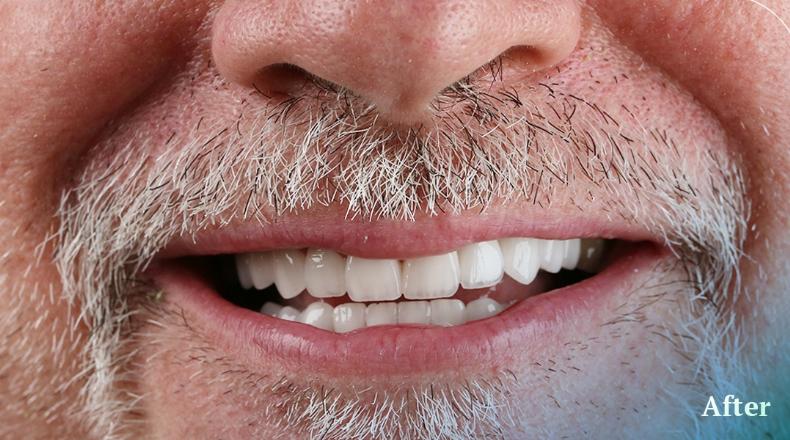
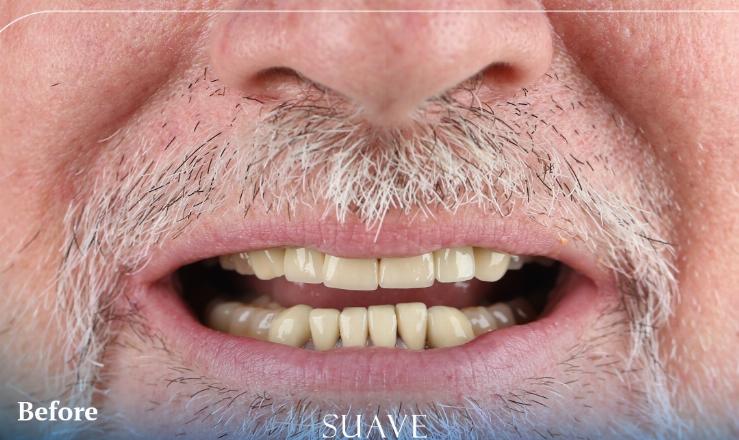
Suave Clinic
Verified clinicFull smile restoration · Istanbul
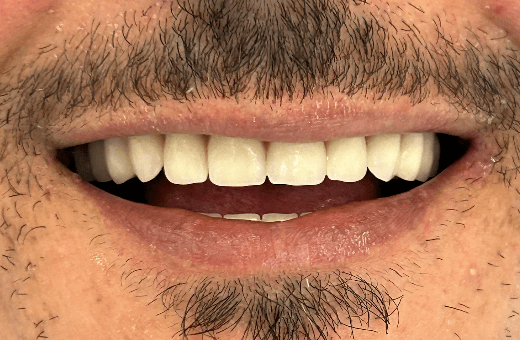
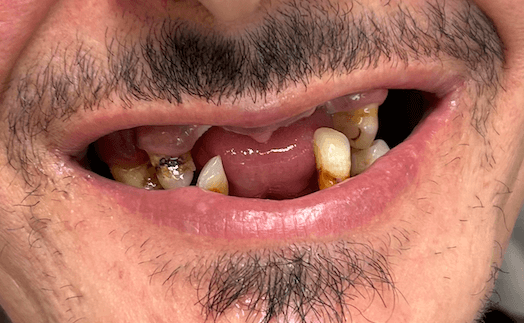
MDental Clinic
Verified clinicFull smile makeover · E-max veneers · Budapest
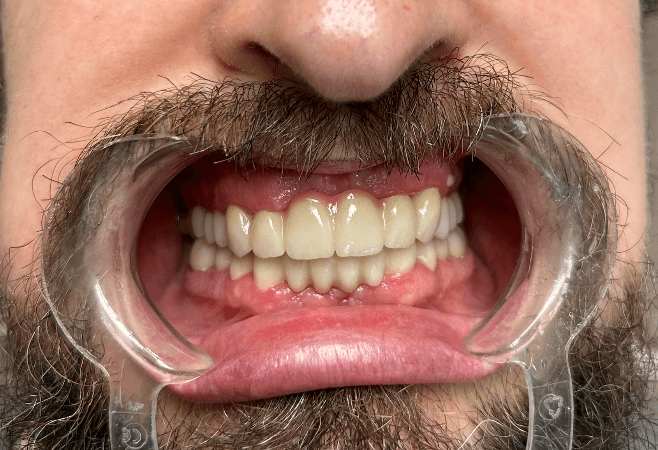
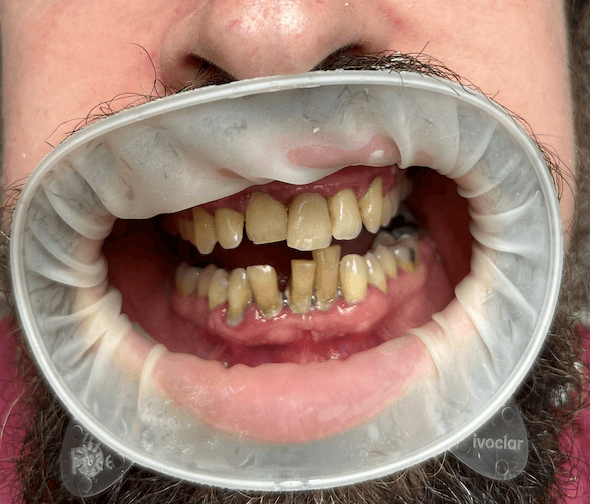
MDental Clinic
Verified clinicCrowns & restoration · Budapest
 Before → After
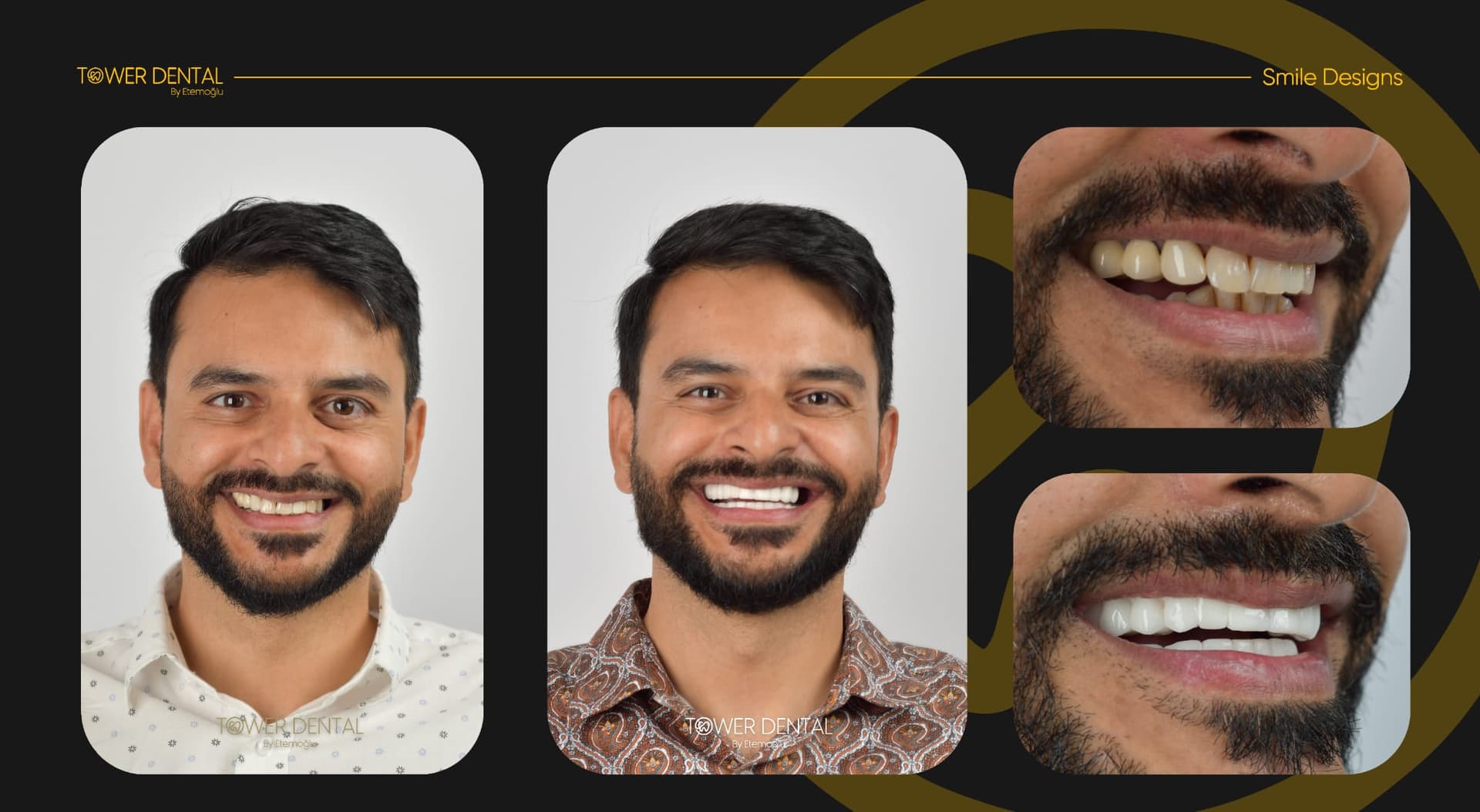
Tower Dental Clinic
Verified clinicHollywood smile · E-max veneers · Istanbul
References & Sources
All clinical claims, pricing data, and statistics in this article are based on peer-reviewed research, official regulatory sources, and publicly verifiable data. We invite you to verify anything before making a treatment decision.
- 1.BBC News, "Turkey teeth: The dental tourism risks patients don't see." February 2023.
- 2.BBC, "Turkey Teeth: Bargain Smiles or Big Mistake?" — documentary investigating dental tourism risks, 2022.
- 3.Euronews, "Medical tourism: Dental expert explains why Turkey teeth can be a costly mistake." October 2024.
- 4.General Dental Council (UK), "Going abroad for dental treatment" — patient guidance.
- 5.British Dental Association (BDA), "Dental tourism: Patients need to know the risks."
- 6.T.C. Saglik Bakanligi (Turkish Ministry of Health), Health Tourism Authorisation Regulations.
- 7.Kontakiotis, E.G. et al. (2015), "A prospective study of the incidence of asymptomatic pulp necrosis following crown preparation," Int. Endod. J., 48(6), 512-517.
- 8.Pjetursson, B.E. et al. (2012), "A systematic review of the survival and complication rates of implant-supported fixed dental prostheses after at least 5 years," Clin. Oral Implants Res., 23(S6), 22-38.
- 9.Sailer, I. et al. (2015), "All-ceramic or metal-ceramic tooth-supported fixed dental prostheses: a systematic review," Dent. Mater., 31(6), 603-624.
- 10.Türkiye Today, "1.5 million health tourists visited Türkiye in 2024, generating $3 billion in revenue." 2025.
Medical disclaimer: This article is for educational purposes and does not replace a clinical examination. Treatment outcomes vary between patients. Always consult a qualified dental professional.

About MyDentalFly
MyDentalFly is a UK-based platform that builds your treatment plan and matches you with vetted specialist clinics abroad — and a dentist at the clinic reviews and confirms every plan before you pay anything.
Our interactive assessment evaluates your dental needs and builds a bespoke package: every treatment explained, a matched clinic with reasons why, your named dentist, flight estimates, transport, and accommodation — all in one place. We maintain a small, vetted network across Turkey, Hungary and Poland, visit clinics in person, help arrange CBCT scans before you fly, and stay with you through the entire journey. Compare. Save. Smile.
Questions Pearl can answer about back in the uk after dental abroad
- “Is treatment abroad safe?”
- “What would my case cost?”
- “Which clinic suits me?”
She answers in your own language, using prices from clinics we have checked. No sign-up, and she never asks for a phone number to give you an answer.
Tap a question — Pearl answers
Prefer a person? WhatsApp us · 020 4634 2312 ·
Clinically reviewed before booking
Every dental package built on MyDentalFly is reviewed by a qualified dentist before it gets accepted. Our clinical reviewers include specialists like Dr. Hubert Trępatowski — 800+ All-on-4 procedures, trained under Professor Paulo Malo (pioneer of the All-on-4 technique), graduate of Jagiellonian University Medical Faculty, Krakow.
About the author
Adam Smith
Head of Patient Research, MyDentalFly
Adam leads patient research at MyDentalFly, personally vetting clinics across Turkey, Hungary, and Poland. He has reviewed over 200 clinic proposals, analysed patient outcomes, and helped coordinate treatment plans for patients across the UK, USA, and Europe.


