Dental Implants Abroad Over 50
By Adam Smith, Head of Patient Research
Updated 28 March 2026 · Dental tourism researcher · Clinic vetting specialist · 40+ clinics assessed on-site
Clinically reviewed by Dr. Ertan Etemoglu, Lead Dentist & Co-Founder
Tower Dental Clinic, Istanbul · 26 years in practice · 8,000+ patients/year · Turkish & American Dental Association member · Featured on Reuters
About MyDentalFly
We build your treatment plan and match you with vetted specialist clinics in Turkey, Hungary and Poland — and a dentist at the clinic confirms every plan before you pay anything.
Vetted clinics only· Turkey · Hungary · Poland·1,875 verified prices
Pearl, our dental consultant
Pearl
Pearl · online
Hi, I'm Pearl 👋 Ask me anything about dental implants abroad — or tell me what you need and I'll build your package.
Try asking about this

Age isn't a barrier to dental implants — but it does change the conversation. What over-50s need to know before flying abroad.
The average dental implant patient in Turkey is 52. Not 30. Not 40. Fifty-two.
If you're over 50 and considering dental implants abroad, you're not an outlier — you're the target demographic. But age does change the conversation. Not about whether you can get implants (you almost certainly can), but about what your treating dentist needs to know first.
This Guide Is for You If...
- You're 50+ and considering dental implants abroad
- You take regular medication (blood pressure, blood thinners, diabetes management)
- You're worried about bone density or osteoporosis affecting implant success
- You want to understand how age affects treatment planning, healing, and outcomes
- You've been told by a local dentist that you're "too old" for implants (you're probably not)
Pearl
MyDentalFly’s dental consultant
Worth knowing before you compare any quotes: the number of implants you need isn't a preference, it's decided by how much bone you have and where the gaps sit. Two people missing the same number of teeth can need very different treatment — which is why quotes vary so wildly before anyone has looked at a scan.
How many teeth are you missing or need replacing?
This Guide Is NOT for You If...
- You're under active cancer treatment involving the jaw area — treatment should wait until you're clear
- You have uncontrolled diabetes (HbA1c consistently above 8%) — get this managed first, then reconsider
- You've had bisphosphonate treatment (for osteoporosis) via IV injection — this requires specialist assessment due to osteonecrosis risk. Oral bisphosphonates are usually fine with a drug holiday
Age and Implant Success Rates: The Data
Implant success rates for patients over 50 are between 94-97%. For patients under 50, they're 95-98%. The difference is statistically negligible.
A 2024 systematic review of 14,000+ implant cases found no significant difference in implant failure rates between patients aged 50-70 and those aged 30-50. What matters more than age: smoking status, oral hygiene, and bone quality.
The real age-related factor isn't whether implants work — it's whether your body needs additional preparation before they're placed.
What Changes After 50?
Bone density. Natural bone loss accelerates with age, especially in women post-menopause. This doesn't mean you can't get implants — it means your dentist may need to add a bone graft or sinus lift. Both are routine procedures performed alongside implant placement.
| Scenario | What Happens | Extra Cost (Turkey) | Extra Time |
|---|---|---|---|
| Good bone density | Implant placed directly | None | None |
| Mild bone loss | Bone graft at implant site | £150-350 | Heals simultaneously |
| Significant bone loss (upper jaw) | Sinus lift + bone graft | £250-500 | May need 3-6 months before implant |
| Severe bone loss | Zygomatic implants or All-on-4 design | Varies | Specialist planning |
Medication considerations. Your clinic needs a complete list of everything you take. The most important ones:
- Blood thinners (warfarin, rivaroxaban, apixaban): Usually paused 2-5 days before surgery, with your GP's approval. This is standard practice — not a contraindication.
- Blood pressure medication: Continue as normal. Inform the anaesthetist.
- Diabetes medication (metformin, insulin): Continue as normal. Your blood sugar should be well-controlled before treatment. HbA1c under 7% is ideal; under 8% is acceptable.
- Osteoporosis medication (alendronate, risedronate): Oral bisphosphonates usually require a "drug holiday" of 3 months before implant surgery. Discuss with your GP.
- Steroids: Long-term steroid use can affect healing. Your clinic needs to know the dosage and duration.
"I'm 63, on blood pressure tablets and metformin. My Turkish clinic asked for a full medical history before they'd even quote me. That's when I knew they were serious — they weren't just after my money."
Healing time. Recovery takes slightly longer over 50 — expect 4-6 months for implant integration versus 3-4 months for younger patients. This affects when you return for permanent crowns, not the treatment itself. Most clinics plan for this automatically when they see your age.
Gum health. Decades of wear, previous dental work, and possible gum disease history means your gums may need treatment before implants. A professional clean and any necessary periodontal treatment is usually done on Day 1 of your trip, before implant placement.
The Medical Screening Process
Good clinics screen over-50 patients more thoroughly. Here's what to expect:
Before you fly:
- Full medical history questionnaire (conditions, medications, allergies, previous surgeries)
- Recent dental X-ray or CT scan (your local dentist can provide this, or the clinic takes one on arrival)
- Blood test results if you have diabetes or take blood thinners (bring recent results from your GP)
- Your GP's written confirmation that you're fit for dental surgery under sedation (some clinics require this, others don't)
On arrival:
- 3D CBCT scan (panoramic jaw X-ray) — this shows bone density, nerve positions, and sinus proximity
- Clinical examination of gums, remaining teeth, and bite alignment
- Discussion of findings and finalised treatment plan
- If bone grafting is needed, the clinic will explain exactly where and why
MyDentalFly's dental assessment captures your medical history and medication list upfront, so clinics can flag any concerns before you book flights.
Real Costs: Over-50 Implant Treatment Abroad
Over-50 patients often need additional procedures. Here's what a typical treatment costs:
| Treatment | UK Price | Turkey Price | Savings |
|---|---|---|---|
| 4 implants + crowns | £12,000-16,000 | £2,200-4,000 | £8,000-14,000 |
| All-on-4 (full arch) | £12,000-15,000 | £4,000-7,000 | £5,000-11,000 |
| 2 implants + bone grafts | £7,000-9,000 | £1,200-2,200 | £4,800-7,800 |
| Full mouth restoration | £25,000-40,000 | £8,000-15,000 | £10,000-25,000 |
Prices include bone grafting and sinus lifts where needed. Turkey prices include accommodation at many clinics.
For detailed breakdowns, see our full mouth restoration guide or implant price comparison.
"Don't just go for the cheapest quote — you get what you pay for. At my age, I wanted the best implant brand and the most experienced surgeon. Still saved £9,000 compared to London."
All-on-4: The Over-50 Game Changer
If you're missing most or all teeth in one arch, All-on-4 is often the best option for over-50 patients. Here's why:
- Works with less bone. The angled rear implants grip into denser bone areas, often eliminating the need for bone grafts entirely.
- Immediate teeth. You leave the clinic on the same day with a fixed temporary bridge — no period without teeth.
- Fewer implants, less surgery. Four implants instead of 6-8 means shorter surgery, less swelling, faster recovery.
- Fixed, not removable. Unlike dentures, All-on-4 teeth don't come out. They look and function like natural teeth.
The UK price for All-on-4 starts at £12,000 per arch. In Turkey, £4,000-7,000. For patients over 50 who've been struggling with dentures for years, this is often life-changing.
Travel Considerations for Over-50 Patients
Flights: Most dental tourism destinations are 3-5 hours from the UK, 10-12 from the US. If you have mobility issues or deep vein thrombosis risk, request an aisle seat and compression stockings. Walk during the flight.
Accommodation: Many Turkish clinics arrange hotel stays within walking distance. Ask about ground-floor rooms or lift access if mobility is a concern. Some clinics offer VIP transfers (private car, door to door).
Companion travel: Travelling with a partner or friend is especially valuable for over-50 patients. They can help with meals, medication schedules, and simply being there during recovery. Many clinics offer discounted dental check-ups for companions.
Travel insurance: Get specialist travel insurance that covers dental treatment complications. Standard policies exclude elective dental work. Companies like Battleface and World Nomads offer add-ons for medical tourism.
Recovery time: Plan for 2-3 quiet days after surgery before sightseeing. Swelling peaks at 48 hours. By Day 4-5, most patients feel well enough for gentle activities. Don't plan a hiking trip for the day after implant surgery.
Red Flags for Over-50 Patients
- Clinic doesn't ask about medical history — any clinic that doesn't ask about medications and conditions before quoting is cutting corners on safety
- "No bone graft needed" without seeing your X-rays — bone grafting decisions require imaging, not guesswork
- Unrealistic timelines — if a clinic promises full implant treatment in 2 days for a complex case, be sceptical
- No anaesthetist involvement for sedation — over-50 patients with medical conditions should have a qualified anaesthetist managing sedation, not just the dentist
- Dismissing your concerns about medication interactions — this is serious. If a clinic can't explain how they'll manage your blood thinners or diabetes medication during treatment, choose a different clinic
The Honest Truth About Age and Dental Tourism
You're not too old. At 50, 60, or even 70, dental implants are safe, effective, and predictable — with proper screening and planning.
What matters is choosing a clinic that takes your medical history seriously, has experience with older patients, and doesn't rush the process to save costs. The screening should feel thorough, maybe even overly cautious. That's a good sign.
Start by building your dental package to understand your options, then compare clinic approaches before committing to anything.
See also: All-on-4 Guide
Next Steps
The candidacy checker tells you in 60 seconds if you're suitable for implants. The dental assessment builds your bespoke dental package — mapping your teeth and matching you with the right clinic. The savings calculator shows verified clinic prices vs home costs.
We've verified every clinic on our platform and removed eight that didn't meet our standards — unlike directories that list anyone who pays. Your dental tourism consultant coordinates everything once you're ready.
Guide: Dental Implants Turkey Guide
What your package would look like
Your package, building
ExamplePackage total
building…
—
Real results from verified clinics
Drag the slider to compare before & after
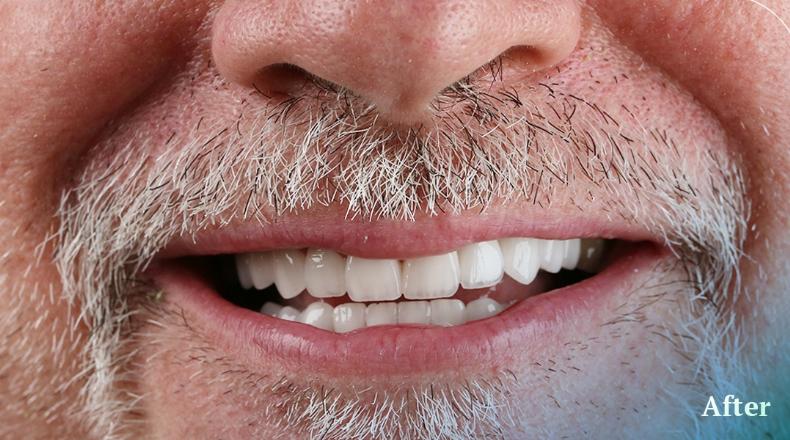
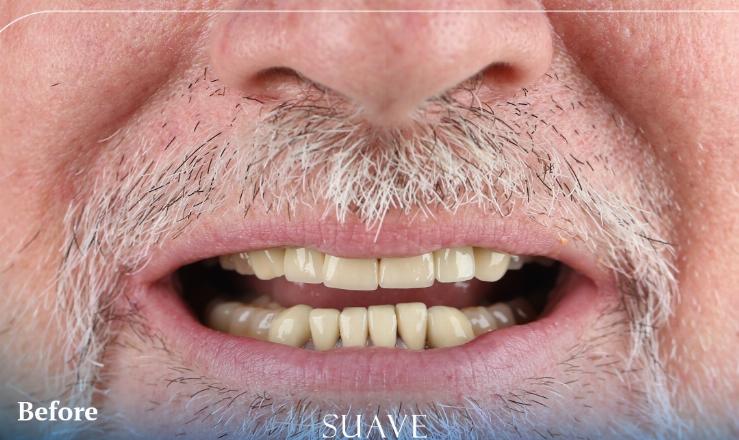
Suave Clinic
Verified clinicFull smile restoration · Istanbul
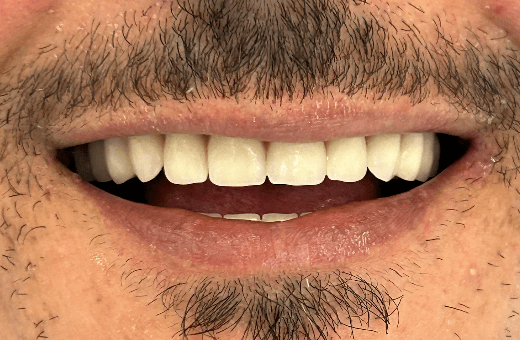
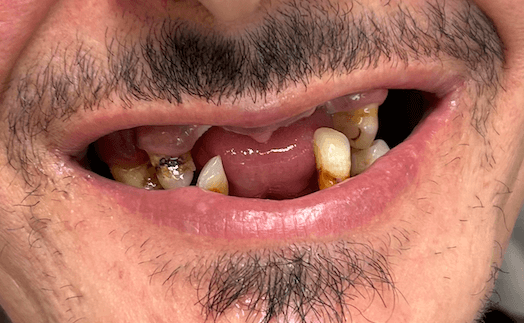
MDental Clinic
Verified clinicFull smile makeover · E-max veneers · Budapest
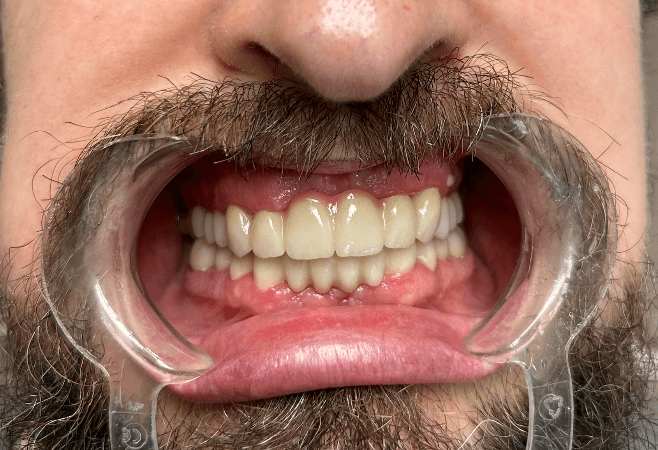
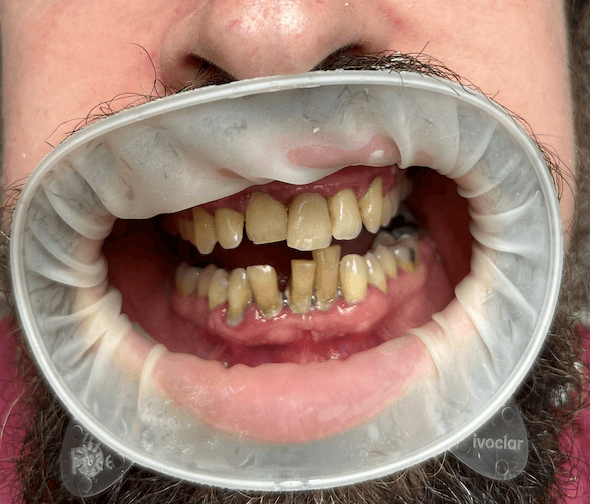
MDental Clinic
Verified clinicCrowns & restoration · Budapest
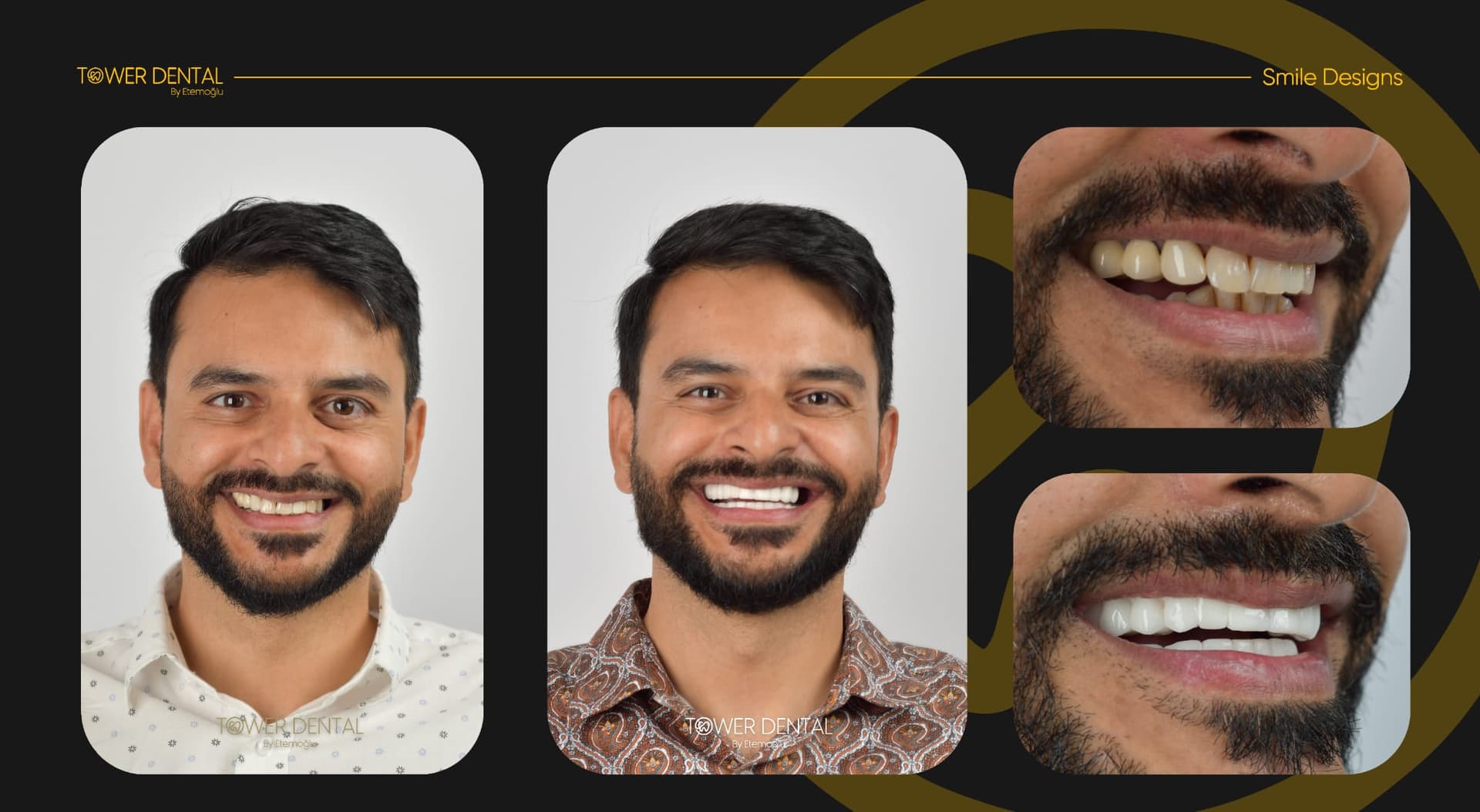 Before → After
Tower Dental Clinic
Verified clinicHollywood smile · E-max veneers · Istanbul
References & Sources
All clinical claims, pricing data, and statistics in this article are based on peer-reviewed research, official regulatory sources, and publicly verifiable data. We invite you to verify anything before making a treatment decision.
- 1.BBC News, "Turkey teeth: The dental tourism risks patients don't see." February 2023.
- 2.BBC, "Turkey Teeth: Bargain Smiles or Big Mistake?" — documentary investigating dental tourism risks, 2022.
- 3.Euronews, "Medical tourism: Dental expert explains why Turkey teeth can be a costly mistake." October 2024.
- 4.General Dental Council (UK), "Going abroad for dental treatment" — patient guidance.
- 5.British Dental Association (BDA), "Dental tourism: Patients need to know the risks."
- 6.T.C. Saglik Bakanligi (Turkish Ministry of Health), Health Tourism Authorisation Regulations.
- 7.Kontakiotis, E.G. et al. (2015), "A prospective study of the incidence of asymptomatic pulp necrosis following crown preparation," Int. Endod. J., 48(6), 512-517.
- 8.Pjetursson, B.E. et al. (2012), "A systematic review of the survival and complication rates of implant-supported fixed dental prostheses after at least 5 years," Clin. Oral Implants Res., 23(S6), 22-38.
- 9.Sailer, I. et al. (2015), "All-ceramic or metal-ceramic tooth-supported fixed dental prostheses: a systematic review," Dent. Mater., 31(6), 603-624.
- 10.Türkiye Today, "1.5 million health tourists visited Türkiye in 2024, generating $3 billion in revenue." 2025.
Medical disclaimer: This article is for educational purposes and does not replace a clinical examination. Treatment outcomes vary between patients. Always consult a qualified dental professional.
About MyDentalFly
MyDentalFly is a UK-based platform that builds your treatment plan and matches you with vetted specialist clinics abroad — and a dentist at the clinic reviews and confirms every plan before you pay anything.
Our interactive assessment evaluates your dental needs and builds a bespoke package: every treatment explained, a matched clinic with reasons why, your named dentist, flight estimates, transport, and accommodation — all in one place. We maintain a small, vetted network across Turkey, Hungary and Poland, visit clinics in person, help arrange CBCT scans before you fly, and stay with you through the entire journey. Compare. Save. Smile.
Tap a question — Pearl answers
Prefer a person? WhatsApp us · 020 4634 2312 · or
Clinically reviewed before booking
Every dental package built on MyDentalFly is reviewed by a qualified dentist before it gets accepted. Our clinical reviewers include specialists like Dr. Hubert Trępatowski — 800+ All-on-4 procedures, trained under Professor Paulo Malo (pioneer of the All-on-4 technique), graduate of Jagiellonian University Medical Faculty, Krakow.
About the author
Adam Smith
Head of Patient Research, MyDentalFly
Adam leads patient research at MyDentalFly, personally vetting clinics across Turkey, Hungary, and Poland. He has reviewed over 200 clinic proposals, analysed patient outcomes, and helped coordinate treatment plans for patients across the UK, USA, and Europe.
Clinically reviewed by
Dr. Ertan Etemoglu
Lead Dentist & Co-Founder, Tower Dental Clinic
26 years in practice · 8,000+ patients/year · Turkish & American Dental Association member · Featured on Reuters
Content last reviewed: 3 September 2026