Dental Implants vs Bridges: How to Decide
By Adam Smith, Head of Patient Research
Updated 28 March 2026 · Dental tourism researcher · Clinic vetting specialist · 40+ clinics assessed on-site
Clinically reviewed by Dr. Ertan Etemoglu, Lead Dentist & Co-Founder
Tower Dental Clinic, Istanbul · 26 years in practice · 8,000+ patients/year · Turkish & American Dental Association member · Featured on Reuters

About MyDentalFly
We build your treatment plan and match you with vetted specialist clinics in Turkey, Hungary and Poland — and a dentist at the clinic confirms every plan before you pay anything.
Vetted clinics only· Turkey · Hungary · Poland·1,875 verified prices
Pearl, our dental consultant
Pearl
Pearl · online
Hi, I'm Pearl 👋 Ask me anything about dental implants abroad — or tell me what you need and I'll build your package.

Smile Analyser
Send one photo. I tell you what I can see.
Try asking about this

Implant or bridge? Here's what dentists consider, what each costs, and which lasts longer.
Your dentist says you need a bridge. The clinic abroad is recommending implants. They cost different amounts, last different lengths of time, and require different amounts of work. Here's how to decide.
The Key Difference in 30 Seconds
A dental implant replaces a missing tooth root-and-all. A titanium post goes into your jawbone, an abutment sits on top, and a crown finishes it. The neighbouring teeth are untouched.
A dental bridge anchors to the teeth on either side of the gap. Those anchor teeth (called abutments) are filed down to support the bridge. No surgery. No waiting for bone to heal.
That's the core trade-off: implants are more involved but preserve more of your mouth. Bridges are faster but require grinding down healthy teeth.
Pearl
MyDentalFly’s dental consultant
Worth knowing before you compare any quotes: the number of implants you need isn't a preference, it's decided by how much bone you have and where the gaps sit. Two people missing the same number of teeth can need very different treatment — which is why quotes vary so wildly before anyone has looked at a scan.
How many teeth are you missing or need replacing?
When an Implant Is the Better Choice
- You're missing one tooth and the teeth on either side are healthy — no reason to grind them down
- You want the longest-lasting result (implants can last a lifetime)
- You're worried about bone loss in your jaw (more on this below)
- You're willing to wait 3–6 months for the implant to integrate before the crown goes on
Implants are the gold standard for single tooth replacement. But "gold standard" doesn't mean "right for everyone."
When a Bridge Makes More Sense
- The teeth on either side of the gap already have large fillings or crowns — grinding them for a bridge costs you nothing extra
- You can't have surgery due to a medical condition (uncontrolled diabetes, blood thinners, active cancer treatment)
- You don't have enough bone for an implant and don't want a bone graft
- You need the tooth replaced quickly — a bridge can be fitted in two appointments
- Budget is a firm constraint right now
Bridges have decades of successful outcomes. A well-made bridge from a good clinic, looked after properly, can last 15+ years. Don't let anyone tell you they're a "compromise."
What They Cost (UK vs Turkey vs Hungary)
| Treatment | UK | Turkey | Hungary |
|---|---|---|---|
| Single implant (standard) | £2,950 | £400–550 | £500–700 |
| Single implant (premium) | £3,500 | £450–800 | £600–900 |
| Bridge — 3-unit | £1,500–2,400 | £360–660 | £600–840 |
| Bridge — 4-unit | £2,000–3,200 | £480–880 | £800–1,120 |
Turkey prices include standard implant brands (MIS, Osstem). Premium brands (Nobel Biocare, Straumann) sit at the higher end. Hungary prices are broadly mid-range between Turkey and the UK.
The savings are real. A standard implant in Istanbul that costs £2,950 in the UK runs around £400–550 in Turkey — the same clinical procedure, often with the same implant brands. For a full breakdown of implant costs in Turkey, see our dedicated guide.
"I spent weeks going back and forth between getting a bridge or an implant. My NHS dentist wanted £2,800 for the implant alone. I ended up getting a premium Nobel Biocare implant in Istanbul for £650 including the crown. Same brand, same procedure — I just did my research first."
How Long Each Lasts
Implants: 20–30+ years, often lifetime, with normal care. The titanium post itself almost never fails once integrated. Crowns on top may need replacing after 15–20 years.
Bridges: 10–15 years on average. Some last longer. The limiting factor is usually decay or damage at the anchor teeth, or wear on the pontic (the false tooth in the middle).
The lifespan gap is real but not as dramatic as implant manufacturers like to suggest. A bridge replaced once is still a reasonable 25–30 year solution.
The Hidden Cost Most People Miss
This is the part that changes how most people think about the decision.
When a tooth is extracted and nothing replaces the root, the jawbone in that area starts to shrink. Not immediately — but over months and years, bone resorption changes the shape of your jaw, affects neighbouring teeth, and can make future treatment harder and more expensive.
An implant stops this. Because the titanium post functions like a tooth root, it stimulates the bone and keeps it intact.
A bridge does not stop bone loss. The pontic sits above the gum — there's no root, no stimulation. The bone beneath slowly recedes.
For younger patients especially, this matters over a 20–30 year horizon. If you're 38 and get a bridge, by 58 you may be looking at enough bone loss to complicate any future implant work. You might need a bone graft or sinus lift — procedures that add cost, time, and complexity.
The other hidden cost with bridges: the two anchor teeth. Grinding down a healthy tooth removes enamel permanently. Those teeth are now more vulnerable to decay, more likely to need root canals, and will eventually need replacing. You started with one missing tooth; the bridge has now made three teeth dependent on each other.
None of this makes bridges wrong. But it should be part of the calculation.
How Do I Know Which I Need?
This is the question patients ask most often. And the honest answer is: you need someone to assess your specific mouth, not a general article.
The factors that matter are bone density at the extraction site, the condition of neighbouring teeth, your bite, your medical history, and how long the tooth has been missing. A quick consultation with a clinic in Turkey or Hungary will tell you far more than any checklist.
How MyDentalFly helps here: Before you contact a single clinic, the platform's interactive dental chart lets you mark exactly which teeth are missing, damaged, or symptomatic. Combined with the dental assessment questions, the dental package recommends implant vs bridge based on your actual data — not a generic "implants are better" default.
Pearl AI, the platform's patient assistant, can also answer follow-up questions about your specific situation: what happens if bone loss has already started, whether a bridge is viable given your neighbouring tooth condition, or what to ask a clinic during consultation.
Getting Either Treatment Abroad
Implants and bridges are both well-suited to dental tourism. The key difference is trip planning.
A bridge can often be completed in one visit of 5–7 days — impressions, preparation, temporaries, and final fitting.
An implant usually needs two trips: one for the implant placement (1–2 days), then a return 3–6 months later for the crown once the implant has integrated. Some clinics offer same-day or immediate loading protocols, but these suit specific cases only.
Destinations worth considering:
- Turkey (Istanbul, Antalya, Izmir) — largest volume, most competitive prices, established implant centres
- Hungary (Budapest) — strong reputation for complex dental work, EU-based (useful for EU patients)
- Poland — growing destination, solid quality, good value
- Spain — popular for Western European patients who want to combine treatment with travel
Unlike directories that list anyone who pays, MyDentalFly vets every clinic before listing them — checking accreditations, reviewing patient outcomes, and removing clinics with bait-and-switch complaints. You can compare up to three verified clinics side-by-side with real prices, then track your treatment through the patient portal (implant brand, clinical notes, warranty information — all stored in one place).
For a full breakdown of what implant treatment looks like across destinations, the dental implants Turkey guide covers the process, what to ask, and how to read a clinic's quote.
Is an implant always better than a bridge?
No. If the teeth on either side of the gap already have crowns or large restorations, a bridge may be the more sensible choice — you're not sacrificing healthy tooth structure. The "implant is always better" framing sells implants. The honest answer is that it depends on your mouth.
Can I get a dental implant if I've had bone loss?
Sometimes yes, with a bone graft. But it adds cost (typically £300–600 in Turkey), an extra healing period, and a higher level of surgical complexity. The longer a gap has been left untreated, the more likely you'll need additional work before an implant is possible.
How much cheaper are implants abroad vs the UK?
In Turkey, a standard implant (including crown) typically costs £400–550 compared to £2,950 in the UK — a saving of roughly 80–85%. Premium brands like Nobel Biocare run £600–800 in Turkey versus £3,500+ in the UK. Hungary sits between the two.
Do I need two trips for a dental implant abroad?
For conventional implants, yes — one trip for placement, a return trip 3–6 months later for the crown. Some clinics offer immediate loading (crown placed the same day), but this isn't suitable for everyone. During your consultation, ask specifically whether you're a candidate.
What questions should I ask a clinic before deciding between implant and bridge?
Ask: Is there sufficient bone for an implant without grafting? What is the condition of the adjacent teeth — are they already restored? What implant brand would you use? What's the warranty? What happens if the bridge or implant fails after I return home? Any clinic that gives you price without answering these first isn't doing a proper assessment.
Next Steps
The candidacy checker tells you in 60 seconds if you're suitable. The dental assessment builds your bespoke dental package — mapping your teeth and matching you with the right clinic. The savings calculator shows verified clinic prices vs home costs. Your dental tourism consultant coordinates everything — patient file, clinic communication, deposit protection.
Guide: Dental Implants Abroad Guide
Compare: Implants: Turkey vs UK
Related: Best Country for Dental Implants (2026)
Related: Dental Implant Costs Compared (2026)
Related: Dental Crown Cost: UK vs Abroad
What your package would look like
Your package, building
ExamplePackage total
building…
—
Real results from verified clinics
Drag the slider to compare before & after
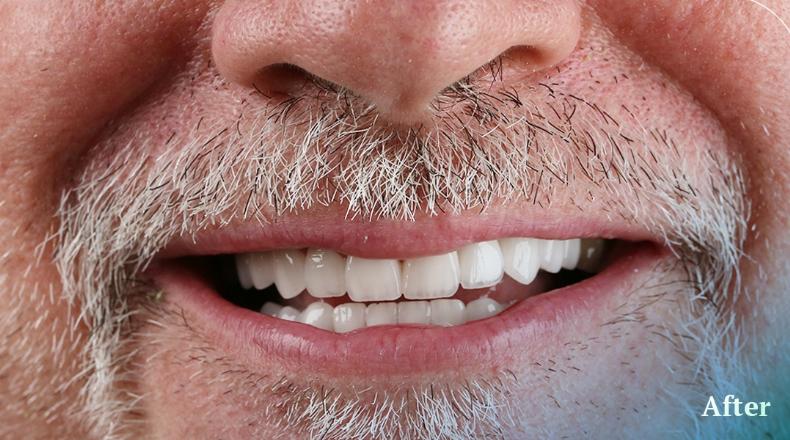
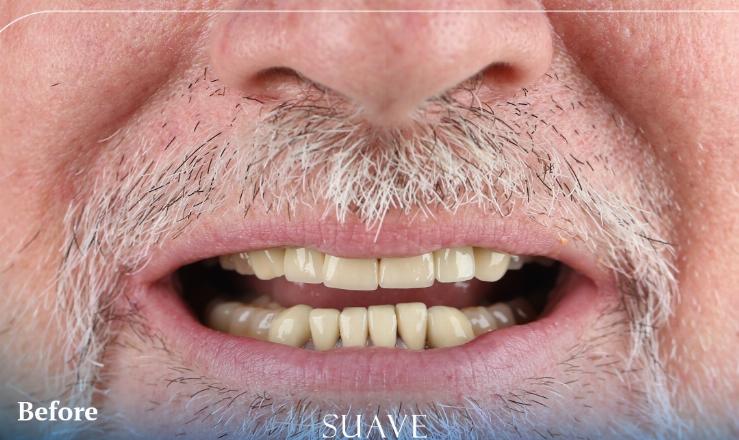
Suave Clinic
Verified clinicFull smile restoration · Istanbul
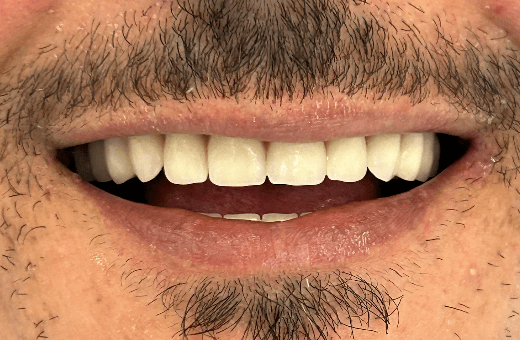
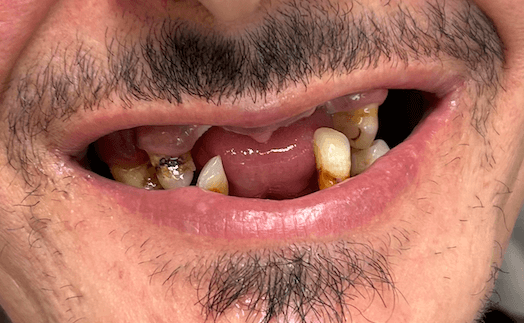
MDental Clinic
Verified clinicFull smile makeover · E-max veneers · Budapest
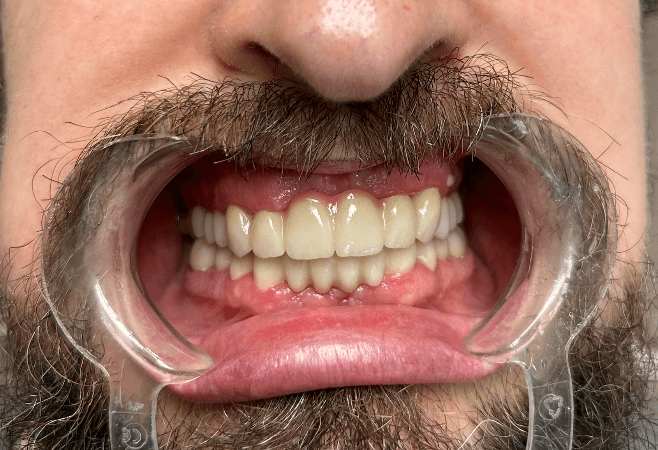
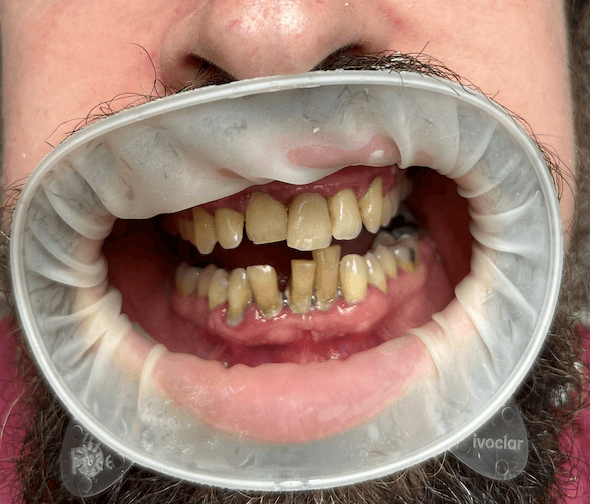
MDental Clinic
Verified clinicCrowns & restoration · Budapest
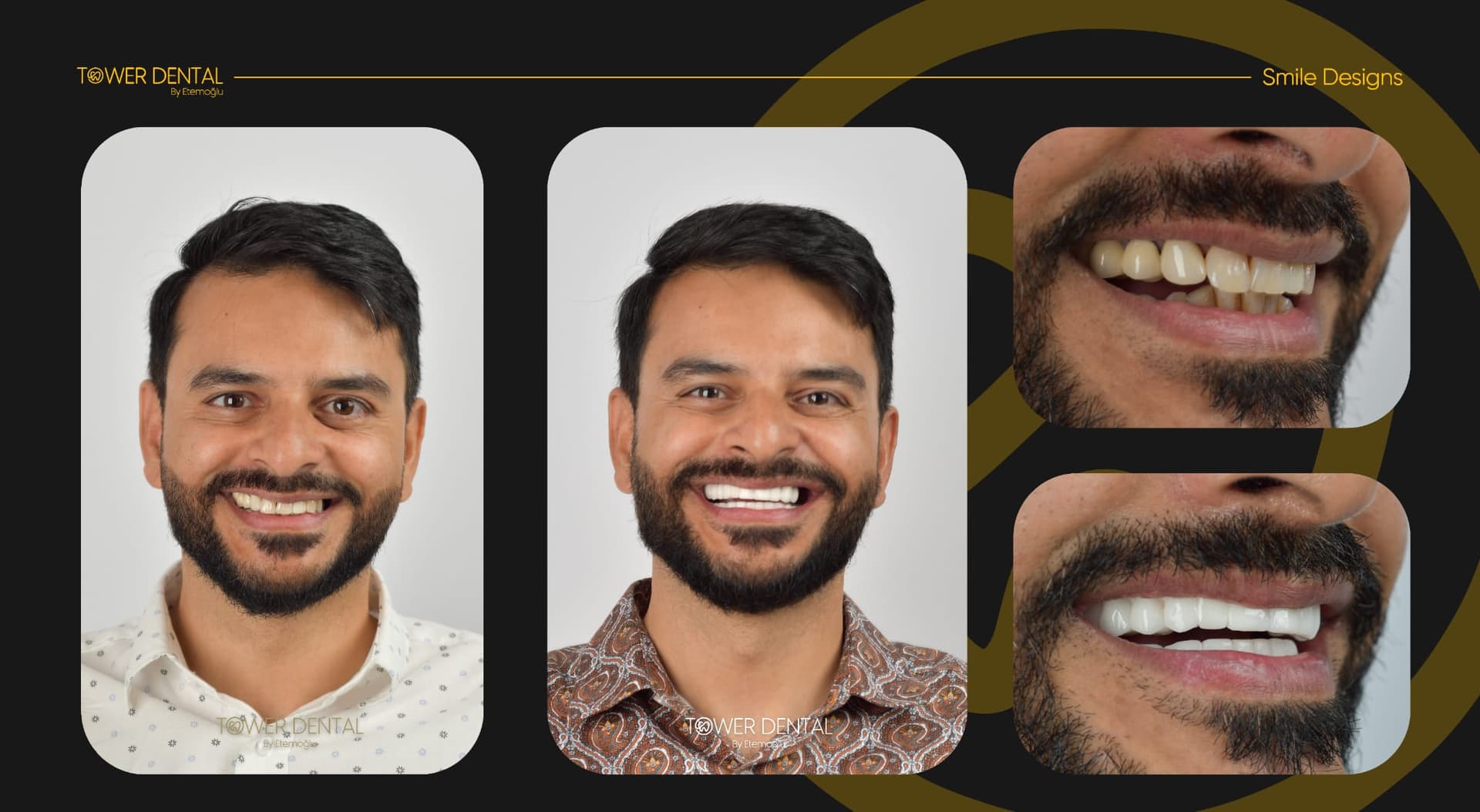 Before → After
Tower Dental Clinic
Verified clinicHollywood smile · E-max veneers · Istanbul
References & Sources
All clinical claims, pricing data, and statistics in this article are based on peer-reviewed research, official regulatory sources, and publicly verifiable data. We invite you to verify anything before making a treatment decision.
- 1.BBC News, "Turkey teeth: The dental tourism risks patients don't see." February 2023.
- 2.BBC, "Turkey Teeth: Bargain Smiles or Big Mistake?" — documentary investigating dental tourism risks, 2022.
- 3.Euronews, "Medical tourism: Dental expert explains why Turkey teeth can be a costly mistake." October 2024.
- 4.General Dental Council (UK), "Going abroad for dental treatment" — patient guidance.
- 5.British Dental Association (BDA), "Dental tourism: Patients need to know the risks."
- 6.T.C. Saglik Bakanligi (Turkish Ministry of Health), Health Tourism Authorisation Regulations.
- 7.Kontakiotis, E.G. et al. (2015), "A prospective study of the incidence of asymptomatic pulp necrosis following crown preparation," Int. Endod. J., 48(6), 512-517.
- 8.Pjetursson, B.E. et al. (2012), "A systematic review of the survival and complication rates of implant-supported fixed dental prostheses after at least 5 years," Clin. Oral Implants Res., 23(S6), 22-38.
- 9.Sailer, I. et al. (2015), "All-ceramic or metal-ceramic tooth-supported fixed dental prostheses: a systematic review," Dent. Mater., 31(6), 603-624.
- 10.Türkiye Today, "1.5 million health tourists visited Türkiye in 2024, generating $3 billion in revenue." 2025.
Medical disclaimer: This article is for educational purposes and does not replace a clinical examination. Treatment outcomes vary between patients. Always consult a qualified dental professional.

About MyDentalFly
MyDentalFly is a UK-based platform that builds your treatment plan and matches you with vetted specialist clinics abroad — and a dentist at the clinic reviews and confirms every plan before you pay anything.
Our interactive assessment evaluates your dental needs and builds a bespoke package: every treatment explained, a matched clinic with reasons why, your named dentist, flight estimates, transport, and accommodation — all in one place. We maintain a small, vetted network across Turkey, Hungary and Poland, visit clinics in person, help arrange CBCT scans before you fly, and stay with you through the entire journey. Compare. Save. Smile.
Questions Pearl can answer about dental implants vs bridges: how to decide
- “Is treatment abroad safe?”
- “What would my case cost?”
- “Which clinic suits me?”
She answers in your own language, using prices from clinics we have checked. No sign-up, and she never asks for a phone number to give you an answer.
Tap a question — Pearl answers
Prefer a person? WhatsApp us · 020 4634 2312 · or
Clinically reviewed before booking
Every dental package built on MyDentalFly is reviewed by a qualified dentist before it gets accepted. Our clinical reviewers include specialists like Dr. Hubert Trępatowski — 800+ All-on-4 procedures, trained under Professor Paulo Malo (pioneer of the All-on-4 technique), graduate of Jagiellonian University Medical Faculty, Krakow.
About the author
Adam Smith
Head of Patient Research, MyDentalFly
Adam leads patient research at MyDentalFly, personally vetting clinics across Turkey, Hungary, and Poland. He has reviewed over 200 clinic proposals, analysed patient outcomes, and helped coordinate treatment plans for patients across the UK, USA, and Europe.
Clinically reviewed by
Dr. Ertan EtemogluLead Dentist & Co-Founder, Tower Dental Clinic
26 years in practice · 8,000+ patients/year · Turkish & American Dental Association member · Featured on Reuters
Content last reviewed: 9 September 2026


