Dental Implant Cost USA 2026: $3K–$6K, or Half Abroad
By Adam Smith, Head of Patient Research
Updated 21 February 2026 · Dental tourism researcher · Clinic vetting specialist · 40+ clinics assessed on-site
Clinically reviewed by Dr. Ertan Etemoglu, Lead Dentist & Co-Founder
Tower Dental Clinic, Istanbul · 26 years in practice · 8,000+ patients/year · Turkish & American Dental Association member · Featured on Reuters

About MyDentalFly
We build your treatment plan and match you with vetted specialist clinics in Turkey, Hungary and Poland — and a dentist at the clinic confirms every plan before you pay anything.
Vetted clinics only· Turkey · Hungary · Poland·1,875 verified prices
Pearl, our dental consultant
Pearl
Pearl · online
Hi, I'm Pearl 👋 Ask me anything about dental implants abroad — or tell me what you need and I'll build your package.
What I build for you

Smile Analyser
Send one photo. I tell you what I can see.
Try asking about this

Americans pay $3,000–$6,000 per dental implant in 2026. See what drives the cost — and how patients cut it 50–70% abroad without losing quality.
You've just been quoted $5,000 for a single dental implant. Your insurance covers maybe $1,250 of that — if it covers implants at all. You need more than one tooth. And you're wondering if this is really what it costs or if there's a way to get the same treatment without draining your savings.
There is. But first, here's what drives the price in America and what your real options are.
How much do dental implants cost in the US in 2026?: State by State
A single dental implant in the United States costs $3,000 to $6,000. In cities like New York, San Francisco, or Miami, expect the higher end. In the Midwest or South, closer to $3,000 — but rarely below it.
That's for one tooth. Most people who need implants need more than one.
| Treatment | National Average | NYC/LA/SF | Midwest/South |
|---|---|---|---|
| Single implant + crown | $3,000 - $6,000 | $5,000 - $7,000 | $3,000 - $4,500 |
| Implant with bone graft | $4,500 - $8,000 | $6,000 - $10,000 | $4,000 - $6,500 |
| All-on-4 (per arch) | $18,000 - $35,000 | $25,000 - $40,000 | $18,000 - $28,000 |
| All-on-6 (per arch) | $24,000 - $40,000 | $30,000 - $50,000 | $22,000 - $35,000 |
| Full mouth (both arches) | $40,000 - $90,000 | $60,000 - $100,000 | $38,000 - $65,000 |
These prices include the titanium post, abutment, and porcelain crown. They don't include the CT scan ($200-$500), bone grafting if needed, or sedation ($300-$800).
Pearl
MyDentalFly’s dental consultant
Worth knowing before you compare any quotes: the number of implants you need isn't a preference, it's decided by how much bone you have and where the gaps sit. Two people missing the same number of teeth can need very different treatment — which is why quotes vary so wildly before anyone has looked at a scan.
How many teeth are you missing or need replacing?
What Dental Insurance Actually Covers
Here's the part nobody tells you upfront: most dental insurance plans classify implants as cosmetic or elective. Even when they're covered, the math isn't great.
Typical PPO coverage for implants:
- Annual maximum: $1,500-$2,500
- Implant coverage: 50% after deductible (if covered at all)
- Waiting period: 6-12 months on new plans
- Per-implant benefit: $750-$1,250 toward a $5,000 procedure
So you'd get $1,250 toward a $5,000 implant. Out of pocket: $3,750. For multiple implants, your annual max runs out after the first one.
Medicare doesn't cover dental implants. Period. Medicare Part A covers dental work only if it's part of a covered hospital procedure.
Medicaid coverage varies by state, but implants are almost never included.
VA dental benefits cover implants for service-connected dental conditions, but wait times average 4-8 months.
Why Implants Cost So Much in America
Three things drive US implant prices:
Overhead. A dental practice in Manhattan pays $15,000-$25,000/month in rent alone. Staff, malpractice insurance, compliance — it all gets passed to patients.
Specialist fees. Oral surgeons and periodontists charge $400-$800/hour. Implant placement takes 1-2 hours of chair time, plus follow-up appointments.
Lab costs. A US dental lab charges $600-$1,200 per custom crown. The implant post itself costs the dentist $200-$500 wholesale. Everything else is margin and overhead.
The implant itself — the actual titanium screw — is the same product globally. A Straumann implant placed in Istanbul is the same Straumann implant placed in Manhattan. The difference is everything around it.
The Abroad Option: Same Implants, 60-70% Less
Over 850,000 Americans traveled abroad for dental work in 2025. The math makes it obvious:
| Treatment | US Average | Turkey | Mexico | Hungary |
|---|---|---|---|---|
| Single implant + crown | $4,500 | $700-$1,100 | $900-$1,500 | $1,000-$1,500 |
| All-on-4 (per arch) | $25,000 | $4,000-$6,500 | $5,000-$8,000 | $6,000-$8,500 |
| All-on-6 (per arch) | $30,000 | $5,500-$8,500 | $7,000-$10,000 | $7,500-$10,000 |
| 6 implants + crowns | $27,000 | $4,800-$6,600 | $5,400-$9,000 | $6,000-$9,000 |
These clinics use the exact same implant brands — Nobel Biocare (Swedish), Straumann (Swiss), Osstem (Korean). Same manufacturer, same warranty. The implant brand comparison tool lets you compare success rates, warranties, and prices across 13 brands — so you know exactly what you're getting.
Real Savings After Travel
A common objection: "But flights and hotels eat up the savings." Here's what it actually looks like:
Example: 4 implants + crowns
- US cost: $20,000
- Turkey cost: $3,200 (4 x Osstem implants with zirconia crowns)
- Round-trip flight (JFK to Istanbul): $600-$900
- Hotel (7 nights): $700
- Food and transport: $400
- Total abroad: ~$5,000-$5,200
- Actual saving: ~$15,000
Even flying business class, you'd save $12,000+. The trip cost estimator does this calculation for you — treatment, flights, hotel, and transfers — so you see the real number, not just the clinic price.
Financing vs Going Abroad
Many Americans finance implants through CareCredit, Lending Club, or Prosper Healthcare Lending. Typical terms:
- 0% APR for 12-24 months (if approved)
- After promo period: 14.9%-26.99% APR
- A $25,000 All-on-4 financed over 5 years at 18% APR = $39,000 total
Paying $5,000 cash abroad beats paying $39,000 over five years at home.
How to Actually Do This Safely
The savings are clear. The question is how to make sure you don't become one of the bad stories. Here's what matters:
Figure out what you actually need first. You might think you need 4 implants, but after an X-ray you might need bone grafts too. The dental assessment maps your teeth in 2 minutes and tells you exactly what treatment you're looking at — before anyone quotes you a price. It's worth about $65 at a US dentist, and it's free.
Don't rely on directories. Most dental tourism sites — WhatClinic, Dental Departures, Bookimed — list any clinic that pays a listing fee. They don't visit clinics. They don't check reviews. They don't reject anyone. We've personally verified every clinic on MyDentalFly and removed eight that didn't meet our standards — including clinics caught with fake reviews and one that removed a patient's implants over a billing dispute.
Get a dental tourism consultant. When you start with MyDentalFly, you get a dedicated consultant who manages the entire process — your patient file, clinic coordination, appointment scheduling, and communication. Your deposit is held by us, not the clinic, until you arrive and confirm you're happy after your consultation and X-rays. If something feels wrong, your consultant speaks to the clinic directly. You're not navigating a foreign healthcare system alone.
Check the implant brand. If a clinic won't tell you which brand they use, walk away. Straumann and Nobel Biocare have 98-99% success rates over 10 years. Budget brands have less data. The savings calculator shows you prices at verified clinics using named brands — so you're comparing like for like.
How much does a single dental implant cost in the US in 2026?
A single dental implant including the crown costs $3,000-$6,000 depending on location. In major cities (NYC, LA, SF) expect $5,000-$7,000. Adding a bone graft pushes the total to $4,500-$8,000. Most insurance plans cover only $750-$1,250 of this.
Why are dental implants so expensive in America?
Three factors: practice overhead ($15,000-$25,000/month rent in major cities), specialist fees ($400-$800/hour), and US lab costs ($600-$1,200 per crown). The implant itself costs the dentist $200-$500 wholesale — the same price clinics abroad pay for the same product.
Is it safe to get dental implants abroad?
At verified clinics using major brands (Straumann, Nobel Biocare, Osstem), yes. These are the same implants placed in US practices. The risk comes from choosing unverified clinics. Over 850,000 Americans traveled for dental work in 2025. The key is choosing a vetted clinic, not just the cheapest one.
How much can I save getting implants in Turkey or Mexico?
For a single implant: $2,000-$3,500 saved after flights and hotel. For full mouth work (All-on-4 both arches): $25,000-$50,000 saved. Even with business class flights and a nice hotel, the savings are substantial.
Related: Best Country for Dental Implants (2026 Comparison)
See also: Dental Implants Turkey: 2026 Guide
Does dental insurance cover implants abroad?
Most US dental insurance does not cover treatment abroad. However, since most plans only cover $1,250 toward a $5,000 implant anyway, the savings from going abroad far exceed what insurance would have contributed. Some patients use their HSA or FSA to pay for treatment abroad — check with your plan administrator.
Guide: Dental Implants Turkey Guide
Prices: Dental Implant Prices in Turkey
Related: Dental Implants Abroad for Americans
Related: Dental Implant Costs Compared (2026)
Related: All-on-6 Turkey: 2026 Cost Guide
What your package would look like
Your package, building
ExamplePackage total
building…
—
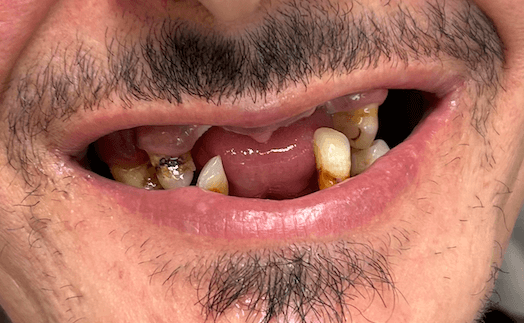
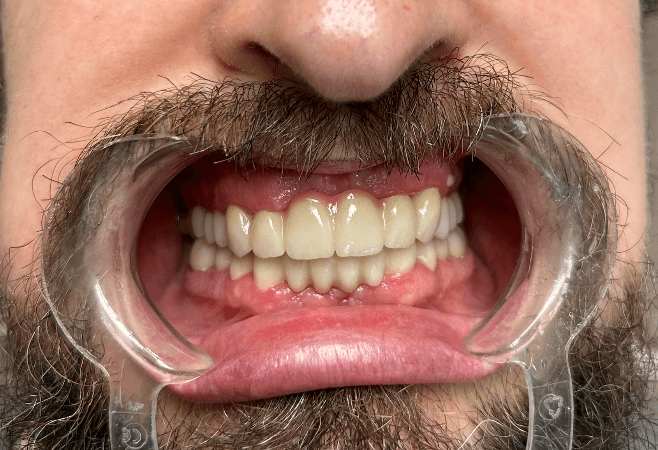
Real results from verified clinics
Drag the slider to compare before & after
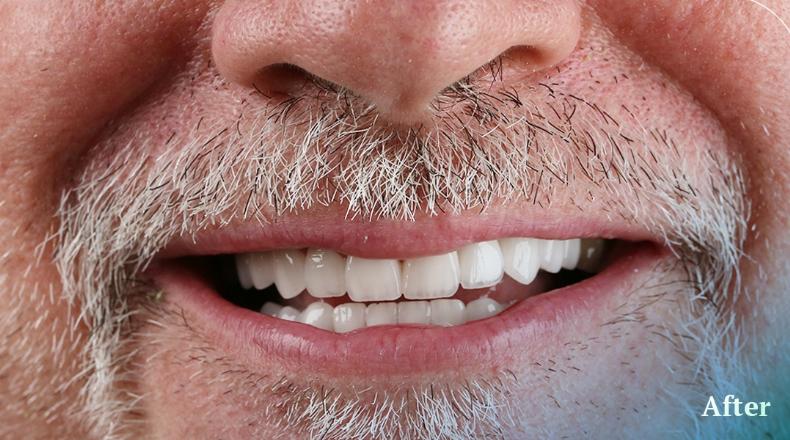
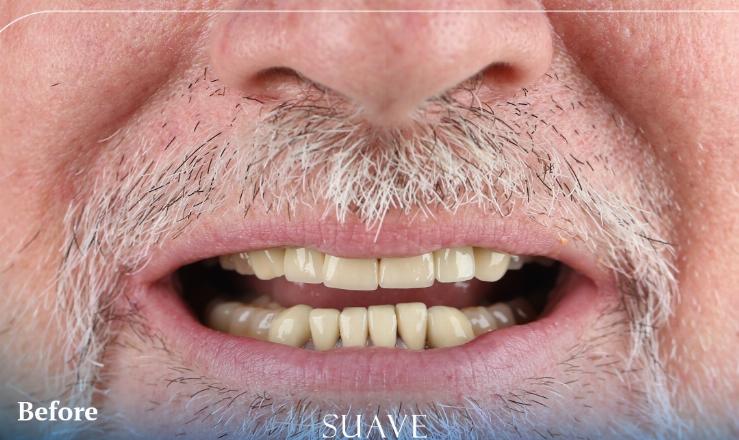
Suave Clinic
Verified clinicFull smile restoration · Istanbul
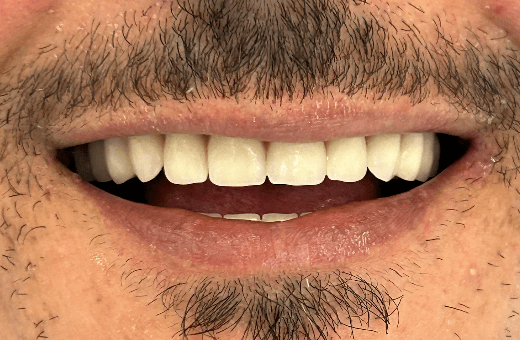
MDental Clinic
Verified clinicFull smile makeover · E-max veneers · Budapest
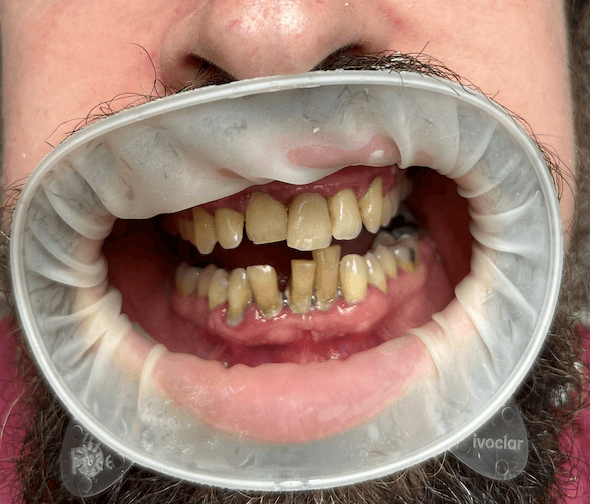
MDental Clinic
Verified clinicCrowns & restoration · Budapest
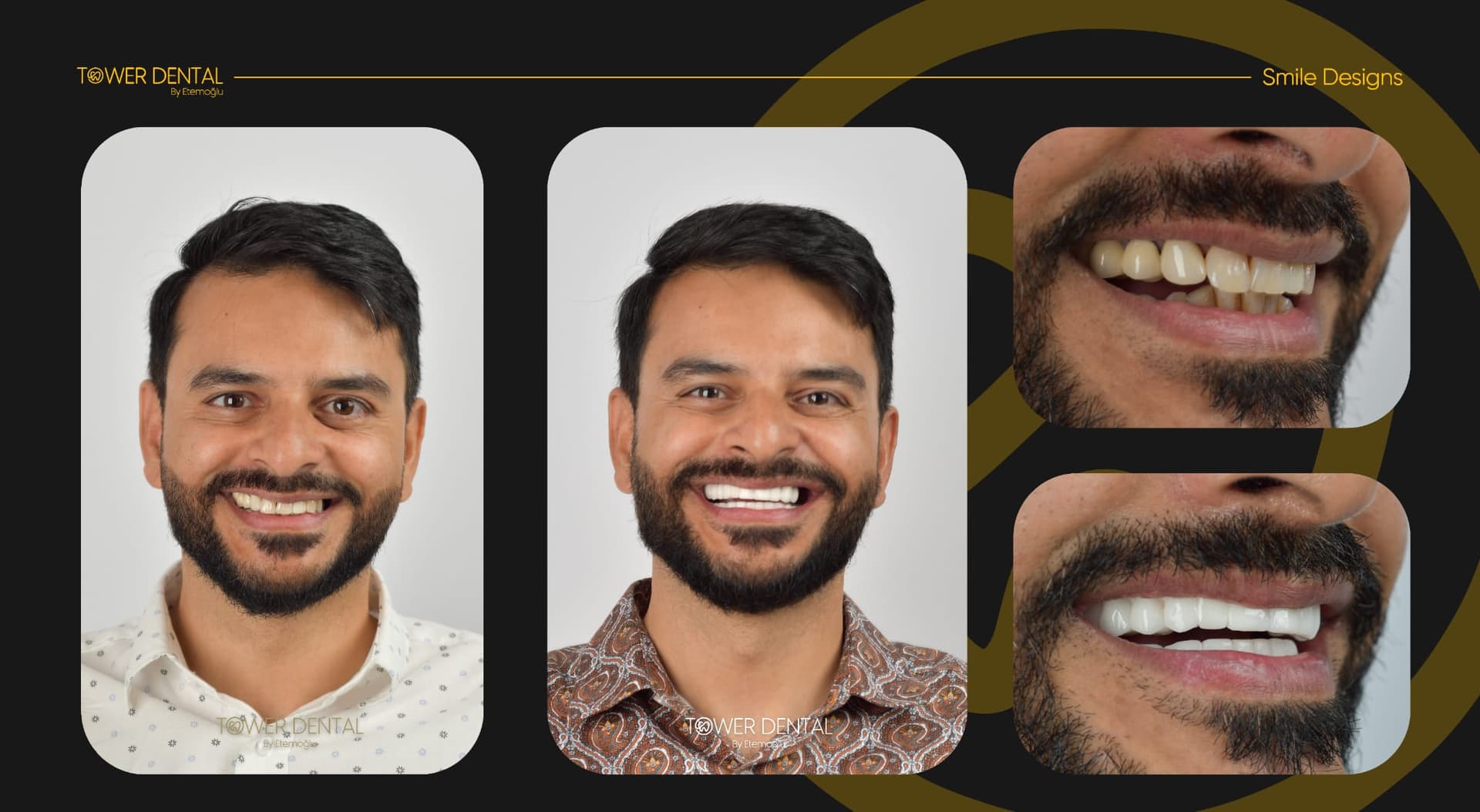 Before → After
Tower Dental Clinic
Verified clinicHollywood smile · E-max veneers · Istanbul
References & Sources
All clinical claims, pricing data, and statistics in this article are based on peer-reviewed research, official regulatory sources, and publicly verifiable data. We invite you to verify anything before making a treatment decision.
- 1.BBC News, "Turkey teeth: The dental tourism risks patients don't see." February 2023.
- 2.BBC, "Turkey Teeth: Bargain Smiles or Big Mistake?" — documentary investigating dental tourism risks, 2022.
- 3.Euronews, "Medical tourism: Dental expert explains why Turkey teeth can be a costly mistake." October 2024.
- 4.General Dental Council (UK), "Going abroad for dental treatment" — patient guidance.
- 5.British Dental Association (BDA), "Dental tourism: Patients need to know the risks."
- 6.T.C. Saglik Bakanligi (Turkish Ministry of Health), Health Tourism Authorisation Regulations.
- 7.Kontakiotis, E.G. et al. (2015), "A prospective study of the incidence of asymptomatic pulp necrosis following crown preparation," Int. Endod. J., 48(6), 512-517.
- 8.Pjetursson, B.E. et al. (2012), "A systematic review of the survival and complication rates of implant-supported fixed dental prostheses after at least 5 years," Clin. Oral Implants Res., 23(S6), 22-38.
- 9.Sailer, I. et al. (2015), "All-ceramic or metal-ceramic tooth-supported fixed dental prostheses: a systematic review," Dent. Mater., 31(6), 603-624.
- 10.Türkiye Today, "1.5 million health tourists visited Türkiye in 2024, generating $3 billion in revenue." 2025.
Medical disclaimer: This article is for educational purposes and does not replace a clinical examination. Treatment outcomes vary between patients. Always consult a qualified dental professional.

About MyDentalFly
MyDentalFly is a UK-based platform that builds your treatment plan and matches you with vetted specialist clinics abroad — and a dentist at the clinic reviews and confirms every plan before you pay anything.
Our interactive assessment evaluates your dental needs and builds a bespoke package: every treatment explained, a matched clinic with reasons why, your named dentist, flight estimates, transport, and accommodation — all in one place. We maintain a small, vetted network across Turkey, Hungary and Poland, visit clinics in person, help arrange CBCT scans before you fly, and stay with you through the entire journey. Compare. Save. Smile.
Questions Pearl can answer about dental implant cost usa 2026: $3k–$6k, or half abroad
- “Is treatment abroad safe?”
- “What would my case cost?”
- “Which clinic suits me?”
She answers in your own language, using prices from clinics we have checked. No sign-up, and she never asks for a phone number to give you an answer.
Tap a question — Pearl answers
Prefer a person? WhatsApp us · 020 4634 2312 ·
Clinically reviewed before booking
Every dental package built on MyDentalFly is reviewed by a qualified dentist before it gets accepted. Our clinical reviewers include specialists like Dr. Hubert Trępatowski — 800+ All-on-4 procedures, trained under Professor Paulo Malo (pioneer of the All-on-4 technique), graduate of Jagiellonian University Medical Faculty, Krakow.
About the author
Adam Smith
Head of Patient Research, MyDentalFly
Adam leads patient research at MyDentalFly, personally vetting clinics across Turkey, Hungary, and Poland. He has reviewed over 200 clinic proposals, analysed patient outcomes, and helped coordinate treatment plans for patients across the UK, USA, and Europe.
Clinically reviewed by
Dr. Ertan EtemogluLead Dentist & Co-Founder, Tower Dental Clinic
26 years in practice · 8,000+ patients/year · Turkish & American Dental Association member · Featured on Reuters
Content last reviewed: 21 February 2026