Composite vs Porcelain vs Zirconia
By Adam Smith, Head of Patient Research
Updated 13 February 2026 · Dental tourism researcher · Clinic vetting specialist · 40+ clinics assessed on-site
Clinically reviewed by Dr. Ertan Etemoglu, Lead Dentist & Co-Founder
Tower Dental Clinic, Istanbul · 26 years in practice · 8,000+ patients/year · Turkish & American Dental Association member · Featured on Reuters

About MyDentalFly
We build your treatment plan and match you with vetted specialist clinics in Turkey, Hungary and Poland — and a dentist at the clinic confirms every plan before you pay anything.
Vetted clinics only· Turkey · Hungary · Poland·1,875 verified prices
Pearl, our dental consultant
Pearl
Pearl · online
Hi, I'm Pearl 👋 Ask me anything about veneers abroad — or tell me what you need and I'll build your package.
What I build for you

Smile Analyser
Send one photo. I tell you what I can see.
Try asking about this

Three veneer materials, three price points, three very different outcomes. Here's which one to pick based on your budget, your teeth, and how long you want them to last.
Composite, porcelain, or zirconia? Your clinic is offering all three and the price difference is significant. Here's what each material actually does, how long it lasts, and which one is right for your teeth.
The Real Comparison
| Factor | Composite | E.max Porcelain | Zirconia |
|---|---|---|---|
| Turkey price per tooth | £80-150 | £180-300 | £150-250 |
| UK price per tooth | £250-450 | £700-1,000 | £500-800 |
| Lifespan | 5-7 years | 12-20 years | 15-25+ years |
| Appearance | Good (can stain over time) | Excellent (most natural-looking) | Very good (slightly more opaque) |
| Translucency | Low | High (mimics real enamel) | Lower than E.max |
| Stain resistance | Poor — absorbs coffee, wine, tea | Excellent — non-porous surface | Excellent — non-porous surface |
| Repairability | Can be patched chairside in 30 min | Must be fully replaced if cracked | Must be fully replaced if cracked |
| Tooth preparation | Minimal or none (0-0.3mm) | Moderate (0.3-0.5mm enamel removal) | Moderate (0.3-0.7mm enamel removal) |
| Reversibility | Often reversible (no-prep options exist) | Not reversible once teeth are prepared | Not reversible once teeth are prepared |
| Strength | Weakest — prone to chipping | Strong — 400 MPa flexural strength | Strongest — 900-1,200 MPa flexural strength |
| Best for | Budget, young patients, trial run | Front teeth, aesthetics-first patients | Back teeth, bruxism, strength-first patients |
The numbers tell a story. Twenty composite veneers in Turkey cost £1,600-3,000. They need replacing every 5-7 years. Do the maths: over 20 years, you'll pay for three sets. Total cost: £4,800-9,000, plus three separate trips.
Twenty E.max porcelain veneers cost £3,600-6,000 upfront. They last 12-20 years. Over 20 years, you might replace them once. Total cost: £3,600-12,000.
Porcelain often costs less over a lifetime.
Pearl
MyDentalFly’s dental consultant
The bit that matters most and gets discussed least: veneers and crowns are not the same treatment. A veneer is a thin facing that keeps most of your own tooth; a crown means the tooth is reduced right down first, and that can't be undone. A lot of very cheap 'veneer' packages abroad are actually crowns.
What are you hoping to change?
When Composite Actually Makes Sense
Composite gets unfairly dismissed, but it's the smart choice in specific situations.
You're under 25. Your jaw is still growing. Permanent veneers placed on shifting teeth won't fit properly in five years. Composite lets you fix cosmetic issues now without committing to irreversible tooth reduction.
You want to test-drive a new smile. Composite shows you what different tooth shapes and colours look like without grinding down enamel. Hate the result? Remove them. Your natural teeth are untouched underneath.
You need one or two teeth fixed quickly. A chipped front tooth can be repaired with composite in 30 minutes. No lab work. No waiting. The dentist sculpts the material directly onto your tooth.
You genuinely cannot afford porcelain. If your options are composite veneers or no treatment, composite wins. A transformed smile at £1,600-3,000 beats perfect teeth you can't afford.
You should skip composite if: You want a permanent smile makeover lasting 10+ years. Composite absorbs stains from coffee, wine, tea, and tobacco. After 2-3 years, your veneers will look noticeably discoloured. No amount of polishing fixes this completely.
Why E.max Porcelain Dominates
E.max lithium disilicate is the material you see in celebrity smile makeovers. There's a reason it's the gold standard.
The translucency matches natural tooth enamel. Light passes through the veneer and bounces off your tooth underneath, creating depth and warmth. Composite and zirconia reflect light more artificially, producing a flatter appearance.
Perfect for front teeth. Your "social six" — upper canine to canine — show most when you smile. E.max delivers the most natural result here.
Stain-proof in daily use. Coffee, wine, and tea stains sit on the surface instead of absorbing into the material. A professional cleaning restores the original shade.
Long-term economics work. E.max costs £180-300 per tooth in Turkey versus £700-1,000 in the UK. That 60-70% discount makes premium materials accessible to regular people, not just celebrities.
The main downside: once your teeth are prepared for E.max veneers, there's no going back. You've removed enamel permanently.
Zirconia's Sweet Spot
Zirconia is dental Kevlar. Its 900-1,200 MPa flexural strength makes it virtually unbreakable in normal use.
Back teeth need this strength. Premolars and molars handle crushing forces that would crack E.max. Zirconia handles them without stress.
Night grinders should consider it. If you clench or grind your teeth during sleep, E.max veneers on front teeth risk fracturing. Zirconia's strength provides a safety margin. (You still need a night guard, but zirconia won't shatter if you forget to wear it.)
Full-arch restorations require it. All-on-4 and All-on-6 prosthetics use zirconia because they need to withstand years of chewing across the entire arch. E.max is too brittle for this application.
The aesthetics trade-off: Zirconia looks very good, but not quite as natural as E.max. It's slightly more opaque. For back teeth, this doesn't matter. For front teeth, it's noticeable to trained eyes.
The Smart Dentist Approach
Top cosmetic dentists don't use one material everywhere. They match materials to function:
- Upper front 6-8 teeth: E.max for maximum aesthetics
- Upper premolars: Zirconia for strength
- Lower front teeth: E.max (or composite if budget is tight — lower teeth show less)
- Lower back teeth: Zirconia crowns
This combination gives you natural-looking front teeth backed by bulletproof durability where chewing forces peak.
The Repair Reality
"Composite can be repaired if chipped, porcelain has to be replaced."
True. A chipped composite veneer gets patched in 30 minutes at any dentist's office worldwide. A chipped porcelain veneer needs complete replacement — another trip to Turkey or a £700+ bill locally.
But composite chips far more often than porcelain. The repair advantage is offset by needing repairs more frequently. Over 10 years, composite patients typically need 3-5 repairs. Porcelain patients might need zero.
The Facebook groups confirm this pattern. Weekly posts from composite patients regretting their choice. Rare posts from porcelain patients wishing they'd gone composite.
Turkey Pricing Reality
| Material | Per Tooth (Turkey) | Full Set 20 Teeth (Turkey) | Full Set 20 Teeth (UK) |
|---|---|---|---|
| Composite | £80-150 | £1,600-3,000 | £5,000-9,000 |
| E.max Porcelain | £180-300 | £3,600-6,000 | £14,000-20,000 |
| Zirconia | £150-250 | £3,000-5,000 | £10,000-16,000 |
The gap between composite and E.max in Turkey is £2,000-3,000 for a full set. In the UK, that gap is £9,000-11,000. Turkey's pricing makes premium materials affordable for people who'd be forced into composite at home.
Your Decision Framework
Get a bespoke dental package on MyDentalFly and request quotes for both materials you're considering. Seeing actual prices for your specific case makes this concrete rather than theoretical.
Under 25 or want to test-drive a new smile? Composite.
Want front teeth that look natural and last 15+ years? E.max.
Grind your teeth or need back tooth work? Zirconia.
Budget genuinely tight? Composite now, upgrade to porcelain later.
For detailed guidance on choosing clinics and planning your trip, check the complete veneers guide.
The short version: if you can stretch your budget to E.max for front teeth and zirconia for back teeth, do it. Your future self will thank you.
See also: All-on-4 Guide
Next Steps
The dental assessment builds your dental package and tells you which material is right for each tooth — because some teeth might need porcelain while others need zirconia. The savings calculator shows what each option costs at verified clinics abroad. Your dental tourism consultant ensures the clinic uses exactly what was quoted.
Guide: Dental Implants Abroad Guide
Compare: Veneers: Turkey vs UK
Related: E-Max vs Zirconia: Which Is Better?
What your package would look like
Your package, building
ExamplePackage total
building…
—
Real results from verified clinics
Drag the slider to compare before & after
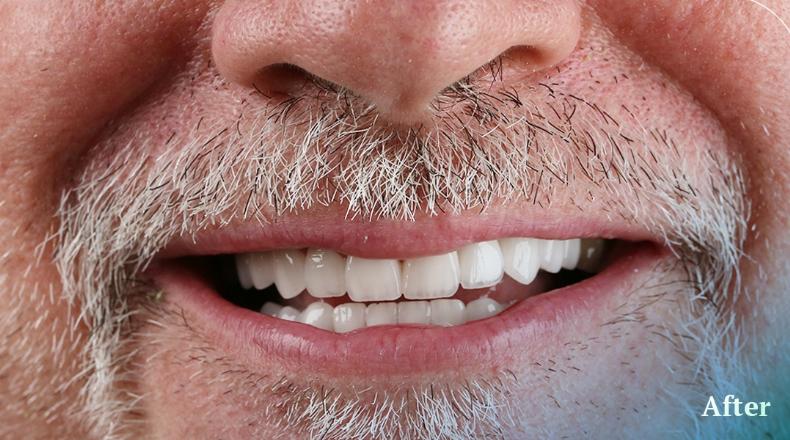
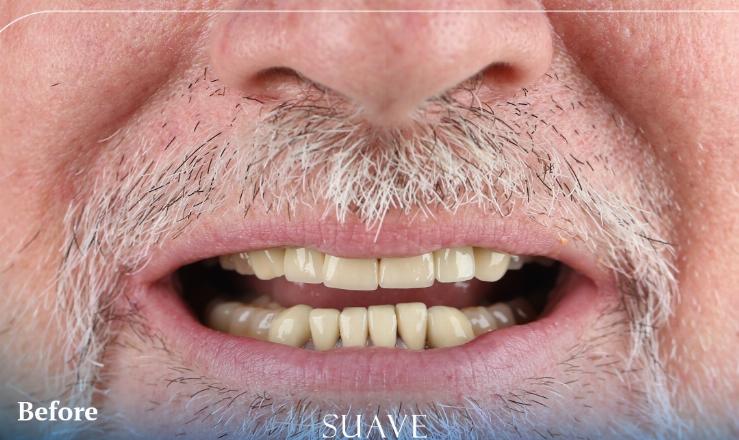
Suave Clinic
Verified clinicFull smile restoration · Istanbul
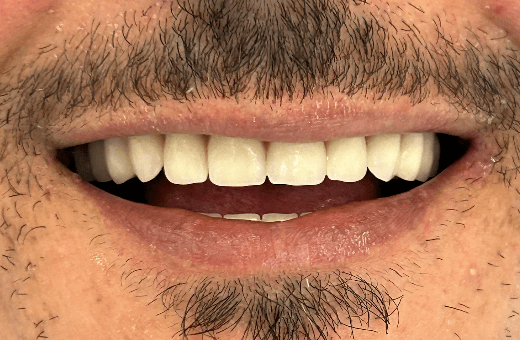
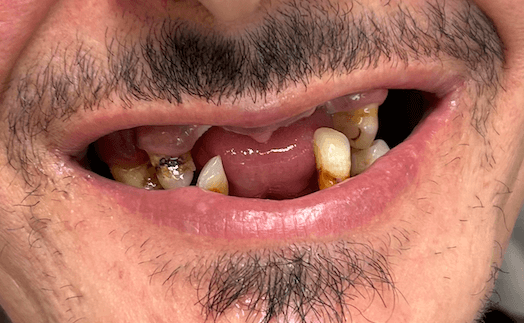
MDental Clinic
Verified clinicFull smile makeover · E-max veneers · Budapest
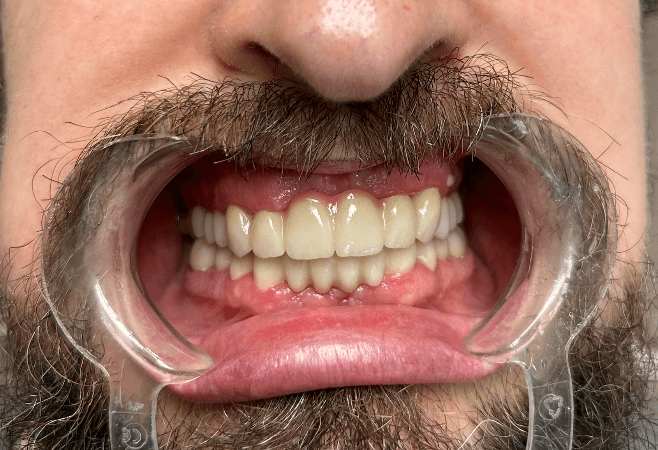
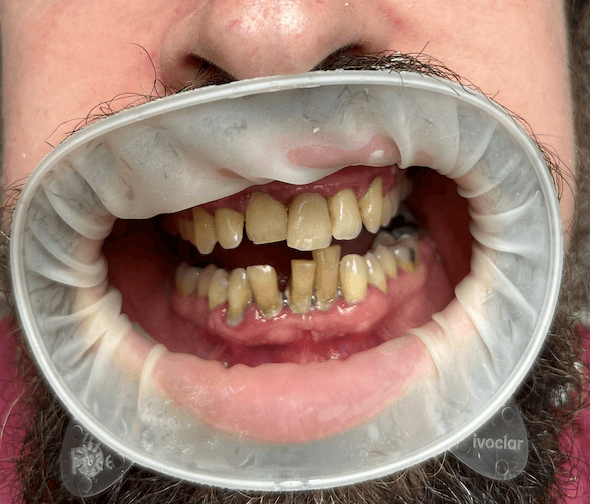
MDental Clinic
Verified clinicCrowns & restoration · Budapest
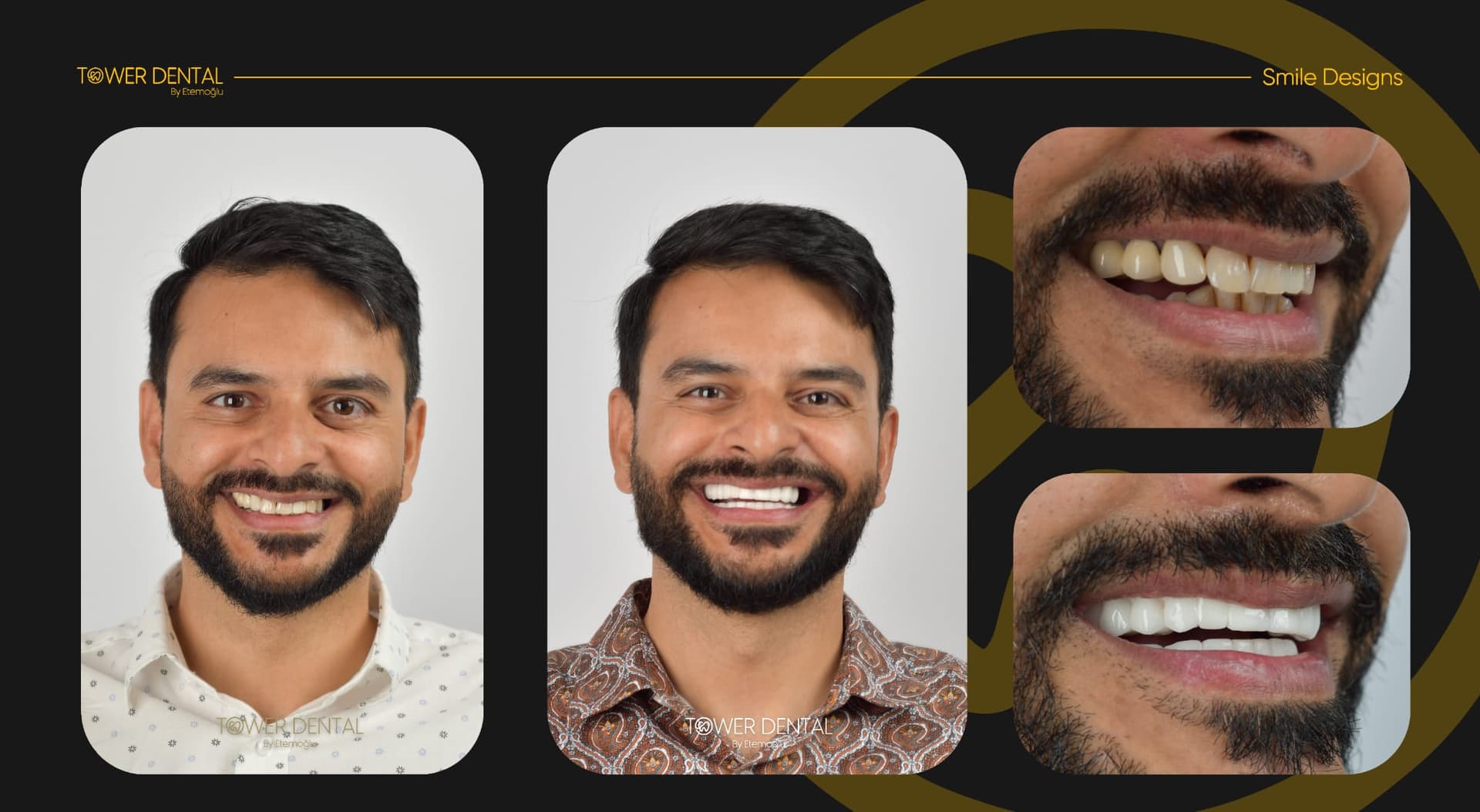 Before → After
Tower Dental Clinic
Verified clinicHollywood smile · E-max veneers · Istanbul
References & Sources
All clinical claims, pricing data, and statistics in this article are based on peer-reviewed research, official regulatory sources, and publicly verifiable data. We invite you to verify anything before making a treatment decision.
- 1.BBC News, "Turkey teeth: The dental tourism risks patients don't see." February 2023.
- 2.BBC, "Turkey Teeth: Bargain Smiles or Big Mistake?" — documentary investigating dental tourism risks, 2022.
- 3.Euronews, "Medical tourism: Dental expert explains why Turkey teeth can be a costly mistake." October 2024.
- 4.General Dental Council (UK), "Going abroad for dental treatment" — patient guidance.
- 5.British Dental Association (BDA), "Dental tourism: Patients need to know the risks."
- 6.T.C. Saglik Bakanligi (Turkish Ministry of Health), Health Tourism Authorisation Regulations.
- 7.Kontakiotis, E.G. et al. (2015), "A prospective study of the incidence of asymptomatic pulp necrosis following crown preparation," Int. Endod. J., 48(6), 512-517.
- 8.Pjetursson, B.E. et al. (2012), "A systematic review of the survival and complication rates of implant-supported fixed dental prostheses after at least 5 years," Clin. Oral Implants Res., 23(S6), 22-38.
- 9.Sailer, I. et al. (2015), "All-ceramic or metal-ceramic tooth-supported fixed dental prostheses: a systematic review," Dent. Mater., 31(6), 603-624.
- 10.Türkiye Today, "1.5 million health tourists visited Türkiye in 2024, generating $3 billion in revenue." 2025.
Medical disclaimer: This article is for educational purposes and does not replace a clinical examination. Treatment outcomes vary between patients. Always consult a qualified dental professional.

About MyDentalFly
MyDentalFly is a UK-based platform that builds your treatment plan and matches you with vetted specialist clinics abroad — and a dentist at the clinic reviews and confirms every plan before you pay anything.
Our interactive assessment evaluates your dental needs and builds a bespoke package: every treatment explained, a matched clinic with reasons why, your named dentist, flight estimates, transport, and accommodation — all in one place. We maintain a small, vetted network across Turkey, Hungary and Poland, visit clinics in person, help arrange CBCT scans before you fly, and stay with you through the entire journey. Compare. Save. Smile.
Questions Pearl can answer about composite vs porcelain vs zirconia
- “Is treatment abroad safe?”
- “What would my case cost?”
- “Which clinic suits me?”
She answers in your own language, using prices from clinics we have checked. No sign-up, and she never asks for a phone number to give you an answer.
Tap a question — Pearl answers
Prefer a person? WhatsApp us · 020 4634 2312 ·
Clinically reviewed before booking
Every dental package built on MyDentalFly is reviewed by a qualified dentist before it gets accepted. Our clinical reviewers include specialists like Dr. Hubert Trępatowski — 800+ All-on-4 procedures, trained under Professor Paulo Malo (pioneer of the All-on-4 technique), graduate of Jagiellonian University Medical Faculty, Krakow.
About the author
Adam Smith
Head of Patient Research, MyDentalFly
Adam leads patient research at MyDentalFly, personally vetting clinics across Turkey, Hungary, and Poland. He has reviewed over 200 clinic proposals, analysed patient outcomes, and helped coordinate treatment plans for patients across the UK, USA, and Europe.
Clinically reviewed by
Dr. Ertan EtemogluLead Dentist & Co-Founder, Tower Dental Clinic
26 years in practice · 8,000+ patients/year · Turkish & American Dental Association member · Featured on Reuters
Content last reviewed: 13 February 2026


