Implant Red Flags From a Dental Technician
By Adam Smith, Head of Patient Research
Updated 28 March 2026 · Dental tourism researcher · Clinic vetting specialist · 40+ clinics assessed on-site
Clinically reviewed by Dr. Ertan Etemoglu, Lead Dentist & Co-Founder
Tower Dental Clinic, Istanbul · 26 years in practice · 8,000+ patients/year · Turkish & American Dental Association member · Featured on Reuters

About MyDentalFly
We build your treatment plan and match you with vetted specialist clinics in Turkey, Hungary and Poland — and a dentist at the clinic confirms every plan before you pay anything.
Vetted clinics only· Turkey · Hungary · Poland·1,875 verified prices
Pearl, our dental consultant
Pearl
Pearl · online
Hi, I'm Pearl 👋 Ask me anything about dental implants abroad — or tell me what you need and I'll build your package.

Smile Analyser
Send one photo. I tell you what I can see.
Try asking about this

A denture technician shares what implant patients get wrong — and the one step that prevents most problems.
"If someone is promising a successful outcome before even doing a proper evaluation, be cautious." That's not from a patient who got burned. It's from a denture technician who posted in an All-on-4 implant discussion group after scrolling through hundreds of stories from patients who'd already made mistakes.
He's the person who builds the teeth that sit on your implants. He sees the aftermath — the cases that went right and the ones that didn't. His advice cuts through the noise because he has no clinic to sell you on.
What a Dental Technician Actually Sees
Most patients never think about dental technicians. You meet the dentist, you meet the receptionist, maybe a hygienist. But your crowns, bridges, and dentures are built by a technician in a lab — and they see patterns that patients don't.
A good technician can tell from a case file whether the treatment plan was rushed. They know when a dentist ordered the wrong size abutment, when the bite registration was sloppy, or when corners were cut on materials. They see the physical evidence of every decision made in that chair.
"I got quotes ranging from £3,500 to £9,000 for the same work — the cheapest wasn't always the worst"
That quote from a patient in the same Facebook group captures the confusion. Price alone tells you nothing about whether the case was properly planned.
Pearl
MyDentalFly’s dental consultant
Worth knowing before you compare any quotes: the number of implants you need isn't a preference, it's decided by how much bone you have and where the gaps sit. Two people missing the same number of teeth can need very different treatment — which is why quotes vary so wildly before anyone has looked at a scan.
How many teeth are you missing or need replacing?
Corporate vs Private: Why It Matters
Jay's post flagged something most patients ignore: "understand the difference between corporate dental practices and private practices."
Here's what that means in dental tourism:
| Factor | Corporate / Volume Clinic | Private / Boutique Clinic |
|---|---|---|
| Daily patient volume | 15-30 patients | 3-8 patients |
| Your dentist | Assigned on the day | Named in advance |
| Treatment planning | Template-based | Case-specific |
| Lab work | Outsourced bulk lab | In-house or premium lab |
| Time per patient | 30-45 min slots | 60-90 min slots |
| Implant brands | Budget / mid-range | Premium (Nobel, Straumann) |
Corporate clinics run on volume. They need a steady conveyor belt of patients to cover overheads — the marketing, the patient coordinators, the VIP transfers. That cost has to come from somewhere, and it usually comes from time. Less time planning your case, less time in the chair, less time checking the fit.
Private clinics make money from reputation. The lead dentist is often the owner. They're selective about cases because a failed implant damages their name directly. That selectivity is actually a green flag.
The Best Dentists Are Selective
This was Jay's sharpest point: "the best doctors are selective about who they treat."
That sounds counterintuitive. You'd think a good dentist takes on any case. But implants have real failure conditions:
- Heavy smokers have implant failure rates of 6-20% vs 1-4% for non-smokers
- Uncontrolled diabetes impairs bone healing around implants
- Insufficient bone density requires grafting before implants — skip this and the implant fails
- Bruxism (grinding) can crack implant crowns or loosen posts
- Certain medications (bisphosphonates for osteoporosis) dramatically increase jawbone complications
A clinic that promises you eight implants based on a WhatsApp photo hasn't checked any of these. A clinic that asks about your medical history, requests a CBCT scan, and tells you "we need to address the bone loss first" — that's a clinic doing it right.
When you take MyDentalFly's dental assessment, we ask about smoking, medications, diabetes, grinding, and gum disease history. Not because we're nosy — because those factors change your treatment plan entirely. Your dental package flags conditions that affect implant success before any clinic sees your case.
Implants Don't Work for Everyone
This is the bit nobody wants to hear. Implants have a 95-98% success rate overall, but that number drops when risk factors stack up. A 55-year-old smoker with Type 2 diabetes and moderate bone loss is not the same candidate as a healthy 40-year-old with one missing tooth.
The honest answer isn't always "yes, you're a great candidate." Sometimes it's:
- "You need bone grafting first — that's an extra £200-350 per site in Turkey, or £800-1,500 in the UK"
- "We need to stabilise your gum disease before placing implants"
- "You should consider a bridge here instead — an implant in this position has higher failure risk"
- "All-on-4 works for your upper jaw but your lower jaw needs All-on-6 for stability"
A platform that gives you a straight answer about what you actually need — even when that answer costs more or takes longer — is worth more than a clinic that quotes you £3,000 for something that should cost £5,000.
The Evaluation That Should Happen Before You Fly
Here's the gap Jay identified: clinics promising outcomes before proper evaluation. In dental tourism, that gap is massive. Most agencies work like this:
- You send a photo or X-ray over WhatsApp
- Someone (often not a dentist) gives you a quote
- You book flights
- The real evaluation happens Day 1 at the clinic
- Treatment plan changes. Price changes. Too late.
"Communication was excellent before I arrived but follow-up after returning home was poor"
That pattern — great sales, poor clinical process — is the root cause of most dental tourism problems. The fix isn't finding a cheaper clinic or a better agent. It's doing the evaluation properly before anyone quotes you.
MyDentalFly's interactive dental chart maps every tooth with symptoms. The health questionnaire covers medical history, medications, and risk factors. Your Dental Package identifies recommended treatments with estimated costs — and flags when extras like bone grafts or sinus lifts might be needed. Clinics receive your full case file before you arrive, so they can plan properly instead of diagnosing and treating in the same rushed visit.
What This Actually Costs
| Treatment | UK | USA | Turkey | Hungary |
|---|---|---|---|---|
| Single implant (standard) | £2,950 | $4,000 | £350-550 | £800-1,200 |
| Single implant (premium — Nobel/Straumann) | £3,500 | $5,000 | £450-800 | £1,000-1,500 |
| All-on-4 (full arch) | £18,000 | $25,000 | £3,800-7,000 | £5,500-8,000 |
| All-on-6 (full arch) | £22,000 | $30,000 | £5,000-9,000 | £7,000-10,000 |
| Bone graft (per site) | £800 | $1,500 | £150-350 | £400-600 |
| Sinus lift | £1,200 | $2,500 | £300-500 | £500-800 |
The savings are real. But the savings mean nothing if the evaluation was rushed and the treatment plan was wrong. An extra £200 for a bone graft identified in advance is cheaper than a failed £5,000 implant.
What Jay Would Tell You to Do
Based on his advice and the patterns we see across thousands of cases:
-
Get a proper evaluation before any clinic quotes you. Not a WhatsApp photo. A dental chart, medical history, and ideally a CBCT scan.
-
Ask about success rates. Any dentist who claims 100% success is lying. Ask how many implant cases they do per month and what their complication rate is.
-
Understand who's doing your work. Is it the dentist from the marketing video, or whoever's available that day? Private clinics name your dentist. Corporate ones assign you.
-
Don't fear the clinic that says no. A dentist who tells you "you need bone grafting first" or "implants aren't right for your situation" is a dentist who cares about outcomes, not volume.
-
Compare clinics on equal terms. MyDentalFly lets you compare up to 3 clinics side by side — same treatment plan, same format — so you can see differences in materials, guarantees, and what's included.
The Facebook groups are full of people who wish they'd done more homework. A denture technician just told you exactly what that homework should look like.
How do I know if I'm a good candidate for dental implants?
A proper evaluation checks bone density (via CBCT scan), gum health, medical history (diabetes, osteoporosis medications, autoimmune conditions), smoking status, and bite alignment. MyDentalFly's dental assessment covers these factors and flags risks before any clinic sees your case.
What's the difference between a dental technician and a dentist?
A dentist performs the surgery — placing implants, preparing teeth, fitting temporary crowns. A dental technician works in a lab building the permanent crowns, bridges, and dentures that go on top. They're the craftspeople behind your smile, and a good technician is just as important as a good dentist.
Should I worry if a clinic guarantees implant success?
Yes. No responsible dentist guarantees 100% success. Implant failure rates are 1-4% even in ideal conditions. Clinics that guarantee outcomes before evaluating your case are prioritising sales over clinical honesty. Look for clinics that offer written warranties (5-10 years) with clear terms instead.
How do I avoid bait-and-switch pricing for dental implants abroad?
Get a full evaluation before you fly. MyDentalFly's dental package documents your case — teeth affected, symptoms, medical history — so clinics provide accurate quotes based on real information. When a clinic receives your complete case file in advance, there's no reason for the price to change on arrival.
Is All-on-4 cheaper than individual implants?
For replacing a full arch of teeth, yes. All-on-4 uses four implants to support 10-12 teeth, costing £3,800-7,000 in Turkey vs £18,000 in the UK. Individual implants at £350-550 each would cost far more for a full arch. But All-on-4 isn't right for everyone — your bone density and bite determine which approach works.
See also: All-on-4 Guide
Next Steps
The candidacy checker tells you in 60 seconds if you're suitable for implants. The dental assessment builds your bespoke dental package — mapping your teeth and matching you with the right clinic. The savings calculator shows verified clinic prices vs home costs.
We've verified every clinic on our platform and removed eight that didn't meet our standards — unlike directories that list anyone who pays. Your dental tourism consultant coordinates everything once you're ready.
Guide: Dental Implants Turkey Guide
What your package would look like
Your package, building
ExamplePackage total
building…
—
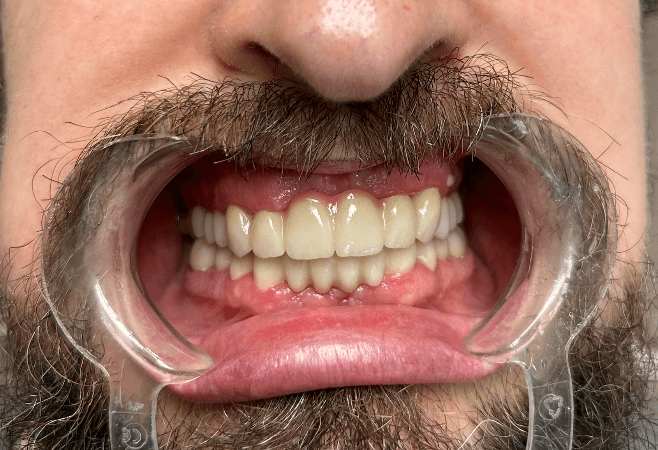
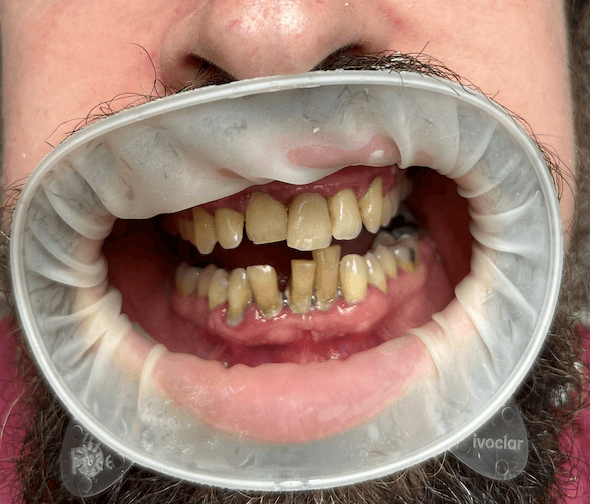
Real results from verified clinics
Drag the slider to compare before & after
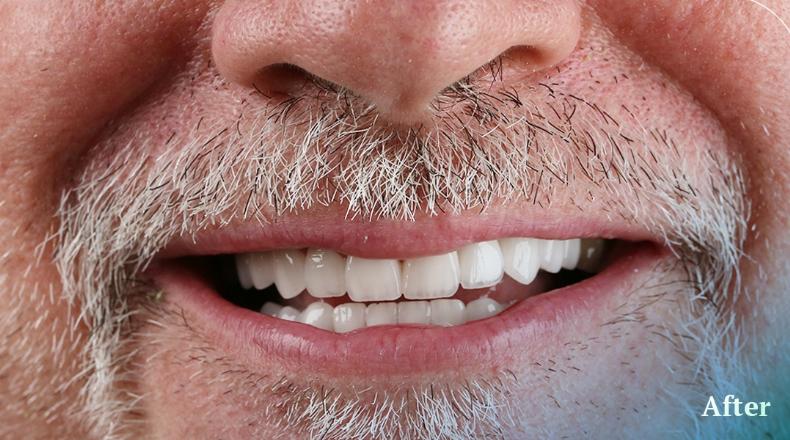
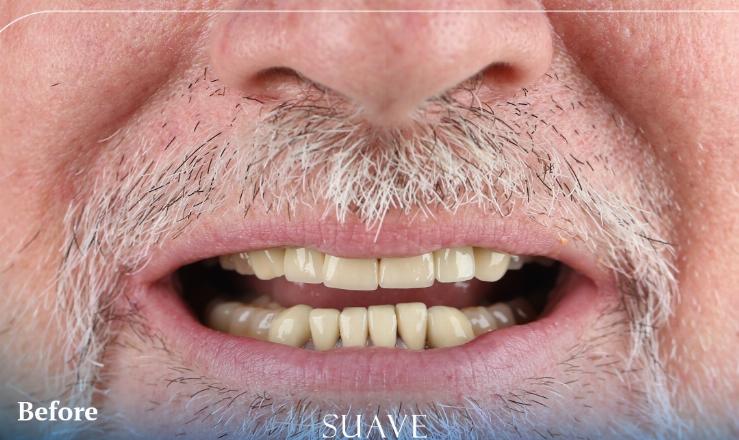
Suave Clinic
Verified clinicFull smile restoration · Istanbul
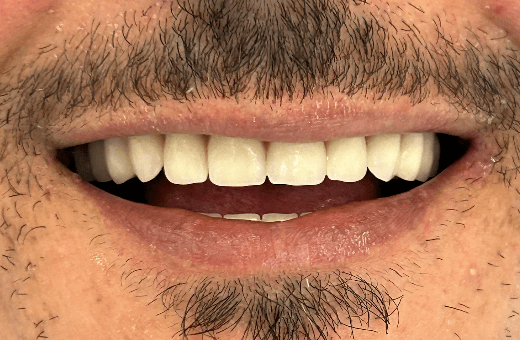
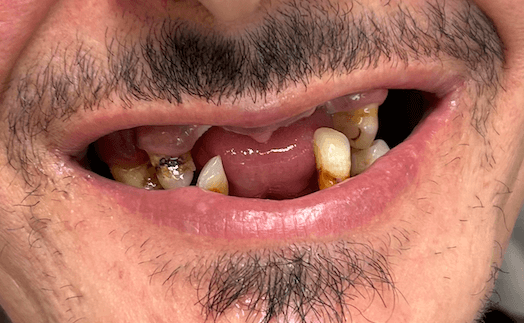
MDental Clinic
Verified clinicFull smile makeover · E-max veneers · Budapest
MDental Clinic
Verified clinicCrowns & restoration · Budapest
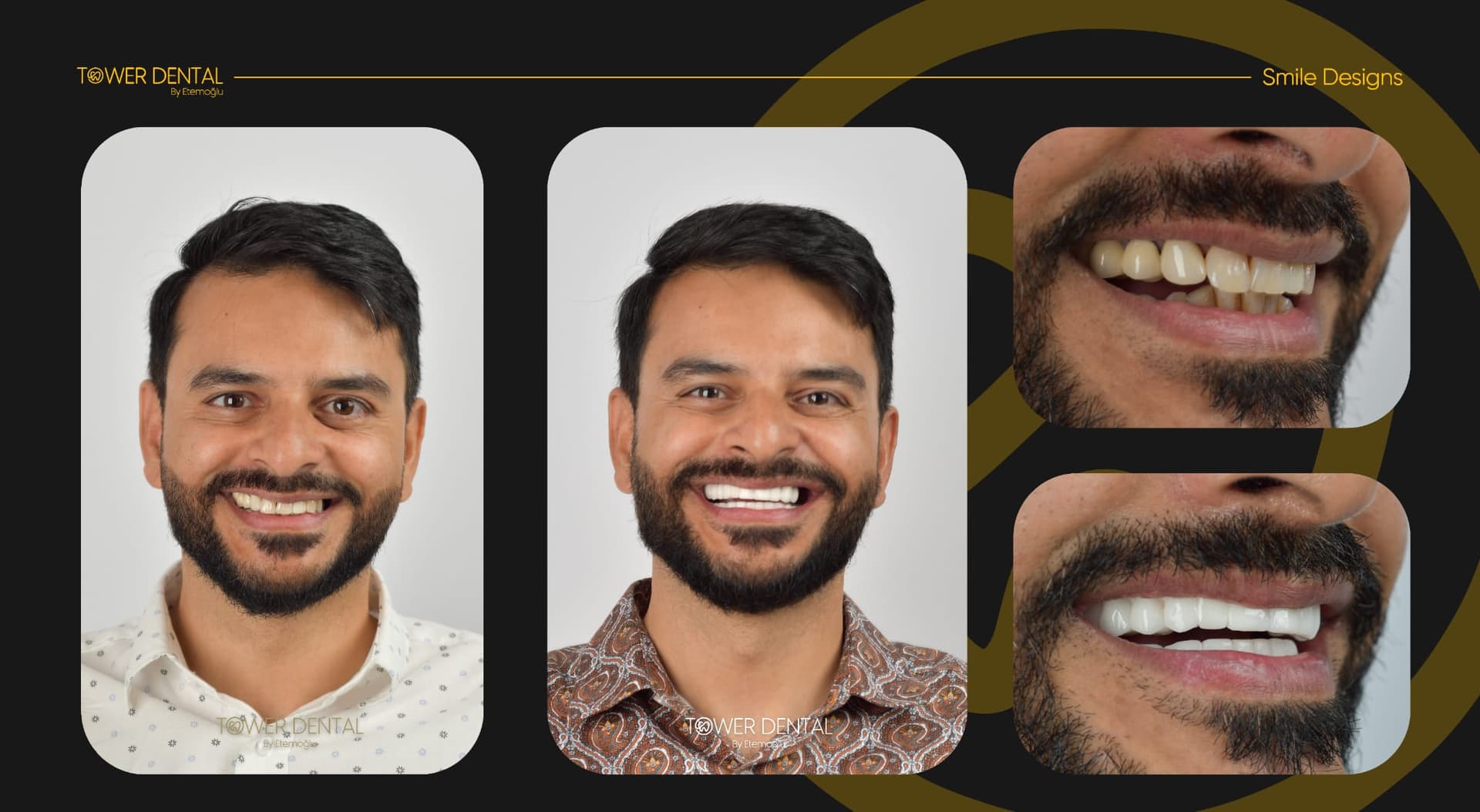 Before → After
Tower Dental Clinic
Verified clinicHollywood smile · E-max veneers · Istanbul
References & Sources
All clinical claims, pricing data, and statistics in this article are based on peer-reviewed research, official regulatory sources, and publicly verifiable data. We invite you to verify anything before making a treatment decision.
- 1.BBC News, "Turkey teeth: The dental tourism risks patients don't see." February 2023.
- 2.BBC, "Turkey Teeth: Bargain Smiles or Big Mistake?" — documentary investigating dental tourism risks, 2022.
- 3.Euronews, "Medical tourism: Dental expert explains why Turkey teeth can be a costly mistake." October 2024.
- 4.General Dental Council (UK), "Going abroad for dental treatment" — patient guidance.
- 5.British Dental Association (BDA), "Dental tourism: Patients need to know the risks."
- 6.T.C. Saglik Bakanligi (Turkish Ministry of Health), Health Tourism Authorisation Regulations.
- 7.Kontakiotis, E.G. et al. (2015), "A prospective study of the incidence of asymptomatic pulp necrosis following crown preparation," Int. Endod. J., 48(6), 512-517.
- 8.Pjetursson, B.E. et al. (2012), "A systematic review of the survival and complication rates of implant-supported fixed dental prostheses after at least 5 years," Clin. Oral Implants Res., 23(S6), 22-38.
- 9.Sailer, I. et al. (2015), "All-ceramic or metal-ceramic tooth-supported fixed dental prostheses: a systematic review," Dent. Mater., 31(6), 603-624.
- 10.Türkiye Today, "1.5 million health tourists visited Türkiye in 2024, generating $3 billion in revenue." 2025.
Medical disclaimer: This article is for educational purposes and does not replace a clinical examination. Treatment outcomes vary between patients. Always consult a qualified dental professional.

About MyDentalFly
MyDentalFly is a UK-based platform that builds your treatment plan and matches you with vetted specialist clinics abroad — and a dentist at the clinic reviews and confirms every plan before you pay anything.
Our interactive assessment evaluates your dental needs and builds a bespoke package: every treatment explained, a matched clinic with reasons why, your named dentist, flight estimates, transport, and accommodation — all in one place. We maintain a small, vetted network across Turkey, Hungary and Poland, visit clinics in person, help arrange CBCT scans before you fly, and stay with you through the entire journey. Compare. Save. Smile.
Questions Pearl can answer about implant red flags from a dental technician
- “Is treatment abroad safe?”
- “What would my case cost?”
- “Which clinic suits me?”
She answers in your own language, using prices from clinics we have checked. No sign-up, and she never asks for a phone number to give you an answer.
Tap a question — Pearl answers
Prefer a person? WhatsApp us · 020 4634 2312 · or
Clinically reviewed before booking
Every dental package built on MyDentalFly is reviewed by a qualified dentist before it gets accepted. Our clinical reviewers include specialists like Dr. Hubert Trępatowski — 800+ All-on-4 procedures, trained under Professor Paulo Malo (pioneer of the All-on-4 technique), graduate of Jagiellonian University Medical Faculty, Krakow.
About the author
Adam Smith
Head of Patient Research, MyDentalFly
Adam leads patient research at MyDentalFly, personally vetting clinics across Turkey, Hungary, and Poland. He has reviewed over 200 clinic proposals, analysed patient outcomes, and helped coordinate treatment plans for patients across the UK, USA, and Europe.
Clinically reviewed by
Dr. Ertan EtemogluLead Dentist & Co-Founder, Tower Dental Clinic
26 years in practice · 8,000+ patients/year · Turkish & American Dental Association member · Featured on Reuters
Content last reviewed: 18 September 2026