Dental Implants in Poland: The Complete 2026 Guide
Reviewed by MyDentalFly Clinical Team
Updated Sept 2026

Dental Implants in Poland: The Complete 2026 Guide

Poland is the most accessible dental destination in Europe for British patients — not because it is the cheapest, but because it is the easiest to reach twice. Krakow, Gdansk, Wroclaw and Poznan are served direct from more than twenty UK airports, and implant work costs 50-70% less than at home under the same EU regulatory framework.

£400-700

Per implant in Poland

50-70%

Savings vs UK prices

95%+

Success rate

2-2.5 hrs

Flight from the UK

At a glance

By Adam Smith, Head of Patient Research

Updated 2026-09-07 · Dental tourism researcher · Clinic vetting specialist · 40+ clinics assessed on-site

HT

Clinically reviewed by Dr. Hubert Trzepatowski

Haldent Dental Clinic, Krakow

About MyDentalFly

We build your treatment plan and match you with vetted specialist clinics in Turkey, Hungary and Poland — and a dentist at the clinic confirms every plan before you pay anything.

Vetted clinics only· Turkey · Hungary · Poland·1,875 verified prices

Pearl, our dental consultant

Try me — ask or talk to me

Pearl

Pearl · online

Free · no card needed · no obligation

Hi, I'm Pearl 👋 Ask me anything about dental implants abroad — or tell me what you need and I'll build your package.

Prefer another language?

Try asking about this

Why Krakow for Dental Implants?

A Dental Implant (Standard) costs £400-700 in Krakow compared with £2,000-2,500 in the UK and $3,000-5,000 in the USA. That is the headline, but it is not the reason most British patients end up in Poland. The reason is that an implant case is rarely one trip. The post has to fuse with the jawbone over three to six months before the permanent crown goes on, which means going back. Poland is the destination where going back is easy.

Krakow is a two hour fifteen minute flight from London, but more importantly it is a direct flight from Edinburgh, Glasgow, Manchester, Liverpool, Leeds, Birmingham, Bristol and Newcastle. So are Gdansk, Wroclaw and Poznan. No other dental destination has that regional coverage, because no other destination has 800,000 Polish nationals living in the UK keeping the routes full. Return fares under £60 are normal outside school holidays. A second trip for a crown fitting is a long weekend, not an expedition.

Clinically, Poland sits in the same bracket as Hungary. It is an EU member state. Polish dentists hold EU-recognised qualifications and register with the Polish Chamber of Physicians and Dentists. The implant systems used there are Straumann, Nobel Biocare, Alpha-Bio, MIS and Osstem. They are the same ones fitted in Harley Street. The variation that matters is between clinics, not between countries, which is why we assess your case before we show you any clinic at all.

Best for: People who want EU-regulated implant care with the widest choice of direct flights from UK regional airports, and who would rather travel two hours than two and a half.

Key Insight

Implants need a second visit. Poland is the only dental destination with direct flights from twenty-plus UK airports, which is why the follow-up trip actually happens — at 50-70% below UK prices under EU regulation.

Types of Treatment

Dental Implant (Standard)

£400-700 per implant in Poland

The titanium post and its abutment, replacing the root of one missing tooth. The crown that sits on top is a separate product with a separate price. This is the single most common reason a Polish quote looks cheaper than it really is. Krakow clinics typically use Alpha-Bio (Israel), MIS (Israel) or Osstem (South Korea) at standard tier. All three are globally certified with long clinical records. Always confirm in writing whether a quoted figure includes the abutment and the permanent crown.

Dental Implant (Premium)

£550-1,000 per implant in Poland

Premium placements use Straumann (Switzerland), Nobel Biocare (Switzerland) or ICX (Germany) — the systems with the longest published follow-up data, some now past thirty years. Worth the difference for front teeth where the aesthetics are unforgiving, for cases that already need grafting, and for anyone who wants a system their UK dentist will certainly recognise if something needs attention later.

All-on-4 Implants (Full Arch)

£4,500-8,000 per arch in Poland

Four angled implants carrying a full fixed arch, for patients who have lost most or all of the teeth in a jaw. The first trip covers placement and a provisional fixed bridge; the permanent zirconia prosthesis follows after four to six months. Krakow and Wroclaw clinics do high volumes of full-arch work, and this is the treatment where the gap against UK pricing is widest in absolute terms.

All-on-6 Implants (Full Arch)

£5,800-10,000 per arch in Poland

Six implants per arch instead of four, for better load distribution and long-term stability. Usually recommended for the upper jaw, where bone is softer, and for patients with enough bone volume to take the extra fixtures. Same two-trip timeline as All-on-4, roughly 20-30% more.

Success Rates & Risks

95-98%

overall success rate across major clinical studies

Success by case type

Single implant, healthy bone, non-smoker97-98%
Single implant, smoker89-94%
All-on-4 full arch94-98%
Implant with bone graft90-95%

Why implants fail

Peri-implantitis

5-8% over 10 years

Bacterial infection around the implant causing bone loss. The most common long-term complication, and the one most affected by how well you clean around the implant. Treatable if caught early.

Failed osseointegration

1-2%

The post does not fuse with the jawbone during the 3-6 month healing window. It is removed, the site heals, and a replacement goes in. Most clinic guarantees cover this.

Mechanical failure

<1%

Fracture of the post or abutment. Requires surgical removal and replacement. Rare with premium systems.

Complication rates

ComplicationFrequencySeverity
Post-operative swelling80-100%mild
Temporary numbness (lower jaw)5-10%moderate
Infection at surgical site2-5%moderate
Permanent nerve damage<0.5%serious

Based on meta-analyses from the Journal of Oral & Maxillofacial Implants (2023) and European Journal of Oral Implantology (2024).

Are You a Candidate?

Ideal candidates

  • Healthy gums with no active periodontal disease
  • Sufficient jawbone density, confirmed by CBCT scan
  • Non-smoker, or willing to stop around surgery
  • No uncontrolled chronic conditions
  • Able to make two trips over 4-8 months

Minimum requirements

  • Adequate jawbone volume, assessed by CBCT at the clinic
  • Healthy gums — existing gum disease is treated first
  • Jaw growth complete (18+)

Contraindications

Not suitable

Uncontrolled diabetes (HbA1c > 8%)

Must be brought under control first. Polish clinics will ask for a recent blood test.

Not suitable

IV bisphosphonate therapy

Significant risk of jaw osteonecrosis following dental surgery.

Caution

Smoking (10+ a day)

Success rates fall 5-10%. Most clinics require stopping two weeks before and eight weeks after.

Caution

Controlled diabetes

Workable, with success around 93% and prophylactic antibiotics likely.

Price Comparison: Poland vs Home Country

Prices shown in native currencies. Poland prices in GBP.

UK average
Turkey price

Dental Implant (Standard)

Save 73%
UK
£1,500
Tur
£400

Dental Implant (Premium)

Save 68%
UK
£1,900
Tur
£600

All-on-4 Implants (Full Arch)

Save 62%
UK
£13,000
Tur
£5,000

All-on-6 Implants (Full Arch)

Save 57%
UK
£15,000
Tur
£6,500
TreatmentUKPolandSaving
Dental Implant (Standard)£1,500£50067%
Dental Implant (Premium)£1,900£75061%
All-on-4 Implants (Full Arch)£13,000£5,80055%
All-on-6 Implants (Full Arch)£15,000£7,50050%
Bone Graft£800£28065%
Sinus Lift£1,200£45063%

Pearl

MyDentalFly’s dental consultant

Worth knowing before you compare any quotes: the number of implants you need isn't a preference, it's decided by how much bone you have and where the gaps sit. Two people missing the same number of teeth can need very different treatment — which is why quotes vary so wildly before anyone has looked at a scan.

How many teeth are you missing or need replacing?

What Can Go Wrong

Complication rates, how likely each is, and how clinics handle them

What Can Go Wrong

Infection

2-5%Preventable

Bacterial infection in the gum tissue around the implant.

How clinics handle this:

Antibiotics. Rarely requires removal.

Nerve damage

<1%Preventable

The inferior alveolar nerve in the lower jaw can be bruised during placement, causing numbness in the lip or chin.

How clinics handle this:

Usually resolves in 3-6 months. Permanent damage is very rare with guided surgery and a CBCT scan beforehand.

Implant loosening

1-3%Preventable

The post fails to fuse with the bone.

How clinics handle this:

Removed under local anaesthetic, bone heals for 2-3 months, replacement placed. Normally covered by the clinic guarantee.

If something goes wrong after you return home

You message your Krakow clinic directly through the patient portal. If they do not respond promptly we intermediate on your behalf. For anything urgent after you are home, the clinic advises you remotely or refers you to a local dentist. And with direct flights from most UK airports, going back for a review is realistic in a way it is not from further afield.

Polish clinics on our platform offer 5-10 year guarantees on implant posts and 3-5 years on crowns. EU consumer protection law sits behind those guarantees.

The Process: Step by Step

1

Assessment first, before any clinic

10-15 minutes

You mark your teeth on the interactive dental chart and answer ten questions. Pearl works out which treatments your case actually calls for. It also flags which ones might be added later. Bone grafting and sinus lifts are the two items that move an implant price most, and we give you the probability of each up front rather than letting it appear as a surprise in Krakow.

2

Your dental package, with real Polish prices

Immediate

You get an itemised package: one recommended clinic and two alternatives, each with their own prices for your specific treatments. Clinics appear because they fit your case, never because they paid. If it is useful, we will put a Hungarian or Turkish clinic alongside for comparison.

3

We speak to the clinic, not you

2-5 days

Before anything is confirmed we contact the clinic ourselves. We check they have the scope and capacity for your case, then pass your file over a GDPR-compliant channel rather than WhatsApp. That file is your assessment, your chart and your X-rays. You never have to negotiate, and no clinic gets your phone number.

4

Treatment across two trips

2 trips over 4-8 months

Trip one is placement, typically three to four days. Then three to six months of healing at home. Trip two is the permanent crown or bridge, usually two to three days. With direct flights from most UK regional airports, the second trip is a long weekend.

Recovery: What to Really Expect

Day by day, pain levels, and when you can eat and fly normally

Recovery: What to Really Expect

1

Day 1

Pain: Moderate (4-6/10)

Swelling starts. Numbness wears off after 2-4 hours. Cold packs help.

Soft or liquid food onlyNo hot drinksSleep propped up
2

Day 2-3

Pain: Moderate (3-5/10)

Swelling peaks. Managed with prescribed painkillers.

Soft foodNo strawsNo smoking
3

Day 4-7

Pain: Mild (2-3/10)

Swelling subsides. Comfortable enough to walk around Krakow’s old town.

Soft to semi-soft foodNo alcohol while on antibiotics
4

Week 2-3

Pain: Minimal (1/10)

Stitches dissolve. Normal daily activity resumes.

Avoid hard food on the implant side
5

Month 3-6

Pain: None

Osseointegration complete. Second trip to Poland for the permanent crown or bridge.

Normal life

Return to work

Desk work: 2-3 days. Physical work: 5-7 days.

Return to exercise

Walking: next day. Gym: 5-7 days. Contact sport: 2-3 weeks.

Dietary restrictions

  • Day 1-3: liquids and very soft food
  • Day 4-14: soft food
  • No nuts, popcorn or crusty bread for 4-6 weeks
  • No alcohol for 48 hours — it interacts with the antibiotics

Travel note: Safe to fly 24-48 hours after surgery. Krakow, Gdansk, Wroclaw and Poznan all fly direct to UK regional airports, so the return leg is short and the second trip is straightforward.

Why Poland?

Poland has the deepest UK travel connection of any dental destination, and that is a clinical advantage rather than a convenience. Implant treatment is inherently a two-visit procedure, and the destinations that fail patients are the ones where the second visit becomes a burden. Direct routes from more than twenty UK airports mean a follow-up, a review, or a small adjustment does not require taking a week off work.

EU-Regulated Care

Poland follows EU medical device directives. The same rules govern an implant in Krakow as in Dublin or Berlin.

Premium Implant Brands

Straumann, Nobel Biocare, Alpha-Bio and Osstem — with manufacturer warranties honoured across the EU.

50-70% Savings

Central European operating costs, Western European materials and protocols. The saving is in overheads, not in what goes in your jaw.

Flights From Your Airport

Krakow, Gdansk, Wroclaw and Poznan fly direct from 20+ UK airports — not just London. Often under £60 return.

In-House Labs

Most serious Polish implant clinics mill their own zirconia on site, so adjustments happen in the building rather than by courier.

Built For The Second Trip

Implants take two visits over 4-8 months. Poland is the destination where going back is a long weekend.

Long-Term Costs & Maintenance

What it costs to keep over 5, 10 and 15 years

Long-Term Costs & Maintenance

Ongoing maintenance

FrequencyWhatCost
Every 6 monthsProfessional cleaning around the implants£50-90 in Poland, £80-150 in the UK
AnnuallyCheck-up with X-ray£35-60 in Poland, £60-120 in the UK

Component lifespan

Implant post(Lifetime (20-30+ years))
£400-700 in Poland if it fails outside guarantee
Crown(10-15 years)
£170-300 in Poland, £500-1,000 in the UK

Total cost of ownership

Over fifteen years a single implant in Poland totals roughly £1,000-1,600 including one crown replacement, against £4,000-6,000 in the UK. Add two return flights at £60-120 and the gap barely narrows.

Alternatives to Consider

Other treatments that may suit your case better, with pros and cons

Alternatives to Consider

BudgetBone densityNumber of missing teethWhether you can make two tripsFixed versus removable

Dental Bridge

Turkey

£150-280 per unit in Poland

UK

£800-1,500 per unit

One to three missing teeth with healthy teeth either side.

Pros

  • No surgery
  • Lower upfront cost
  • Finished in one trip

Cons

  • Healthy teeth are ground down to take it
  • Does not stop bone loss under the gap
  • If an anchor tooth fails the whole bridge fails

Removable Partial Denture

Turkey

£220-450 in Poland

UK

£500-1,500

Budget is the binding constraint, or you are not a candidate for implants.

Pros

  • Cheapest option
  • No surgery
  • Made quickly

Cons

  • Removable
  • Less stable when eating
  • Bone loss continues
  • Needs replacing every 5-8 years

Key Takeaway

Poland offers EU-regulated implant care at 50-70% below UK prices. It also has more direct UK routes than any other dental destination. Krakow, Gdansk, Wroclaw and Poznan are all served from regional airports, often for under £60 return. Build your dental package first so you compare clinic-specific pricing rather than headline rates.

Example dental packages

Real prices from verified clinics — including flights and hotel

Frequently Asked Questions

How much do dental implants cost in Poland?

A standard implant means the titanium post and abutment. That costs £400-700 in Krakow, against roughly £2,000-2,500 in the UK. The crown on top is always priced separately, typically £160-300 in Poland for zirconia. So a complete single tooth is around £560-1,000 in Poland versus £2,800-3,800 in the UK. All-on-4 runs £4,500-8,000 per arch against £12,000-20,000 in the UK. Nobody can give you a final figure before examining you. A CBCT scan can add bone grafting or a sinus lift. We tell you how likely those are before you travel.

Are dental implants in Poland safe?

Poland is an EU member state and its clinics work under European medical device regulation. Dentists hold EU-recognised qualifications and register with the Polish Chamber of Physicians and Dentists. Krakow clinics fit Straumann, Nobel Biocare, Alpha-Bio, MIS and Osstem. These are the same systems used in UK practices, with the same manufacturer warranties. Quality varies between clinics in Poland exactly as it does in Britain, which is why we assess each clinic rather than listing everyone.

How many trips to Poland will I need for implants?

Two, for almost all implant cases. The first trip is three to four days for placement and provisional restorations. After three to six months of healing, the second trip is two to three days for the permanent crown or bridge. Some single-implant cases with good bone can be done with immediate loading in one longer trip, but do not plan on it. Crowns, veneers and root canals without implants are usually one trip of five to seven days.

Is Poland or Hungary better for dental implants?

They are clinically very close — both EU, both using the same implant brands, both with two decades of dental tourism behind them. Poland is typically 10-20% cheaper and has far better direct flight coverage from UK regional airports, which matters because implants need a second visit. Hungary has the longer track record and a denser concentration of clinics in one city. If you live outside London, Poland is usually the more practical choice; if you want the most established market and can fly from a London airport, Hungary is a fair alternative.

Which Polish city is best for dental treatment?

Krakow is the main hub and has the most clinics experienced with international patients, along with the best flight coverage. Gdansk is strong for Scandinavian and northern UK patients. Wroclaw and Poznan have good implant clinics with slightly shorter waiting times. Warsaw is well served but generally prices closer to Western European levels. We match you on clinical fit first and location second, but tell us your home airport and it will shape the recommendation.

What happens if something goes wrong after I get home?

Clinics on our platform give written guarantees, and we help you activate them. That is typically 5-10 years on implant posts and 3-5 years on crowns. Poland being in the EU means consumer protection sits behind that. Minor adjustments can often be handled by your own dentist at home, and we agree in advance with the clinic how that is handled. You message the clinic directly through the patient portal, and if they do not respond we intervene.

What your package would look like

Your package, building

Example

Package total

building…

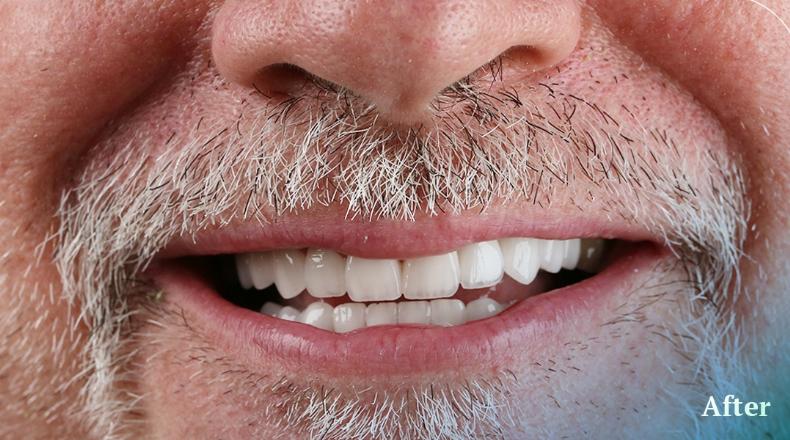
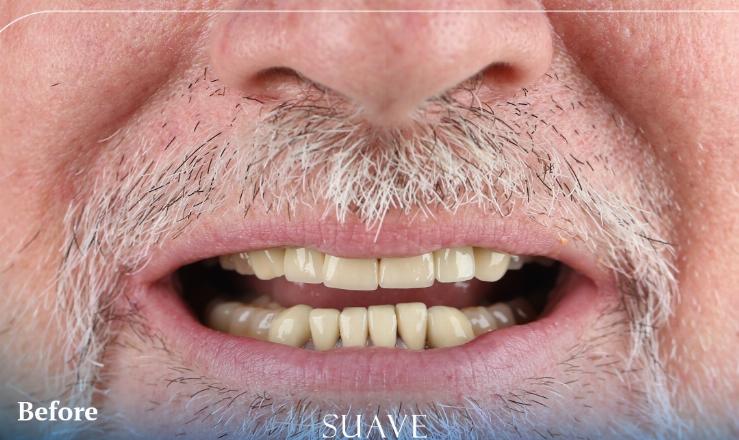
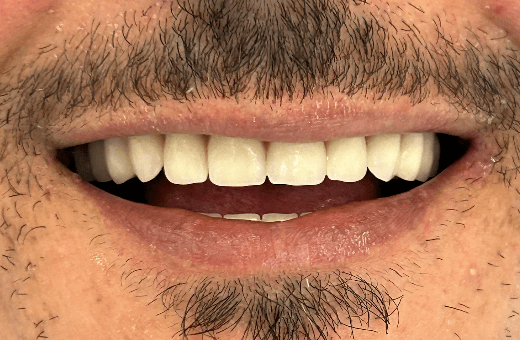
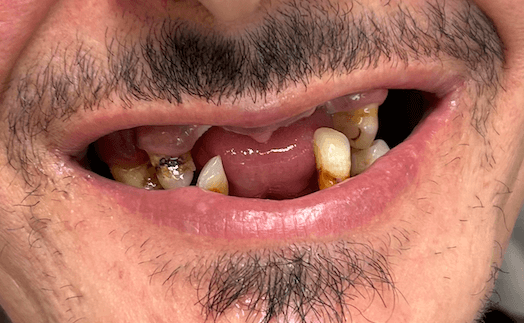
Real results from verified clinics

Drag the slider to compare before & after

After treatment
AFTER
Before treatment
BEFORE
← Drag to compare →

Suave Clinic

Verified clinic

Full smile restoration · Istanbul

After treatment
AFTER
Before treatment
BEFORE
← Drag to compare →

MDental Clinic

Verified clinic

Full smile makeover · E-max veneers · Budapest

After treatment
AFTER
Before treatment
BEFORE
← Drag to compare →

MDental Clinic

Verified clinic

Crowns & restoration · Budapest

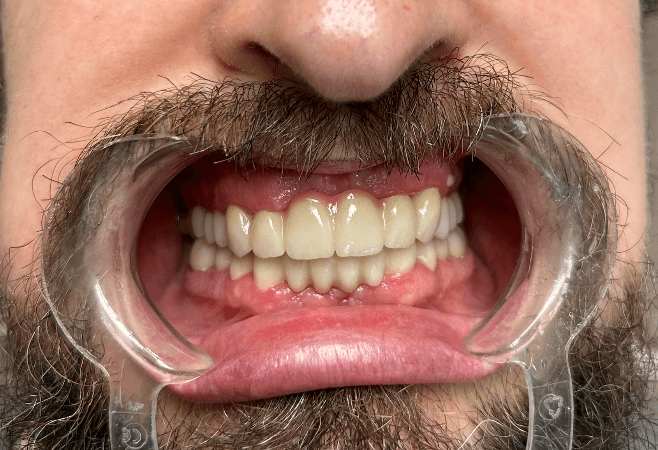
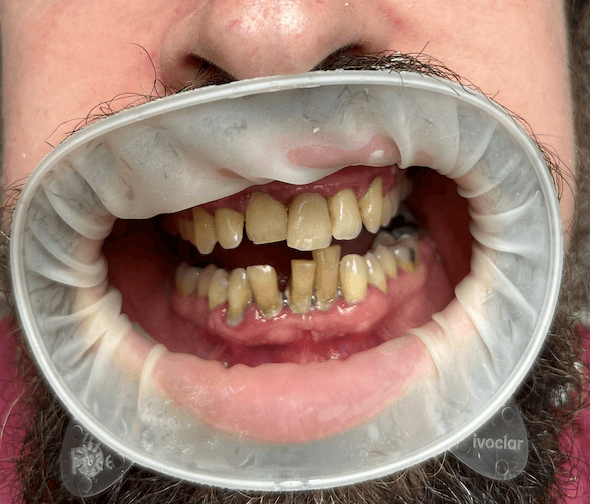
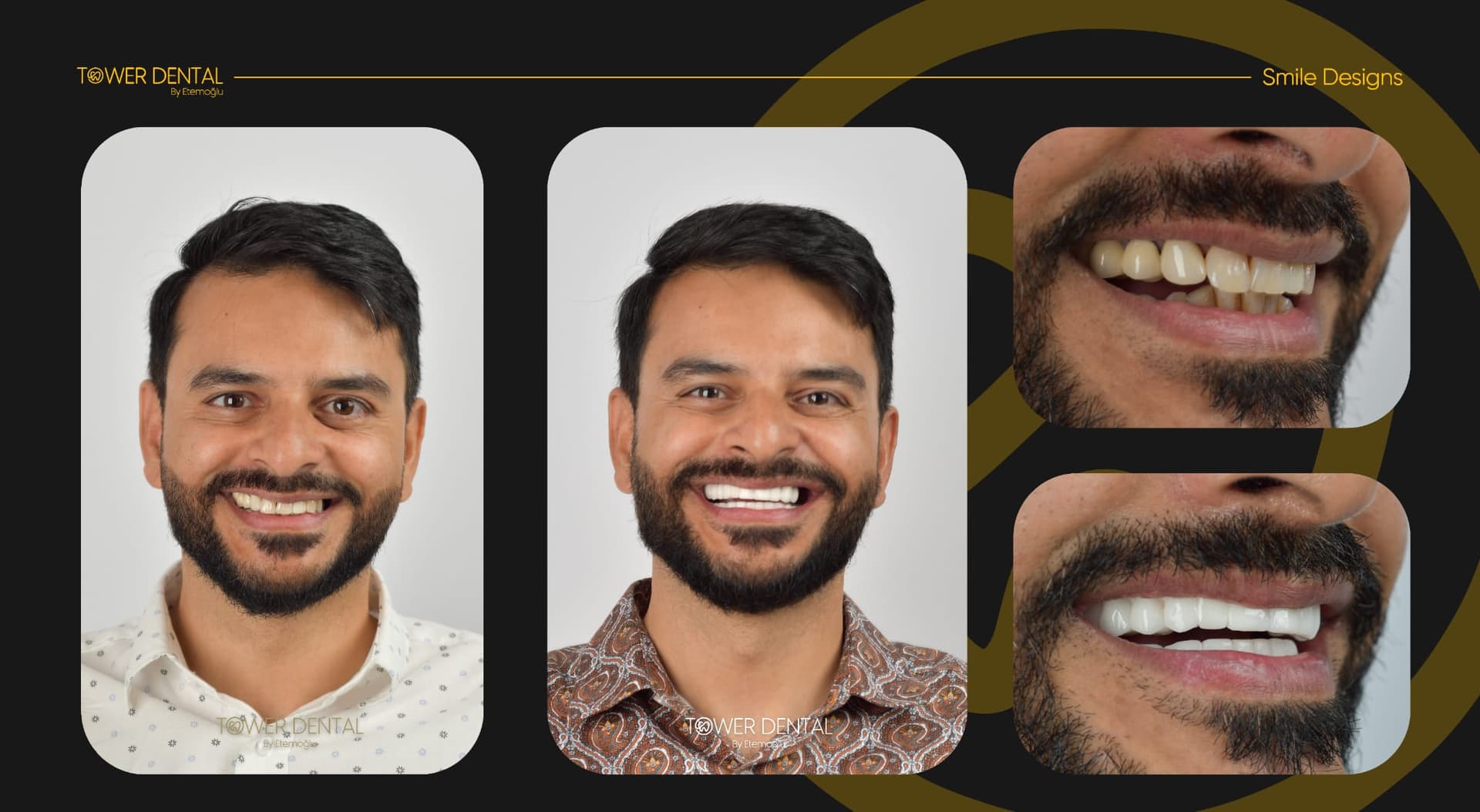
Before and after — Hollywood smile · E-max veneers, Tower Dental Clinic, IstanbulBefore → After

Tower Dental Clinic

Verified clinic

Hollywood smile · E-max veneers · Istanbul

References & Sources

All clinical claims, pricing data, and statistics in this article are based on peer-reviewed research, official regulatory sources, and publicly verifiable data. We invite you to verify anything before making a treatment decision.

  1. 1.BBC News, "Turkey teeth: The dental tourism risks patients don't see." February 2023.
  2. 2.BBC, "Turkey Teeth: Bargain Smiles or Big Mistake?" — documentary investigating dental tourism risks, 2022.
  3. 3.Euronews, "Medical tourism: Dental expert explains why Turkey teeth can be a costly mistake." October 2024.
  4. 4.General Dental Council (UK), "Going abroad for dental treatment" — patient guidance.
  5. 5.British Dental Association (BDA), "Dental tourism: Patients need to know the risks."
  6. 6.T.C. Saglik Bakanligi (Turkish Ministry of Health), Health Tourism Authorisation Regulations.
  7. 7.Kontakiotis, E.G. et al. (2015), "A prospective study of the incidence of asymptomatic pulp necrosis following crown preparation," Int. Endod. J., 48(6), 512-517.
  8. 8.Pjetursson, B.E. et al. (2012), "A systematic review of the survival and complication rates of implant-supported fixed dental prostheses after at least 5 years," Clin. Oral Implants Res., 23(S6), 22-38.
  9. 9.Sailer, I. et al. (2015), "All-ceramic or metal-ceramic tooth-supported fixed dental prostheses: a systematic review," Dent. Mater., 31(6), 603-624.
  10. 10.Türkiye Today, "1.5 million health tourists visited Türkiye in 2024, generating $3 billion in revenue." 2025.

Medical disclaimer: This article is for educational purposes and does not replace a clinical examination. Treatment outcomes vary between patients. Always consult a qualified dental professional.

About MyDentalFly

MyDentalFly is a UK-based platform that builds your treatment plan and matches you with vetted specialist clinics abroad — and a dentist at the clinic reviews and confirms every plan before you pay anything.

Our interactive assessment evaluates your dental needs and builds a bespoke package: every treatment explained, a matched clinic with reasons why, your named dentist, flight estimates, transport, and accommodation — all in one place. We maintain a small, vetted network across Turkey, Hungary and Poland, visit clinics in person, help arrange CBCT scans before you fly, and stay with you through the entire journey. Compare. Save. Smile.

500+ patients helped·Nothing is charged until the clinic's dentist confirms your plan
Vetted clinics only Turkey · Hungary · Poland1,875 verified pricesAsk Pearl how it works ↓
online

Tap a question — Pearl answers

Example — ask your own below

Prefer a person? WhatsApp us · 020 4634 2312 · or

AS

About the author

Adam Smith

Head of Patient Research, MyDentalFly

Adam leads patient research at MyDentalFly, personally vetting clinics across Turkey, Hungary, and Poland. He has reviewed over 200 clinic proposals, analysed patient outcomes, and helped coordinate treatment plans for patients across the UK, USA, and Europe.

HT

Clinically reviewed by

Dr. Hubert Trzepatowski

Lead Implantologist & Founder, Haldent Dental Clinic

Only certified Nobel Biocare All-on-4 trainer in Poland · 1,500+ patients/year · Polish Association of Implantology

Content last reviewed: 2026-09-07

Read Next

Dental Implants in Poland: 2026 Prices
Price Guide

Dental Implants in Poland: 2026 Prices

Treatment-by-treatment Polish pricing, what the quote leaves out, and how Krakow compares with Istanbul and Budapest.

Read the guide

Continue Reading

Related guides, comparisons, and clinic listings